Being an adolescent anywhere is challenging. This is particularly true in sub-Saharan Africa, where adolescents have some of the world’s highest rates of HIV infection, unintended teenage pregnancy, and intimate partner violence.
In Tanzania, for instance, around 60% of teen girls are sexually active by 18. Less than 10% of girls aged 15 to 19 use any type of modern contraceptive. A staggering one in three 15-to-24-year-olds will experience intimate partner violence.
There have been decades of public health interventions and research in sub-Saharan African countries. But we still have a lot to learn about how to improve adolescent sexual and reproductive health. Most traditional family planning and sexual and reproductive health programmes target married adults or older individuals, and often focus on females exclusively.
In our recent research we set out to identify interventions that would improve the sexual and reproductive health of girls and young women aged 11 to 22. We partnered with BRAC, an international development organisation operating in 11 countries including Tanzania.
One of our key findings was that two interventions significantly reduced intimate partner violence. The first was engaging with and inspiring adolescent boys and young men to make better choices around their sexual and reproductive health. The second was empowering adolescent girls and young women. We did this by using a goal-setting exercise focused on staying healthy.
Both approaches are low-cost and easy to replicate and scale. But they are not often used for sexual and reproductive health interventions. Our research provides fresh insights into strategies that can be used to improve the lives of adolescents in sub-Saharan Africa and around the world.
The programme
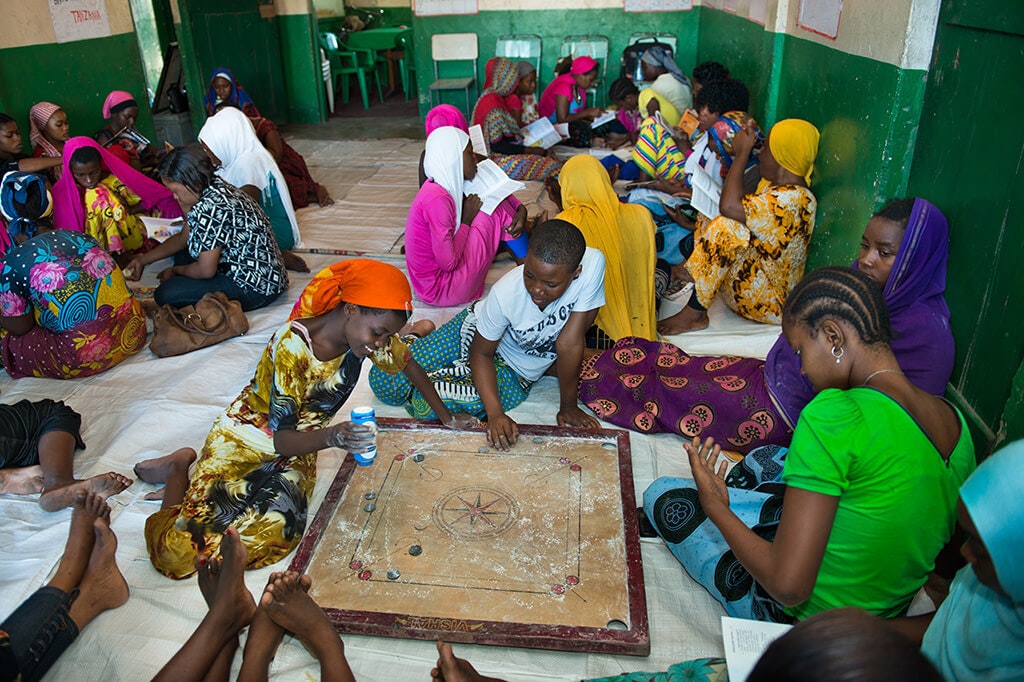
Our partner, BRAC, designs proven scalable solutions that equip people to lift themselves out of poverty and achieve their potential. Among its initiatives are Empowerment and Livelihood for Adolescents clubs. These provide social and economic empowerment and education to young people in fun settings in eight countries.
We layered three additional interventions in 150 of the clubs across Tanzania as part of a randomised controlled trial. This research method provides a rigorous design to identify causal impacts and determine which interventions are effective and which are not.
Between 2016 and 2020, we worked with approximately 4,500 adolescents (3,000 females and 1,500 males). We analysed the results of the following three interventions:
-
a goal-setting activity for adolescent girls and young women around staying healthy and free of sexually transmitted infections and HIV. This enabled us to estimate the role of behavioural factors that affect commitment to safe sexual behaviour and partner selection.
-
a soccer-based health behaviour change and empowerment programme for the male partners of the adolescent girls and young women. This enabled us to test whether sexual and reproductive health outcomes for adolescent females improved when males were included in the intervention.
-
access to free modern contraceptives. This allowed us to test whether access to them – without changing other behavioural norms – had significant impact.
The findings were surprising. We believe they are important for policymakers, civil society organisations, and the general public.
What we found
First, we found that offering male partners a soccer-based health programme that educated and inspired them to make better choices regarding sexual and reproductive health reduced female reports of intimate partner violence. Together with BRAC, we offered that intervention by partnering with Grassroot Soccer. This is a nonprofit adolescent health organisation that uses soccer to educate, inspire, and mobilise young people in developing countries.
Reductions in intimate partner violence associated with the soccer-based health intervention appear to be driven by a change in male attitudes towards intimate partner violence in communities where Grassroot Soccer operated. In addition we observed a reduction in sexual activity in these communities. Females reported fewer partners and spent less time with male partners.
Second, we found that female adolescents who participated in the goal-setting activity reported decreases in intimate partner violence. We asked the female adolescents to set two or three specific strategies to achieve the goal of staying healthy and free of sexually transmitted infections and HIV.
Reductions in intimate partner violence due to the goal-setting activity were driven by improvements in the reported quality of partners, as well as an increase in the young women’s sense of personal agency. We measured the quality of partners by partner age, educational attainment, and use of contraception. These are all factors which are correlated with risky sexual activity.
In both the goal-setting and soccer treatment arms, we found that impacts were larger among females who were already sexually active at the beginning of the study.
Third, we found that mere access to free contraceptives had no significant impact on sexual and reproductive health outcomes. This might be because providing access to modern contraceptives without altering the norm via education is not effective – but further study is needed on this issue.
Key lessons
We drew a number of key lessons from our findings. First, engaging adolescent boys and young men reduces intimate partner violence and shifts male attitudes around violence against women.
Second, adolescents benefited from participating in an activity that encouraged forward-looking behaviour. This increased their sense of personal agency to make better choices in the present around sexual relationships.
Third, offering contraception alone, without focusing on behaviour change for females and males, won’t necessarily improve sexual and reproductive health for adolescents.


