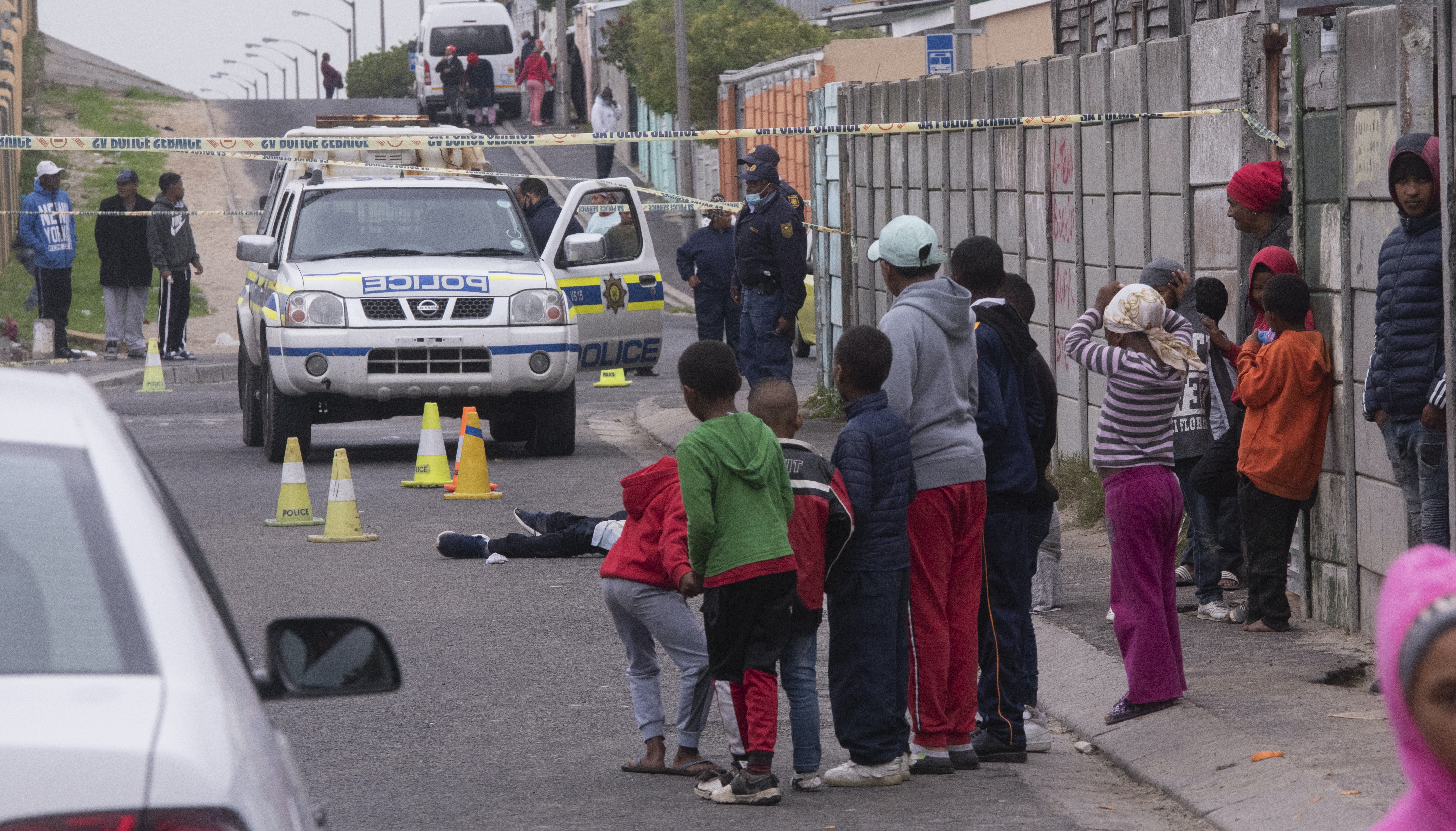
Gang violence is a deeply rooted problem in many impoverished communities across South Africa. This not only significantly affects the young people involved, but has adverse effects on communities: psychological violence, substance abuse and abnormal levels of crime and gun battles.
Another grim side effect of gang violence is gender-based violence, which is one of the country’s greatest concerns. Research has repeatedly shown how gender-based violence is closely linked to toxic masculinities – views about masculinity (what it means to be a man) that are harmful to the man himself and the people around him. It is also about the exercise of power by men over women and other men they consider weak.
Our study explored the intricate connection between marginalised youth in gangs, toxic masculinity and gender-based violence in Bophelong, a township about 70 kilometres south of Johannesburg, in the Vaal area. Townships are historically black urban residential areas, mostly characterised by underdevelopment and high levels of poverty.
The study, The Interconnection between Youth Gangs, Toxic Masculinity and Gender Based Violence in South Africa, is a chapter in the book Negotiating Patriarchy and Gender in Africa: Discourses, Practices, and Policies.
We found that, in the absence of socio-economic opportunities – recreational and cultural facilities, jobs, other economic opportunities and social networks – gangs use violence to dominate and subordinate rival gangs in order to maintain their place as the “superior” men in their communities.
High levels of violence are used to “prove” gang members’ masculinity. The findings also highlight that the way young gang members think about and understand masculinity ultimately translates into gender-based violence.
Read more: The Cape Town gangsters who use extreme violence to operate solo
Our findings are important because they highlight the link between harmful definitions of masculinity and violence. They show that in the face of marginalisation and social exclusion, youth in gangs think they have no options except violence to prove that they are “real” men in their communities.
The study
We interviewed 15 unemployed youths and former gang members between the ages of 14 and 35, and 19 practitioners working on the issue of youth and gang violence.
We asked questions about the development challenges facing youth in townships, as well as exploring what drives young people’s attraction to gangs. And we examined how gang members think about masculinity. We found that gangs use violence to construct and practise a toxic masculinity: it makes them engage in anti-social behaviour, resulting in them being maimed or killed.
Women in the areas are often caught in the crossfire of gang wars. This is because territory marking and revenge among rival gangs is not just about them fighting among themselves. It also spills over into sexual violence.
The gang members often lose their loved ones or put them in danger of revenge attacks while trying to prove that they are the better gangs and the better men.
A former gang member explained (page 82):
you feel like you are a man if your gang is powerful but there is so much violence and there is so much revenge.
These results concur with those of other studies which have noted that gangs use violence as a tool to eradicate all traces of femininity or weakness within them. Gangs enable their members to assert their manhood. As our study confirms, being a “real man” is about power and hierarchy.
Read more: Gangs offer a tempting ‘home’ to frustrated, unhappy youngsters
Many participants in our study identified the masculine norms of power, control, being in command and aggression as some of the defining factors of being “top dogs” (izinja ze game in isiZulu). There was also an element of performance, whereby they displayed their so-called prowess on the streets to intimidate communities.
All of this is, of course, dangerous not just for the individual men, but for their communities more broadly.
Sexual violence
Research indicates that, due to their glamorous lifestyle which includes access to cash, expensive clothes and flashy cars, gangs often construct their masculinity through promiscuity. Our findings show, however, that in Bophelong, gangs use rape as a weapon to assert their masculinity. A respondent working with former gang members noted (page 81):
They start raping girls around the area. I don’t know, maybe they are told that they are now men they must test their thing.
We also found that the gangs extended their violence to the women and girls around them. To mark territory or exert revenge, a rival gang member’s female family member is sometimes raped.
Another respondent working with current and former gang members added (page 82):
You find that you are a gang member and you belong to a certain group. How do we hurt you? We hurt you by either touching your daughter, your wife, or your girlfriend. So now again you see gender-based violence … It plays right into the sexual violence domain.
A former gang member confirmed (page 80):
My sister was raped by rival gangs as an act of revenge.
Conclusion
This study has shown how gangs from the marginalised community of Bophelong, who feel that they have been “emasculated” by poverty, construct and practise masculinity. It also shows the impacts.
Read more: South Africa’s soldiers won’t end gang violence. A co-ordinated plan might
It is, therefore, recommended that various government departments, civil society and communities work together to deny toxic masculinity its breeding ground. The focus should be on addressing the underlying, interlinked root causes of toxic masculinity. This includes a change in attitudes, socialisation, behaviours and beliefs about masculinity and manhood.


