Telling the complex story of ‘medical xenophobia’ in South Africa:
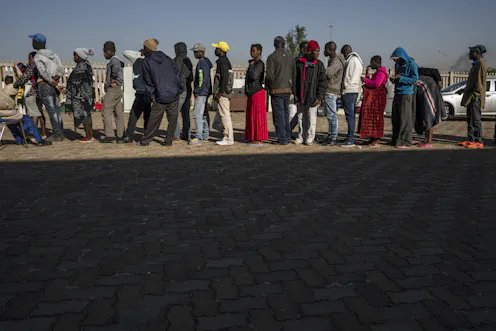
The phrase “medical xenophobia” is often used to describe the negative attitudes and practices of South African health care professionals towards refugees and migrants. It is used whenever foreign nationals are denied access to any medical treatment or care.
Research on migration and health in South Africa has documented public health care providers as indiscriminately practising “medical xenophobia”. But this dominant, single narrative around migrants and health care is misleading.
My recent research showed that there was more complexity, ambivalence and a range of possible experiences of non-nationals in South Africa’s public health care system. I conducted the research in a public health clinic in Musina, a small town on the border of South Africa and Zimbabwe.
I found that frontline health care workers provided services, including HIV treatment, to black African migrants who are often at the receiving end of xenophobic sentiment and violence. This was in spite of several institutional and policy-related challenges.
Discretion and innovation played a crucial role in inclusive health care delivery to migrants in a country marred by high xenophobic sentiment. This was because health care providers subscribed to an ethos of what was right for the patient.
Public health and individual discretion
There are a few issues with the current framing of “medical xenophobia”. First, the focus on attitudes – and not health care delivery – reflects a particular generalisation of how health providers are perceived to treat African migrants in South Africa.
This framing does not consider challenges facing the health system. These include shortages of medical personnel. Many migrants seeking care in South Africa’s public health system do face challenges arising from being “foreigners”. But there are other grounds beyond citizenship or legal status on which medical care might be denied. Not all cases of poor treatment are “medical xenophobia”.
South Africans also face challenges with the public health care system. These are related to the general shortages of nurses and doctors. Other challenges include high bed occupancy, high workload, low morale among nurses in public health facilities and the burden of the HIV pandemic.
Second, existing policy responses to communicable diseases in South Africa and the southern African region do not adequately cater for migrants. For example, treatment guidelines in South Africa have been found to be incomplete or inapplicable to migrant patients. Policies and programmes in the Southern African Development Community on communicable diseases such as HIV do not extend to migrant patients.
Health care providers often have to operate within these institutional, bureaucratic and policy constraints.
This scenario makes frontline discretion unavoidable. Health care providers have to rely on their own judgement to determine what “best practices” to invoke with relatively little input or interference from other institutions.
In spite of these challenges, frontline health care providers were doing their best to provide health services to black African migrants. They bypassed institutional and policy-related barriers to registering and treating undocumented migrants, non-native speaking migrants and migrants without referral letters.
This suggests that the experiences of non-nationals in South Africa’s public health care system were more complex and varied than implied by the dominant discourse on “medical xenophobia”.
It is true that some health care providers stereotyped migrant patients and blamed them for their destitution. But my research showed that these stereotypes didn’t directly translate to the exclusion of migrant patients from health care services. This was because of the health workers’ strong professional conduct and an awareness of the public health implications of not providing migrant patients with HIV treatment.
Working around the system
Health care providers in the clinic I visited came up with a system of using the date of birth to identify and keep a record of undocumented migrant patients. This replaced the 13-digit South African identity number, which is normally used to open patient files. Several of them used notions of morality, ethics and public service to frame their decision making. They understood health care to be a right for everyone, in line with Section 27 of the country’s constitution.
Others provided HIV treatment to migrant patients without referral letters. This decision was also mediated by how patients professed their “belonging” through “alternative” forms of knowledge and expertise. For example, one nurse claimed that she only provided anteretroviral therapy if migrant patients demonstrated knowledge of their medication, or if they brought a medicine container for a refill.
Health care providers reported difficulties interacting with migrant patients who spoke Swahili, French, Portuguese or Chewa. Staff and local patients worked together to ensure that migrant patients accessed health care services, often in extremely demanding circumstances. Health care providers made the effort to connect with migrant patients through informal interpreters by asking co-workers or patients fluent in these non-native languages to translate in English or other native languages.
These health care providers didn’t use language, documentation and referral letters to discriminate against migrant patients. They used innovation, creativity and compromise to provide services to migrant patients living with HIV.
Way forward
Policymakers need to recognise the importance of human relationships, communication networks, leadership and motivation in strengthening the country’s ailing public health system.
More crucially, activists need to identify the informal, inclusive and innovative practices of health care providers in addressing challenges related to documentation, referrals and language.
This should be coupled with calls to strengthen and invest in these grassroots responses to build greater solidarity. This is what can be done while waiting for policymakers to respond to ongoing calls for public health care systems to adequately engage with mobility.

Kudakwashe Vanyoro does not work for, consult, own shares in or receive funding from any company or organization that would benefit from this article, and has disclosed no relevant affiliations beyond their academic appointment.
Source: The Conversation – Articles (AFRICA)
Read more on The Conversation.
Join the fun: Add Your event | Submit a Press Release | Add your listing.


