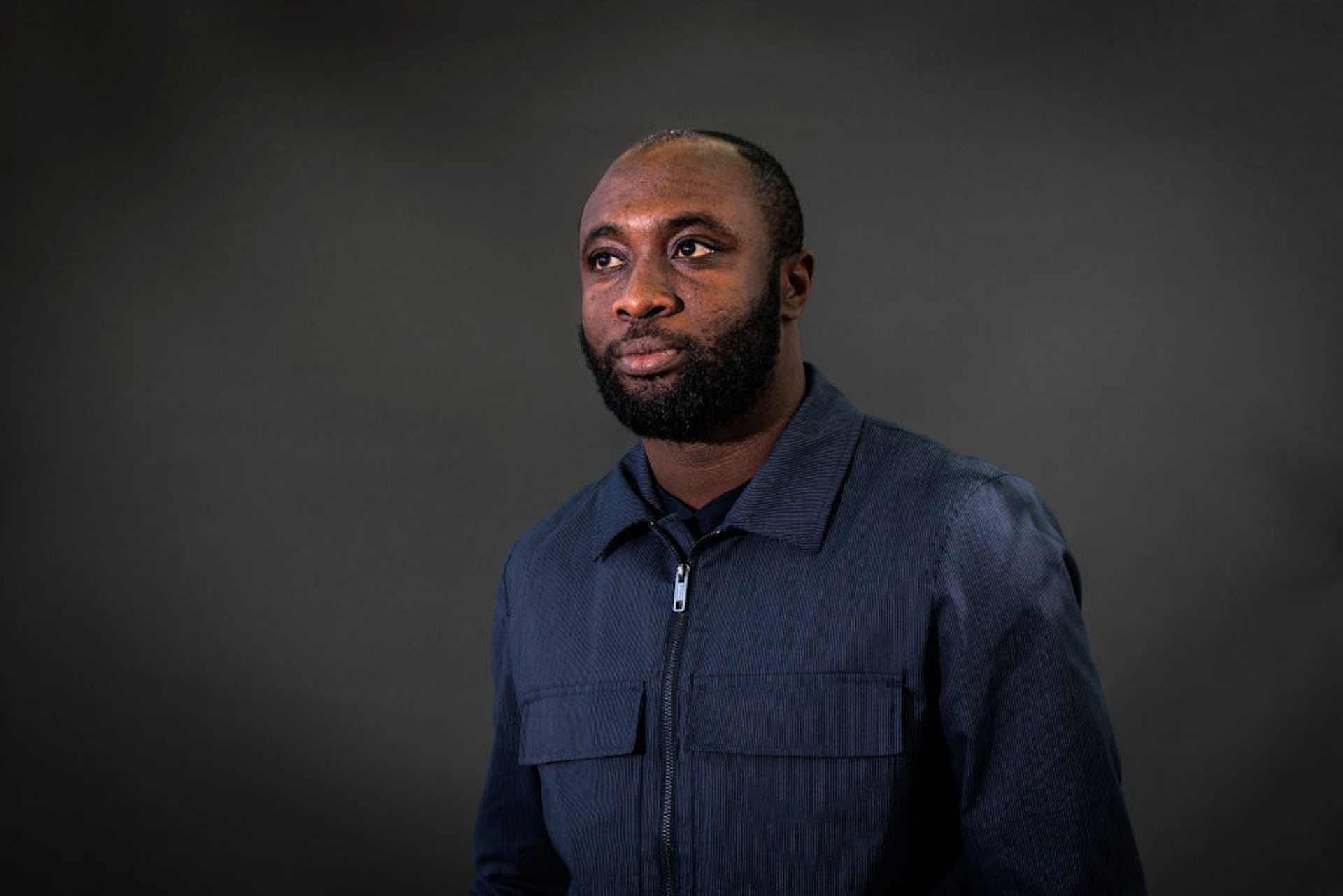
Nigeria’s Emmanuel Iduma is many things: writer, editor, publisher, critic and photographer. In 2022 he combined these skills to introduce a newsletter, Tender Photo, sent to subscribers twice a week. It has since become an important platform for African photographers, writers, critics and curators. Published on Substack, it has become so widely popular that it was a featured publication on the online newsletter support site.
Iduma is the author of three books: I Am Still With You, a memoir on the Nigerian Civil War; A Stranger’s Pose, a travelogue; and The Sound of Things to Come, a novel. He’s also a recipient of the prestigious Windham-Campbell Prize.
With Tender Photo, Iduma is drawn to the narrative potential of photography and the hidden elements behind it. In the newsletter Iduma chooses a photo and writes briefly about what it calls to mind for him. The featured photographer then writes about why and how they took the photo. Literary culture scholar Tinashe Mushakavanhu asked him about the project.
What was the impulse to start a forum like Tender Photo?
In mid-2021, while at an advanced stage of work on my recent book, I felt I needed to tinker with the form with which I published my writing on photography. For the previous seven years, I had written essays – or stories – that foregrounded my voice as a writer of criticism.
I wondered how else I could show my interest in photography, outside my predilections. The newsletter emerged from the need to free my writing from any unnecessary jargon I had acquired in the years of writing for a targeted, art-world audience. Put simply, it was an attempt to find a new path in my work with photographs. It features the work of early to mid-career photographers on the African continent.
Why was it necessary to generate a conversation between a critic and the photographers?
The necessity I felt was to be a middleman in the exchange between a photographer and the photograph they took. As such, the frame of that correspondence was important. How could I get the photographer to speak freely and without gobbledygook on the image in question? My aim has been to present narratives on photography mainly from the point of view of practitioners of the medium, prefaced by short captions that illustrate the possibility of keen observation.
How did you decide on the format?
At this point – nearing the 60th edition – I have chosen to publish only one photograph per feature. But in the first year of the newsletter, I included two other photographs. The idea at the time was to show all three images I selected from the photographer’s portfolio, pointing to some range in style.
In this second year, I have pared things down further, seeing that the feedback I have received shows that people enjoy the concision in my presentation. My overall aim is to allow people to enjoy the process of looking at a photograph, like repeated strokes of a caress.
You recently introduced guests who write about some of the photos you’ve written about. Why?
There are two main reasons why this expansion was inevitable. First, I knew from the start that by the end of a year I would have a decent number of images that spoke to each other in unexpected ways.
In addition, I wanted to broaden the scope of engagement by bringing in other voices, mainly readers who read the newsletter with an appreciable level of frequency. Thankfully, my instincts have proved right. I am moved by the commentary written by the guests, the depth and acuity, and surprised to note the photographs that have recurred in the selections.
What is the state of art criticism and photographic writing on the continent?
It is difficult for me to speak in any generalising manner about the state of photography criticism, mainly because I am often wary of sweeping, continental assessments. I prefer to work with a sense of urgency on a personal level: that is, what do I feel is required of me, given my training, inclinations, and gifts? In this sense, I am quite interested in broadening conversations on criticism on the continent, producing work for mainstream publications – such as a memoir, literary journal, or newspaper – by paying homage to the work done in academic or theoretical circles.
My hope is that more self-driven initiatives would emerge, diversifying and amplifying the work of photographers and critics, even if they last for a short time.
Is Tender Photo an agenda-setting platform?
My goal is to present photographs by artists born or based on the African continent; the agenda ends there. If I can point to the diversity of the work produced on the continent – geographically and stylistically – I might manage to challenge reductive epistemologies.
Do you mean views that reduce African photography by lumping it together? And often this is from a white gaze. How can our generation deal with this?
I suspect there is a greater number of photographers who identify as African or Black than at any point in the history of photography. Museums in the west are now routinely organising surveys of photography from the continent, with an array of forms and subject matter on display. Both facts can be considered progress. And since every generation must discover its mission, I’m more interested in discerning the tasks that fall to us when there is the growing knowledge of “a black gaze”.
What is the end game for Tender Photo? A book? Exhibition? Archive? Web platform?
All these options you mention are on the table. While I am deeply grateful for the reception the newsletter has gotten, my obligation is to consistency, and to unhurried work. You’ll see.


