The continued threat of coal mining at the Mapungubwe world heritage site:

Most developing countries face acute tensions between socio-economic development and environmental protection. Any opposition to proposed development, on environmental or heritage grounds, is seen as a threat to the creation of employment and the growth of the economy.
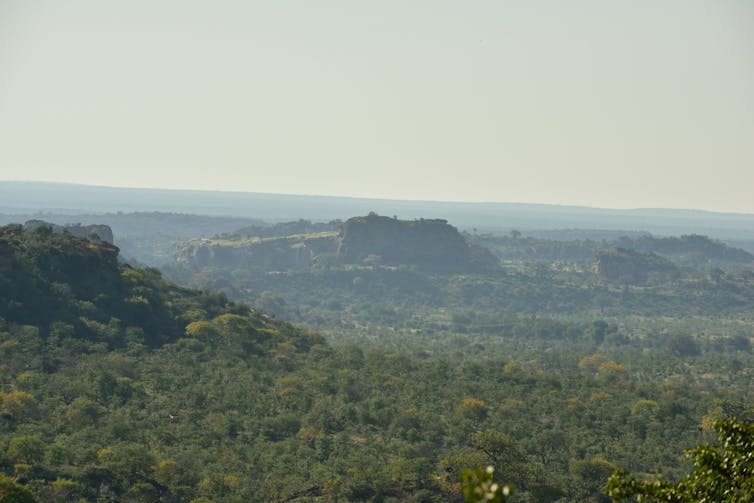
The Mapungubwe Cultural Landscape, a UNESCO World Heritage Site since 2003, is caught in this tension.
An area of about 28,000 hectares, it lies near the confluence of the Limpopo and Shashe rivers and is a meeting point of Botswana, Zimbabwe, and South Africa. It is a landscape characterised by three capital cities of archaeological significance (Shroda, Bambandyanalo, and Mapungubwe Hill) and their satellites.
Since its “rediscovery” on New Year’s Eve in 1932, the landscape has been extensively surveyed and excavated by archaeologists. The focus was particularly on the rich Iron Age of this region, between the 1200s and the 1400s. Through these efforts we have come to know of a complex society that had extensive networks which provided a significant source of wealth.
But the Mapungubwe Cultural Landscape is increasingly being threatened by mining activities. This was not unexpected, as there were two existing diamond mining operations and various coal mining applications when the landscape was listed for its international importance.
Challenges with mining in the area became particularly evident following the confrontation between the Save Mapungubwe Coalition and Coal of Africa, now MC Mining. The legal battle exposed the inefficiency of South Africa’s heritage laws, arising from severe fragmentation between different government departments. It also made felt the “absence” of the World Heritage Committee in the active management of a listed site and exposed the perpetuation of a warring “us and them” scenario with little middle ground or hope of lasting resolution.
It – and my own studies into mining in the area – showed me we need a new approach to the bigger problem.
Fragmented governance
National and international heritage laws played a secondary role in the approval of Coal of Africa’s application for the mining licence. The approving authority, the department of mineral resources, decided on the application seemingly without adequately considering the comments from the departments of environmental affairs, water affairs, and arts and culture.
This effectively meant more attention was paid to mineral resources than heritage value. It highlights the low value of heritage laws, national or international.
Years later, the revised buffer zone for Mapungubwe has still not been approved. The existing mining applications continue to be a threat to the Mapungubwe landscape, particularly in the absence of a framework within which they are to be reviewed and decided on.
A missing-in-action UNESCO
The UNESCO World Heritage Committee should have done more to protect the legitimacy of their decision to inscribe the Mapungubwe Cultural Landscape.
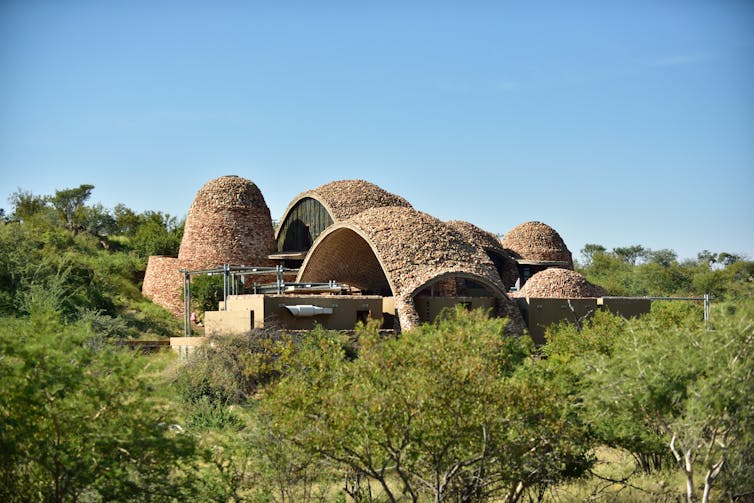
The international body should have ensured that the site’s buffer zone was approved as per recommendations from the International Council on Monuments and Sites. This was never done. The committee sent two missions to South Africa to help resolve the “conflict” arising from the licence being granted, but never took responsibility to ensure a fully operational buffer zone when inscribing the site.
Had they done what was recommended, legal wrangling over mining rights would have been avoided.
A problem with the laws
Another concern is that heritage in the Mapungubwe area has been used as a convenient weapon to fight any form of mining.
Coal of Africa’s licence was approved for activities located at a fair distance from the core of the site. In my view, the significance of the inscribed area was not directly affected.
But the structure that should have been a commenting authority in the mining application, the Limpopo Provincial Heritage Resources Authority, has been all but dysfunctional for many years. This has left a decision-making void. The national South African Heritage Resources Authority has stepped in and made decisions, but their legality is questionable.
The mining company had followed the requirements of the heritage laws by appointing an independent scholar to undertake an impact assessment. Wrangling among archaeologists led to a second report, increasing hostility.
Governments are generally mandated to create enabling opportunities for economic development to help address various social matters, paving the way for the “new”. Heritage managers are mostly interested in keeping the “old” in place.
An “us and them” syndrome fuels difficult relationships that generally exist between government, developers and heritage managers. This has, for many years, led to a rhetoric of “war”. Middle ground between the factions is rarely considered.
And when community interests are put in the picture, things become even muddier because they tend to be conveniently used by the “warring” parties. One side promises employment opportunities while the other seeks the assistance of communities in the protection of “their” heritage resources. With the high rate of unemployment, it is evident which side will be best positioned to win the argument.
A lasting solution
What these three issues around the Mapungubwe case illustrate is that it’s not as simple as just supporting mining or opposing mining. The reality is that not all heritage can be adequately safeguarded, as every part of the world has been an “active cinema” from which various human activities have been performed.
What South Africa needs is to have a sensitivity map for heritage covering the whole country. Such a map will highlight areas of high heritage sensitivity which should then be used to inform the nature of recommendations and decisions we take to protect our rich archaeological past.
Without a clear single framework within which decisions are made, the ongoing challenges with the management of heritage resources in the country will continue to exist and heritage resources will forever be threatened.

Ndukuyakhe Ndlovu receives funding from the National Research Foundation of South Africa and the University of Pretoria.
Source: The Conversation – Articles (AFRICA)
Read more on The Conversation.
Join the fun: Add Your event | Submit a Press Release | Add your listing.


