Nigeria recorded its first case of SARS-CoV-2 on 27 February 2020, and within five months at least one case had been reported in all states across the country.
By 11 March 2020, SARS-CoV-2 had infected over 100,000 people in at least 100 countries. The World Health Organisation consequently declared it a pandemic.
Building on the success of Nigeria’s response to Ebola, the Nigerian government immediately activated a national Incident Control Centre. This was to enable routine surveillance, diagnosis, and prompt reporting of COVID-19 cases. The Nigeria Centre for Disease Control swiftly identified and accredited 70 laboratories (now 85) in the country.
These were equipped with the skills, infrastructure and materials needed for molecular detection of SARS-CoV-2. Subsequently, real-time epidemiological information for routine surveillance of cases across the country was captured in an open source mobile health system. This Surveillance Outbreak Response Management and Analysis System helps to detect outbreaks early and manage them. When a health worker adds a suspected or confirmed case to the system, it automatically triggers a series of actions.
Even before COVID-19, however, Nigeria’s healthcare system was relatively weak, with many challenges. With the onset of the pandemic, resources became even more stretched. Testing capacity was limited, and a densely settled population with poor healthcare infrastructure made Nigeria a fertile ground for the spread of SARS-CoV-2.
Nigeria has a population of over 200 million people. Roughly 2.7% are aged 65 years or older and thus at risk of severe COVID-19. A significant proportion of the population has pre-existing underlying health conditions such as diabetes, high blood pressure, cardiovascular diseases and cancers. These diseases increase their risk for severe COVID-19. An estimated 83 million (40%) of Nigeria’s people live below the poverty line. Consequently, they face steep disadvantages in healthcare. Nigerians also face a high disease burden from other viral pathogens including Lassa fever, yellow fever and measles.
Nigeria is a centre of commerce and travel in Africa. We were concerned that undetected expansion of a more infectious, virulent, or immune-resistant variant of SARS-CoV-2 in the region could have major repercussions. It was also important to know more about the genetic makeup of the virus in Nigeria and whether it was changing.
We collected and analysed hundreds of samples from COVID-19 infected individuals in the southwestern region of the country between July 2020 and August 2021. We found the B.1.1.7 alpha “variant of concern” and the B.1.525 eta lineage were expanding in late 2020. The uncommon delta AY.36 lineage of concern followed, expanding by the summer of 2021. Eta and delta AY.36 were dominant in Nigeria but rare elsewhere. This suggests that distinct viral population dynamics were underlying the epidemic in West Africa.
The findings underline the importance of improving genomic surveillance efforts to better understand and monitor new variants as they arise in different parts of the world. This could prevent threats to vulnerable health systems and populations.
Variants in Nigeria
In the first year of the pandemic, Nigeria needed more consistent and higher volume collection of viral samples. Consequently, we set out to identify the circulating variants of SARS-CoV-2 in Nigeria and monitor them over time. We collected samples from the Biorepository and Clinical Virology Laboratory at the College of Medicine, University College Hospital in Ibadan. This laboratory receives samples primarily from Oyo State and other health facilities in the southwestern region of the country.
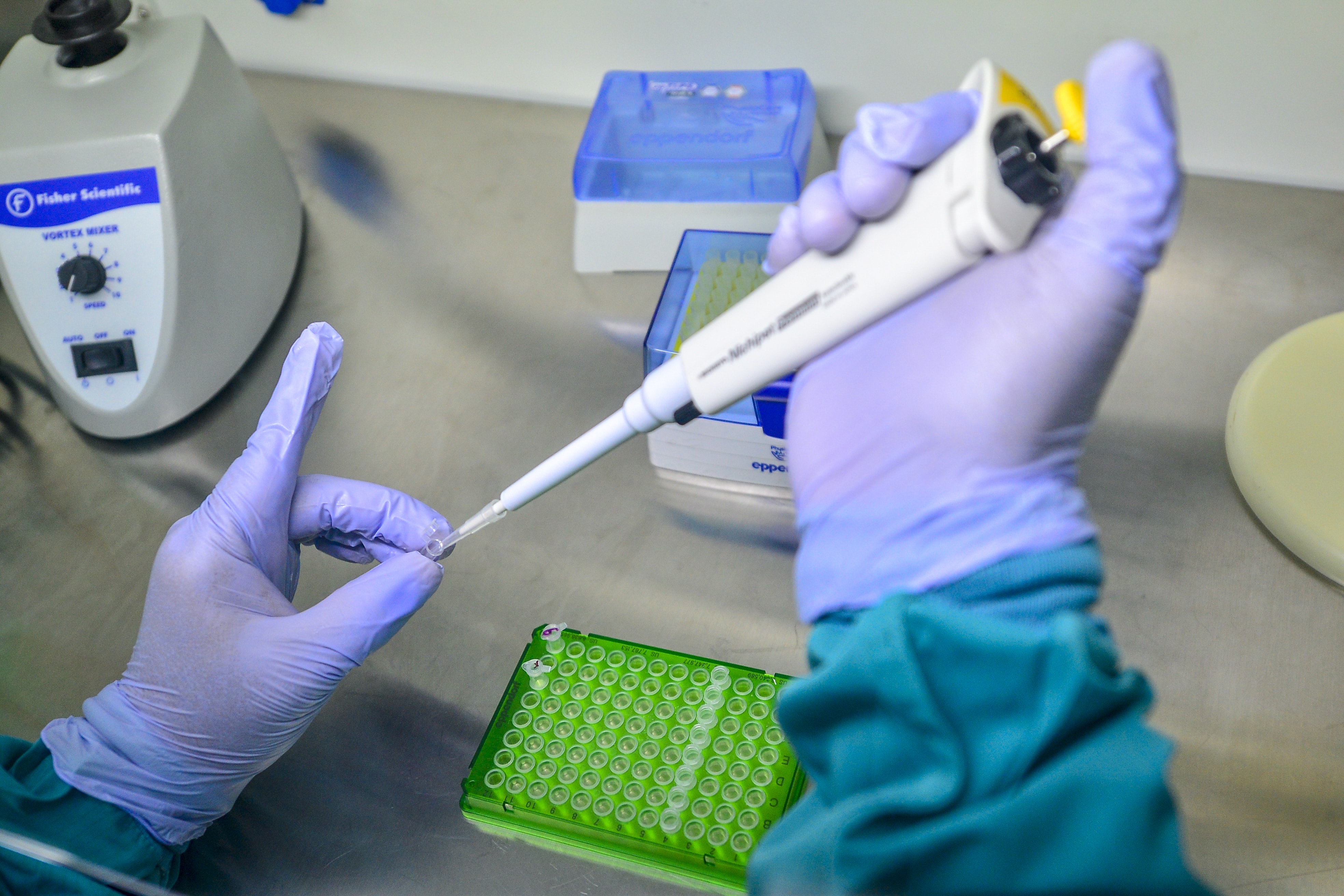
We extracted ribonucleic acid from the samples and chemically made many copies of the material at the Ibadan laboratory. This process is called quantitative polymerase chain reaction. It enables detection and quantification of the virus in infected individuals. Genomic sequencing and phylogenetic analysis were completed at the Northwestern University, Illinois, Chicago. Genomic sequencing allows scientists to classify a virus as a particular variant and determine its lineage.
Read more: Nigerian scientists have identified seven lineages of SARS-CoV-2: why it matters
We reported sequences from 378 SARS-CoV-2 isolates collected in Oyo State, Nigeria between July 2020 and August 2021. Before this, Nigeria had a total of only 856 sequences in the Global Initiative on Sharing Avian Influenza Data database. Our submissions thus increased reporting by nearly 50%.
Our results show that in early 2021, most isolates belonged to the B.1.1.7 alpha “variant of concern” or the B.1.525 eta lineage. Eta later outcompeted alpha in Nigeria and across West Africa, persisting in the region even after the expansion of an otherwise rare delta sub-lineage. Analysis suggests that eta originated in West Africa before spreading globally.
Further analysis suggests that eta could have have been considered a variant of concern in early 2021 had it not been overlooked due to under-sampling in the region. These gaps in surveillance mean there may be new variants popping up around the world, unseen. We should not be caught unprepared by a new variant with unique properties.
Our study confirmed the circulation and expansion of SARS-CoV-2 variants in the population. It also confirmed how a globally uncommon lineage, AY.36, became dominant in the region at some point. It thus emphasises the importance of surveillance and monitoring of SARS-CoV-2 infection to ensure early detection of new variants in Nigeria and the West Africa region.
Research capacity and collaboration
Our study confirms speculation that there was previously inadequate surveillance and under-reporting of cases of SARS-CoV-2 in Nigeria and in a number of other countries.
It also demonstrates the research capacities in Nigeria and the strength of research collaborations between institutions.


