The death rate for mothers having C-sections is 50 times higher in Africa:
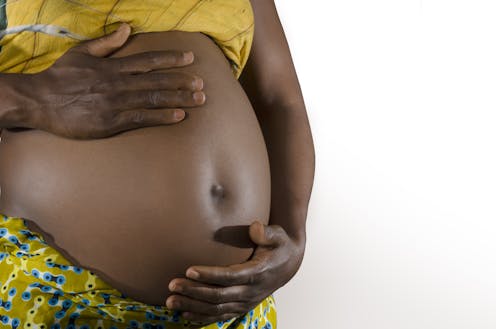
The in-hospital maternal mortality rate following a Caesarean delivery in Africa may be 50 times higher than in high-income countries. These were the findings of the African Surgical Outcomes Study that followed more than 3500 mothers from 22 African countries during a week of surgery in 2016.
The study found that maternal mortality rate was 5.43 per 1 000 operations, compared to 0.1 per 1000 operations in the UK. And one in six women developed complications following Caesarean delivery, which is nearly three times the rate in the US. Bleeding in the period shortly before, during, and immediately after giving birth, was the most common complication. And it had the highest attributable risk for maternal mortality.
Although the complication rate was three times that of a high-income country, mortality was 50 times that of a high-income country. This suggests that a lot more complications result in death in Africa. When a complication results in death, this is known as “failure to rescue”. Mothers in Africa appear to be particularly susceptible to it, when compared to high-income countries.
Unfortunately, it isn’t only the mothers who are suffering in Africa. The in-hospital mortality of babies after Caesarean delivery was double that of high-income countries. There were indicators that the risk of subsequent cerebral palsy or epilepsy for the babies who survived Caesarean delivery, are between two and 11 times higher in Africa when compared to a high-income country.
These findings tell a sad story of life in Africa. Many families are incomplete, as a result of either a mother or child who died in childbirth, and for those children who survive a Caesarean delivery, a number of them will have long-term morbidity.
So what can be done to improve this situation? Unfortunately, there will be no “quick-fix”, as this is a complex, multifactorial problem. It speaks to a number of problems that need to addressed in Africa, if we are to improve outcomes for mothers and their children.
Where the problems lie
The first problem is poor access to Caesarean deliveries. In Africa, the Caesarean section rate is too low. There is a minimum threshold of the number of Caesarean sections per population to ensure optimal obstetric care. Most countries in Africa don’t reach this threshold. The result is that many mothers who would benefit from Caesarean section don’t have this option.
Secondly, access to surgical care is limited. This is reflected in the observation that 3 out of 4 mothers presenting for Caesarean deliveries present as emergencies. This may partly reflect the limitations in the current antenatal services available.
The role of antenatal care is to monitor and identify both mothers and babies at risk. Early identification of those at risk could result in an elective Caesarean section in a more controlled environment. This, in turn, would lead to better outcomes for the mother and the baby.
But it appears that in the current antenatal environment in Africa a number of mothers at risk aren’t identified early enough in the community.
Another contributing factor is that there are limited skilled human resources to provide safe obstetric care in Africa. It’s generally accepted that to provide a safe Caesarean section, at least 20 specialists (obstetricians, surgeons and anaesthetists) are required per 100 000 population. In the African cohort it was found to be <1 specialist per 100 000 population.
This creates a stressful and dangerous working environment. The majority of mothers are sick and present as emergencies, yet there is insufficient skilled staff to deal with the workload.
Finally, it’s clear that mothers are dying predominantly secondary to bleeding around the time of delivery. This may be for many reasons; bleeding may not be identified early enough (both before and after surgery) due to limited human resources (resulting in “failure to rescue”). This could also be due to insufficient resources, such as limited drugs to stop bleeding or limited access to blood products.
Reason for hope
Is there reason for hope? I believe there is. The African Surgical Outcomes Study network, which produced the study, is a group of over 1000 clinician investigators who now span over 30 African countries. They are committed to improving surgical outcomes in Africa.
The group is looking towards large pragmatic trials of simple interventions designed to improve outcomes in resource constrained environments. To this end it will be running a large trial across the continent this year that will focus on identifying and managing high-risk patients in the perioperative period with the aim of preventing the progression of complications. The trial hopes to decrease “failure to rescue” in African surgical patients.
Next year, the group hopes to conduct another large trial across Africa which will aim to decrease maternal bleeding. The hope is that this will also help bring down the numbers of mothers dying at a result of childbirth.
The network aims to extend its footprint into the community to ensure that “at-risk” patients are identified early, and high-risk patients are followed adequately after surgery. Improving maternal and surgical outcomes in Africa certainly demands a large collaborative effort.

Bruce M Biccard received funding from Medical Research Council (MRC) South Africa for ASOS.
Source: The Conversation – Articles (AFRICA)
Read more on The Conversation.
Join the fun: Add Your event | Submit a Press Release | Add your listing.


