The kingdom of Lesotho has been marked by waves of political instability since independence from Britain in 1966. This has manifested in several forms – such as coups, mutinies, electoral disputes, forced exile of political opponents and assassinations. The most recent wave of instability, which necessitated the current long-running facilitation by the Southern African Development Community (SADC), was from 2014 to 2015.
Now the country is discussing wide-ranging constitutional reforms with the aim of achieving lasting peace and stability. The reforms are locally led by the National Reforms Authority – a statutory body comprising several stakeholders such as political parties, government, civil society and other formations.
The reform process dates back to 2012 but gained momentum in 2015 as a result of the strong recommendation of the SADC Commission of Inquiry into the assassination of the former army commander, Lieutenant General Maaparankoe Mahao. There are seven themes to the reform programme. They entail a review of the constitution, parliament, public service, justice, security, economic and media.
Read more: Lesotho’s new leader faces enormous hurdles ensuring peace and political stability
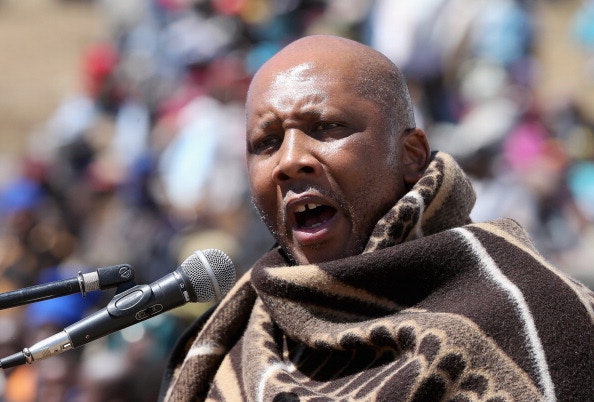
The reform process has once again raised the perennial question of the place of the monarch in the constitutional design. At present it’s mostly a ceremonial role. But recently there’s been a rise in popularity of traditional leadership, and the monarch in particular, amid growing frustration with the elected leadership.
The citizens’ voices on the reforms suggest that people want the monarch to have more power – including the control of the army. This is a change from earlier trends.
The reforms are a wholesale enterprise to review all the institutions in Lesotho, including the institution of the monarch. But, the extent to which the reforms can overhaul the entire design is a matter of intense discourse.
Traditional leadership
After independence from Britain in 1966, there was a steady decline in the power of traditional leadership in Lesotho. The powers of traditional leaders on key matters such as land allocation and dispensing of justice all dissipated.
The 1993 constitution took away the little powers that the king had in terms of the 1966 constitution. He is now expected to act “on the advice” of the prime minister, cabinet or Council of State. The real political power has drifted, almost entirely, to the cabinet and the prime minister in particular.
But not everyone wants the total abolition of traditional leadership in Lesotho. The resilience of the monarch is arguably based on two pillars. Firstly, the institution is still culturally embedded in the psyche of the society. Therefore, it still enjoys legitimacy. Secondly, the failure of democracy has led people to hope that other forms of government, like monarchism, can offer a better alternative.
Failed democracy
Lesotho’s constitutional democracy has not lived up to its lofty promises. Those who were chosen to represent the people have not performed any better than the pre-existing traditional institutions. The country’s grinding poverty and political instability continue.
Read more: South Africa’s efforts to stabilise Lesotho have failed. Less intervention may be more effective
Lesotho’s Auditor General always expresses disclaimer or adverse opinions on government’s annual financial statements because of embezzlement and misappropriation, among other causes. Access to public office has been a licence to loot state resources and torment political opponents.
When citizens have an opportunity to rank politicians in surveys, they show dissatisfaction.
The recent rise in the popularity of traditional leadership is not due to its achievements but to the failure of democratically elected leadership.
Power balance
In view of this resurgence in the popularity of the monarch, the powers of the monarch in the constitution may change somewhat. That is if the reforms are genuinely consultative.
There is not necessarily anything inherently wrong with giving power to the monarch in a system based on the constitutional monarchy. It may even enhance the constitution when power is balanced between the monarch and liberal politicians. That will build in checks and balances.
But restoring some powers to the monarch should be considered extremely carefully. A monarch with absolute powers is just as dangerous as self-serving politicians in a democracy.
Fortunately, the current constitutional reform process in Lesotho happens against the backdrop of pro-democracy demonstrations in eSwatini – the southern African region’s only absolute monarchy.
In eSwatini the king wields all the power and there is no political participation of other political groups. The king has monopolised the economy too.
The frustration with politicians among Basotho should not evoke the decision to discard democracy completely. Democracy – the ability to choose public representatives and hold them to account – is still an essential principle of constitutionalism. It should prevail over heredity.
Read more: Pasha 86: Why it’s wrong to be pessimistic about democracy in Africa
In a constitutional democracy, no single institution must wield untrammelled powers, even an elected one. The problem with Lesotho’s 1993 constitution is that it gives the prime minister near-absolute powers. The most brazen consequence has been the abuse of power to control the army. For years, politicians have used the army to stoke unrest and persecute opponents.
Time to talk about it
The conversation about the place of the king in Lesotho’s constitution is timely. The monarch’s lack of power has not worked for constitutional development in the country.
The monarchy is embedded in society but has no significant role. This is counter-intuitive and costly. Taxpayers foot a hefty bill for an institution that has no significant role in checking on the excesses of elected politicians.
The monarch must be given some powers, but not extreme powers. That would equally harm efforts to consolidate democracy. Reformers must strike a balance between the principle of democracy and the doctrine of checks and balances.


