‘The Night Trains’: a masterly study into southern Africa’s murderous migrant system:
It would be a truism to say that the functions of trains in modern history have been diverse and multifarious. Steam engines were drivers of the British industrial revolution, and the motors of internal westward expansion in North America. Railways were instruments of imperial expansion, as exemplified in Cecil Rhodes’ Cape-to-Cairo fantasy, and instruments of extermination, carrying Holocaust victims to their awful fate.
A railway map of South Africa reveals much about the course of the country’s economic history since the 1880s, with lines converging on the Rand, the industrial and mining metropolis. Meanwhile rural branch lines were constructed to serve the interests of white capitalist farmers, totally excluding the needs of black rural areas.
Trains can also be indicators of inequality. The Blue Train provides luxury travel for those who can afford it, while the Phelophepa Train – a mobile clinic – provides basic healthcare across the country for those who cannot afford it.
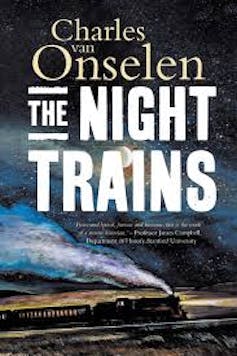
In his impressive The Night Trains: Moving Mozambican Miners to and from South Africa, 1902-1955, historian Charles van Onselen provides a grim account of trains as instruments of brutalisation and dehumanisation. He tells the story of the trains that transported migrant workers from Mozambique to the Rand mines and back during the first five or so decades of the twentieth century – journeys that Van Onselen describes as ‘mobile incarceration’.
It is a harrowing story, narrated with both compassion and elegance. The railway from Delagoa Bay to the Rand opened in 1895. Initially it was built for the purpose of transporting heavy equipment and other goods required for mining operations. After the South African War the British-controlled Transvaal administration came to an agreement with the Portuguese colonial government in Mozambique. Under it the recruiting agency, the Witwatersrand Native Labour Association, was granted exclusive access to black Mozambican labour. For their part the Portuguese were given a guaranteed share of rail traffic routed through Lourenço Marques.
It was a trade-off – rail traffic in exchange for human traffic. When the trains first started carrying Mozambican migrant workers they were still purposed only to carry freight. This meant that the migrants themselves were initially conveyed as such, treated no better than goods, or as animals transported in cattle trucks. In time some effort was made to view the migrants as human passengers. For example, third-class ‘native coaches’ were introduced. But as late as the 1920s the workers might still have to travel part of the journey in open coal trucks, even during the cold of winter.
The attainment of ‘passenger’ status by no means ended the degradation and dehumanisation that characterised the lengthy journey – the up-train to the Rand taking about 20 hours. The down-train took slightly fewer. The overcrowded carriages were locked to prevent migrants jumping off and deserting. There were minimal ablution facilities on the trains, an insufficient provision of water, and meagre food rations, often comprising little more than dry bread.
Such was the extent of the exploitation, and the extreme indignity accompanying it, that the migrants had to pay their own rail fares – a cost amounting to about 17 days of earnings on the mines. While the journey to and from the mines was arduous, the underground work itself was even more onerous and dangerous. Mine owners and managers had little regard for health and safety considerations. This gave rise to a high death rate from accidents, pneumonia, TB and silicosis.
Between 1902 and 1912 it was estimated that about 50,000 workers died from various causes associated with mine labour. Van Onselen succinctly summarises how the Mozambicans
were – at various points or times and with varying degrees of intensity and urgency – assaulted, corralled, disciplined, deprived, documented, examined, fed, fingerprinted, guided, incarcerated, marched, measured, marshalled, questioned, searched, raided and released by black and white men in uniform.
And, he continues, this whole degrading process was carried out in such a way that it was invisible to the white minority whose privilege and prosperity rested in part on the profitability and success of the mining industry. Workers were
recruited out of sight, delivered to the industrial centres invisibly, and then made to disappear into the darkness of the underground workings of the mines before being smuggled back home, also unseen, in the middle of the night.
This masterly study shows how the mining industry and the railway system combined to maximise the exploitation of cheap Mozambican migrant labour to ensure the profitability of the industry.
Up till the 1930s Mozambicans made up over half of the migrant labour force on the gold mines. A combination of rural poverty at home, a coercive labour recruiting system, and an obliging Portuguese colonial administration drove these migrants to South Africa’s mining metropolis, where they were treated merely as expendable units of labour and not as human beings. The degrading transport system that took these workers to this dangerous, life-threatening, underground toil was an essential component of this whole exploitative order that stands as yet another shameful element in South Africa’s past.
The Night Trains: Moving Mozambican Miners to and from South Africa, circa 1902-1955, by Charles van Onselen (Jonathan Ball, 2019) 247pp.

Paul Maylam does not work for, consult, own shares in or receive funding from any company or organization that would benefit from this article, and has disclosed no relevant affiliations beyond their academic appointment.
Source: The Conversation – Articles (AFRICA)
Read more on The Conversation.
Join the fun: Add Your event | Submit a Press Release | Add your listing.


