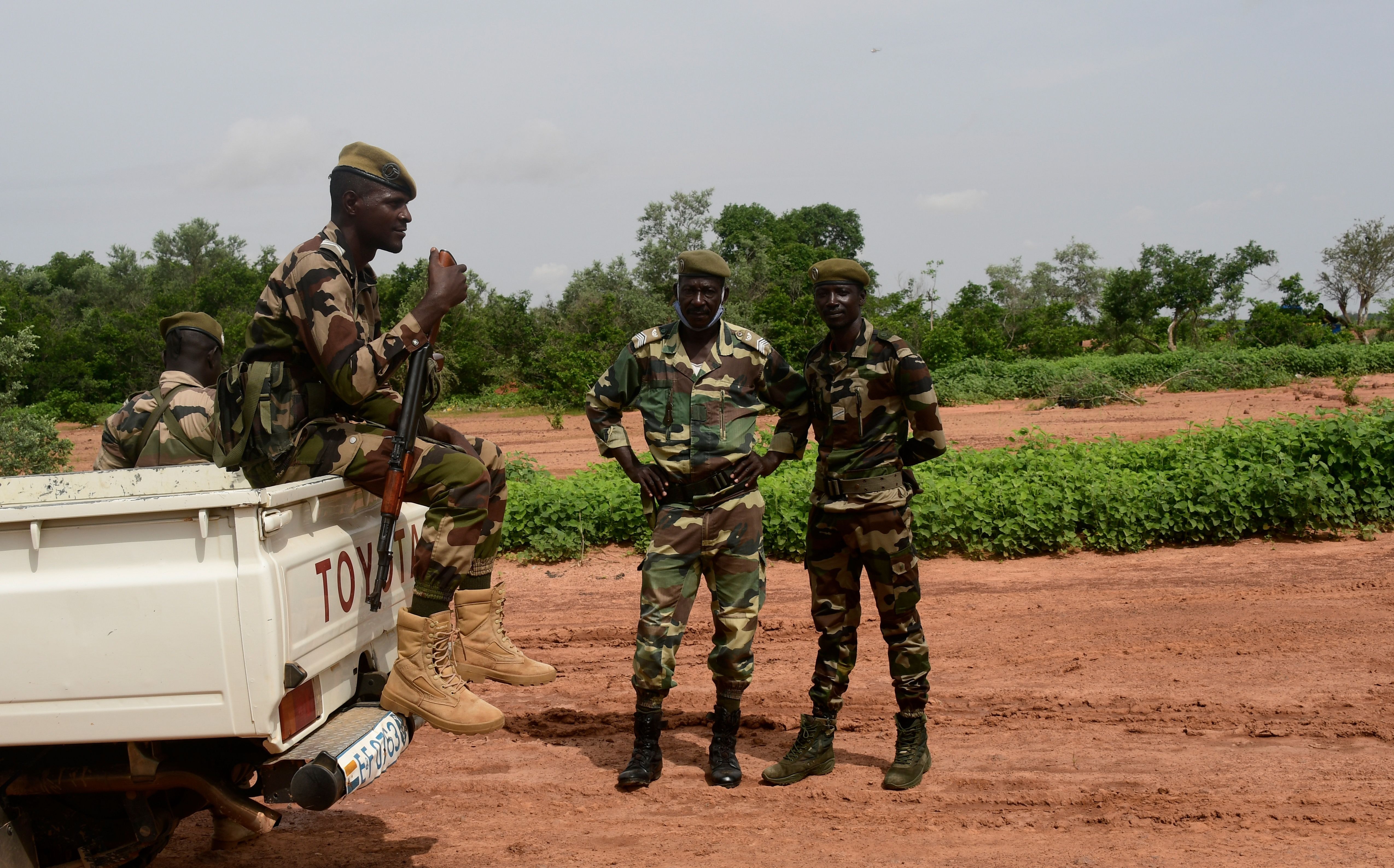
The Sahel region, a belt of largely semi-arid countries below the Sahara, continues to be confronted by jihadist insurgents with various affiliations.
“Jihadist insurgents”, broadly defined, rely on religious rhetoric for political mobilisation and use violence in pursuit of their goals.
Groups such as Boko Haram and the Islamic State West Africa Province have demonstrated their resilience in Nigeria and parts of Niger. Groups like Jama’at Nusrat al-Islam wal-Muslimin and Islamic State in the Greater Sahara continue to mobilise in Mali, Burkina Faso and Niger.
Such groups often receive international attention because of their violence. An estimated 500 civilians have been killed, allegedly by jihadists, in the Sahel in 2021. Recent examples include massacres in Niger and Burkina Faso.
But such violence obscures another dimension of these groups: they develop alternative forms of local governance in rural areas. And the way they govern varies, both among and within groups, even though they are affiliated with a broad Salafi-jihadist ideology.
There is only scattered academic research on this. Consequently, as part of a broader study on Mali, Burkina Faso, Niger and Nigeria, we reviewed existing research to explore how jihadists govern in the region. Also, why their governance differs.
We found that they do not follow strict ideological templates for imposing their rule. Nor do they rely only on the use of spectacular violence. They continuously adapt the manner in which they govern in response to internal factional dynamics and pressure from state and non-state actors. They also respond to local politics.
How jihadists govern
Jihadist insurgents, like other insurgents, govern through force. But this violence can vary in the degree to which it is selective or indiscriminate. Sub-groups of the Al Qa’ida-affiliated Jama’at Nasr al-Islam wal Muslimin have typically targeted non-collaborators, government authorities and international forces, primarily in Mali. The Islamic State in the Greater Sahara has, in contrast, attacked civilians indiscriminately.
Jihadist groups sometimes impose their interpretation of sharia (religious law) locally through harsh punishments. The same group can exercise restraint elsewhere to avoid alienating local communities. Their transnational ideological commitments may be incongruous with local norms and the interests of existing power brokers.
Local elites such as religious leaders and village chiefs can play an important role in determining how jihadist groups exercise authority. For example, the Ansar Dine group in the Kidal area of Mali retained local sharia judges (qadis) who constrained the group’s harsh implementation of sharia.
Scholars have highlighted how rebel governors sometimes develop elaborate bureaucracies, but jihadist insurgents in the Sahel appear to have developed more fluid, less formal local institutions, to maintain social control over local populations.
Groups like the Katiba Macina and Islamic State in the Greater Sahara developed mobile courts to provide local justice where they could not establish a permanent presence. Some groups have gathered zakat (Islamic tax) from local people. But, from the little research that exists, the public services provided by jihadists in return appear quite limited.
While these groups may espouse regional or global goals, they tend to position their governance projects within existing conflicts and cleavages. Jihadists seek to gain a grip over local communities by allying with certain groups in existing conflicts. For example, some have sought to recruit Fulani herders by promising access to resources like pasture. They have also intervened to adjudicate conflicts. This, in a bid to provide a more efficient type of justice than the state does.
Explaining different styles
One factor in explaining why groups differ in governance style is the role of the state and non-state actors like militias, self-defence groups and rivals for control. For example, counter-insurgent operations can constrain jihadists from building institutions, confining them to a more shadowy style of governance. Also, rival jihadist groups may adapt their governance styles to outbid each other to maintain support from communities.
Another explanation is organisational structure. Jihadist groups differ in terms of their cohesiveness and degree of centralisation. Factional dynamics can lead to differences in governance. The leadership may not always be able to discipline sub-commanders to ensure that their vision is carried out locally.
Differences in ideological commitment can provide clues about what to expect from jihadist governance. But there are no ready-made blueprints for “true” Islamic governance. Commanders and group members interpret ideology and are themselves influenced by local traditions and demands.
Lastly, local politics and conflicts strongly influence jihadist governance. Exploiting social divides and grievances can enable a group to impose new systems without relying solely on violence. The group’s existing social relations with locals, such as ethnic affinity, clan or tribal connections, influence what they can do. Local actors can also mount organised collective resistance which challenges jihadist governance projects.
Global labels, localised governance
These preliminary findings hold important lessons for policymakers. The label of Salafi jihadism won’t tell us how a group will govern. Rather, they must be studied as complex political organisations emerging from local socio-political and economic contexts. Jihadists’ support often comes from aggrieved groups seeing an opportunity for advancement. Their local momentum is not only a question of religious appeal.
Resolving jihadist conflicts in the Sahel will require an approach which treats them not only as terrorists or criminals, but also as political actors who seek to provide an alternative form of governance.


