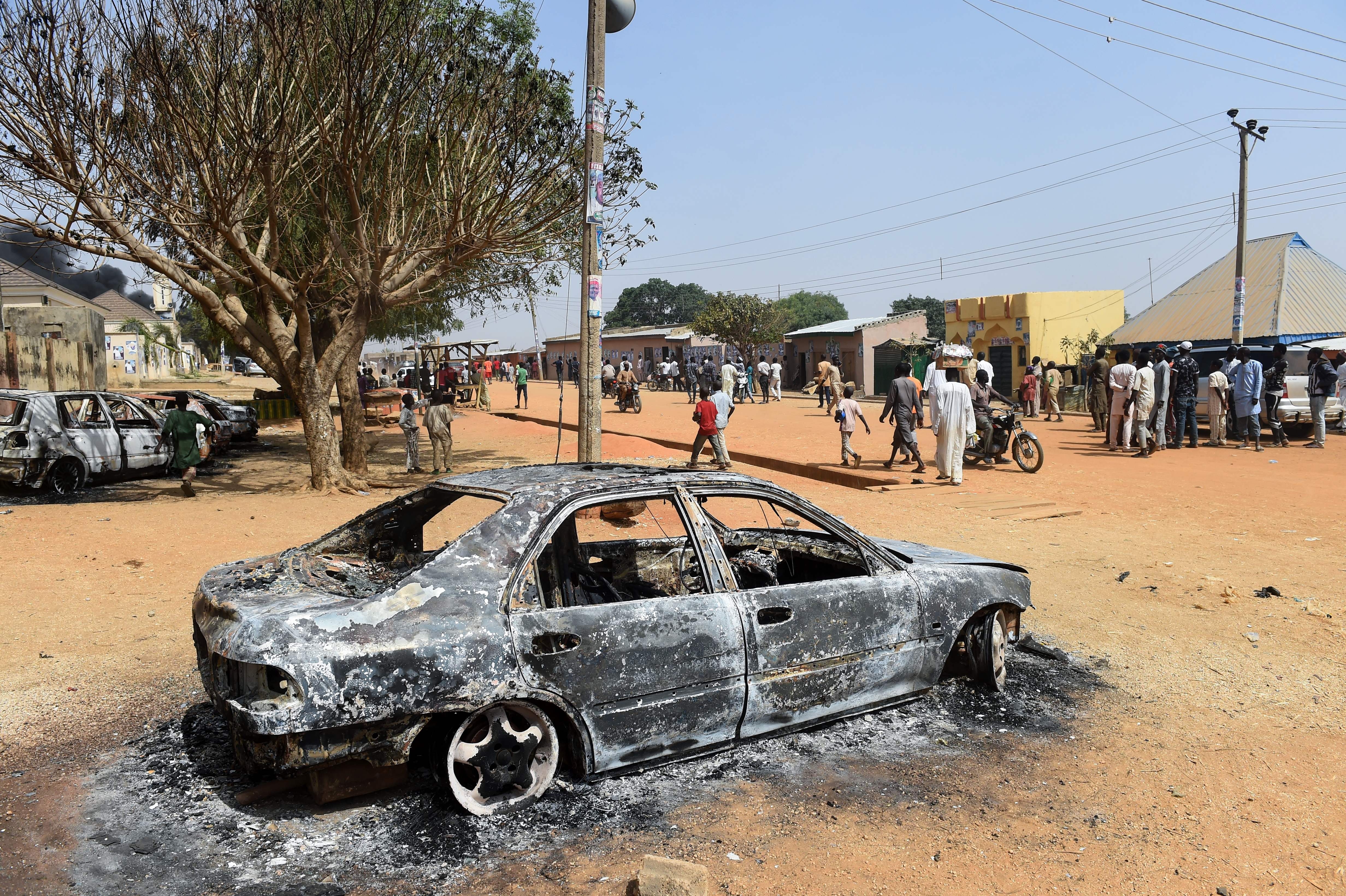
Violence is one of the recurrent features of Nigeria’s electoral history and democratic journey since independence in 1960. The country invariably sees an escalation of violence in the period before, during and after elections.
The country’s electoral body, the Independent National Electoral Commission, has already begun to raise the alarm ahead of a poll scheduled for February and March 2023.
The reasons for the violence vary. It can be designed to minimise or neutralise opponents. Also, it is sometimes used to undermine opponent ability to mobilise supporters and perform at the poll, and spoil victory or protest losses.
Another motive is to manipulate or delegitimise the electoral process. The tactics include armed attack, armed robbery, assault, assassination, kidnappings and bombing.
In our study, we looked into trends of violence across different phases of the 2019 general elections. Our analysis showed that the pre-election period was generally more violent and deadly, although election days could be violent too.
We also looked at violence during the inter-election period between federal and state polls in a general election. Federal elections are due on 25 February 2023 and the state elections are scheduled for 11 March 2023.
This period is often violent because it offers the winning and the losing parties in federal elections the chance to settle scores with state elections. In 2019, 9.8% of the total incidents of electoral violence and 8.2% of the fatalities were in the inter-election period. State elections were also more violent and deadly than the federal elections.
We also identified where violence was concentrated. It was deadliest in the South-South. The nine most violent states were Rivers, Akwa Ibom, Delta, Benue, Bayelsa, Lagos, Kogi, Ogun and Kano. Rivers, Taraba, Delta and Abia states had the highest record of fatalities.
Our insights are relevant to guide those attempting to ensure a peaceful election in Nigeria. Prominent persons, nongovernmental organisations, government agencies, media and international actors should all be involved in promoting dialogue and public education that will bring down tension in notable hot spots.
For their part, security agencies should watch out for notable hot spots and devise strategies to prevent or deter any threats.
What’s driving the violence
First, politics is the most profitable sector in Nigeria. And the stakes are extremely high.
Holding a position in government holds the key to power, which in turn provides access to the country’s wealth. Winners gain all, and losers are sometimes left with nothing, including their followers, investment and integrity.
The result is that political actors often prepare strategies to achieve their objectives that can include violence.
Second, Nigeria’s state institutions are weak.
Those involved in electoral governance are vulnerable to coercion or manipulation. On numerous occasions in past elections, there have been allegations of infractions committed by officials of the electoral body or security agencies in favour of one party or another. This, in turn, has led to some political actors enlisting the support of armed non-state groups. These groups sometimes operate in conflict with state institutions and sometimes compete with them. In some instances, there is co-operation.
A third factor is that many Nigerians are frustrated by the economic, social and political situation in the country. People are frustrated by poverty, inequality, perceived injustice, illiteracy, youth unemployment, hunger, corruption, human rights abuse and insecurity.
Added to this is the lack of sensitivity and inadequate responses of the government.
This is a major reason behind the increase in civil and militant protests and criminal violence in Nigeria.
Fourth are the triggers such as insensitive or irresponsible speeches and actions by political actors. Hate speech, fake news and media reporting can also trigger violence.
Who is involved?
Politicians and their paid agents are known to have been involved in violence against opponents and their supporters. This is sometimes done directly, with mobilisation of thugs, or indirectly through hate speech and incitement of violence, against targeted opponents.
There have also been reported cases of state violence. This has happened when there has been the overt use of state security forces, the police and military personnel. For example, there were allegations of this in River State during 2019 election and Ekiti State in 2018. These are just two among many.
Sometimes the security forces involvement is covert. There have been allegations of secret missions of the security forces for the ruling parties in opposition strongholds. For instance, it was alleged that military personnel without means of identification invaded opposition stronghold in Edo State during the 2015 elections.
Armed non-state groups, including insurgents, terrorists, bandits, political thugs, cultists, saboteurs and syndicates also get involved. As recently as May 2022, bandits were reported to have killed three party delegates in Niger State.
What can be done
All actors in the electoral processes need to work together to ensure that elections are peaceful. This will require effort from state and non-state actors, as well as external partners.
The federal government of Nigeria has the biggest responsibility. It must pay attention to what’s causing the violence and the kind of violence being perpetrated. There is no “one size fits all” solution, and responses will require a combination of political and policing measures.
More effort is also needed to build the capacity of relevant institutions. Two key ones stand out: the electoral and security agencies.
Nigeria’s electoral body is a critical actor in mitigating electoral violence. The regulation of party activities and conduct of elections should be consistent with the country’s laws and directives. And its actions should be transparent. This will strengthen stakeholders’ confidence in the institution and process of the elections.
Election security should be demilitarised. While policing can feature the armed forces in supporting roles, it is important to balance their role during elections with rule of law and respect for human rights. Suspects should be arrested, prosecuted and served justice (devoid of political influence) after a fair hearing.
Nigeria has relevant laws to curb electoral violence. The implementation and enforcement of these laws should be a priority.
The commission should also promote public education using both traditional and new media-based advocacy.
Political parties, civil society groups and media also play important roles in influencing public opinion and mobilising people. Political parties should check, and when necessary condemn and sanction their members and followers engaged in electoral violence. Civil society groups should demand greater accountability and transparency of the election process as well educate and mobilise the public.
The media, especially traditional outlets, have the responsibility to provide accurate and balance news.
Lastly, the assistance of advanced democracies should be sought to strengthen government agencies, non-governmental organisations the security agencies and the media.


