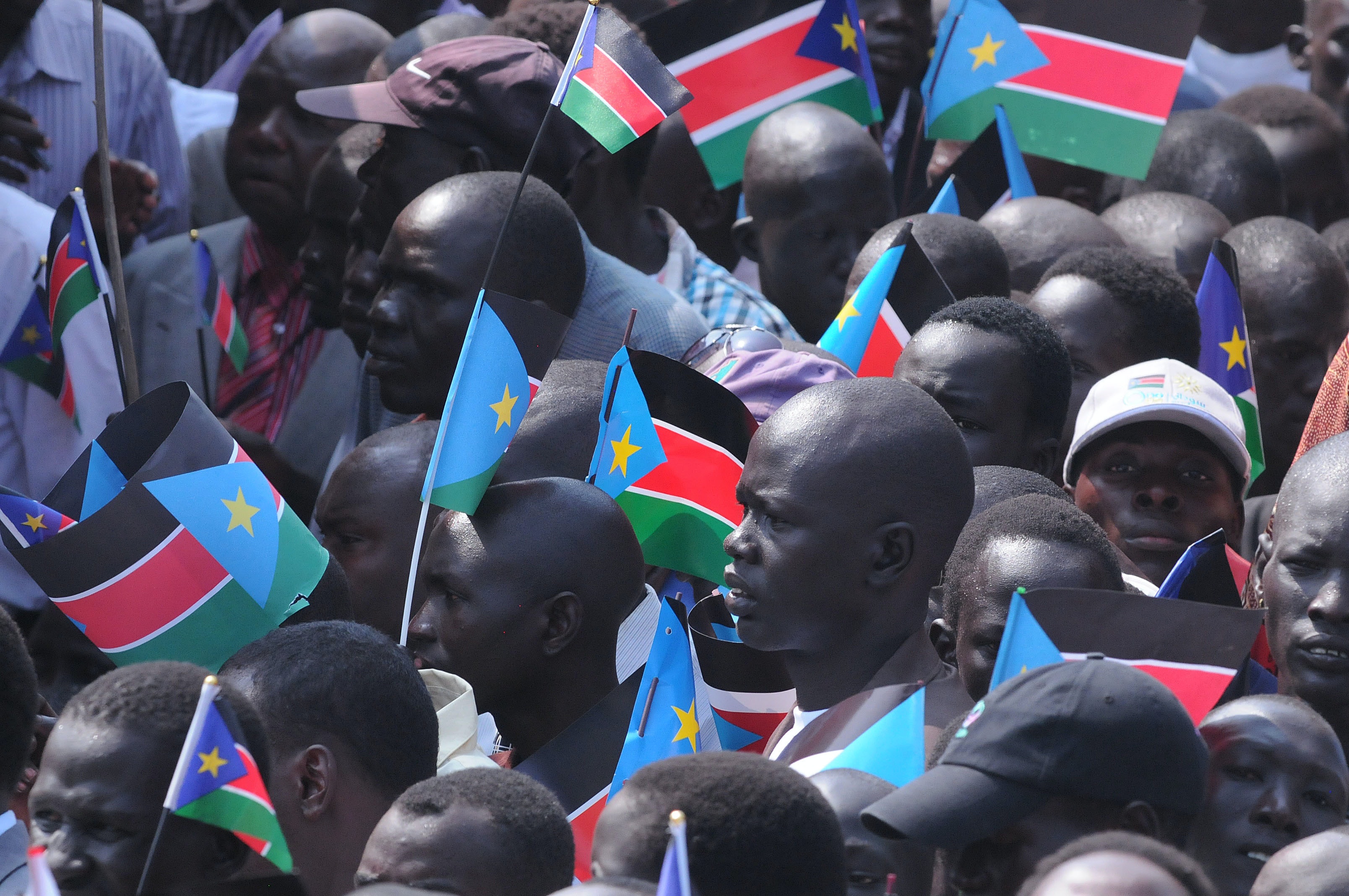
South Sudan’s nation building never really started. Two years into its hard-won independence, a civil war broke out in December 2013. This robbed the country of an opportunity to lay down its foundations.
The country’s first elections were scheduled to be held in 2015 but the war prevented this. A peace deal was struck in 2015, but it collapsed in 2016. So, no elections have been held since independence.
A roadmap for peace and national reconciliation was signed in 2018 between the country’s warring protagonists. This raised hopes that South Sudan would achieve peace and stability and hold its first democratic elections. But implementing the agreement has been painfully slow. Since 2018, little has been achieved on critical aspects and it may have to be extended.
Had the timelines provided under the agreement been met, the following would have been achieved by now:
- adoption of a new constitution
- registration of political parties
- reform of security and legal institutions, including establishing a Constitutional Court
- establishment of transitional justice mechanisms
- unification of armed forces.
Despite South Sudan’s chequered history of peacemaking, there’s still room for hope. I studied the country’s search for a new constitution and found that legislative and institutional reforms can strengthen constitutionalism, rule of law and human rights in South Sudan.
Local peace initiatives
There are three reasons to hope that South Sudan will find peace, creating the breathing space the country needs to build a nation and grow its economy.
The first has to do with emerging local peace initiatives in which communities convene to resolve disputes. In addition to these is the national dialogue initiative where communities freely talk to each other and propose solutions to their problems. Both these local initiatives are driven by respected local leaders, faith-based organisations and civil society with little or no role for political elites.
Evidence abounds that grassroots initiatives like these are the foundation of lasting peace and security. In South Sudan, such grassroots reconciliation initiatives are known as “Wunlit people-to-people” – named for the famous location of a peace deal between Nuer and Dinka people in 1991. They are usually led by traditional leaders, sometimes with faith-based organisations.
Their success stands in contrast to the elite-led peace conferences which have failed to end violence in Tonj, the Twic–Abyei communal violence and elsewhere in Jonglei State. Violence in the Tonj, Twic and Abyei areas is between communities of the Jieeng (Dinka) ethnic group who have no history of fighting each other. The Jonglei violence is between Jieeng and Murle ethnic groups who have an intractable history of violence between them.
Local peacebuilding processes and institutions which are championed by local community structures and non-partisan organisations represent hope for South Sudan to heal and reconcile its divided communities and to build back better and from the bottom up. It is to their credit that they have continued to work despite insurmountable challenges of insecurity and breakdown of the rule of law.
Read more: Kiir and Machar: insights into South Sudan’s strongmen
Reforms to build on
My second reason for hope is that there have been some gains in the institutional and legislative reforms being undertaken in terms of the sluggish peace agreement. The country can build on these.
These gains include the fact that the national unity government has managed to review relevant national security laws. Others are:
- incorporation of the peace agreement into the constitution
- reconstitution of the transitional national legislature
- drafting of the constitution-making process bill
- reunification of the security command structure
- adoption of a public financial reform strategy.
These reforms represent progress. South Sudan and its partners should build upon them to accelerate democratic consolidation and build durable peace. For instance, the reconstitution of the national legislature (Transitional National Legislative Assembly and the Council of States) is an important milestone in establishing oversight public institutions.
The legislature has thus far passed critical laws such as the Political Parties Act and other laws. It will soon pass the Constitution-Making Process Bill to pave the way for the establishment of institutions of constitution-making in South Sudan.
Read more: What stands in the way of a new South Sudan post-conflict constitution
National dialogue
The third source of hope for South Sudan relates to the National Dialogue Initiative forums to document citizens’ aspirations. These were launched by President Salva Kiir Mayardit in recognition of the inadequacies of the peace agreement the government signed with belligerents. While the citizens’ recommendations are yet to be implemented, the mechanism remains a model for keeping the country together through dialogue and engagement.
Furthermore, the national dialogue defines the country’s prioritises for nation building. These include fixing security, peacebuilding, economy and governance issues.
Read more: South Sudan’s constitution-making process is on shaky ground: how to firm it up
Light at the end of the tunnel
South Sudanese and the international community are losing hope due to endless conflicts, humanitarian crises and governance challenges. There is, however, light at the end of the tunnel. This calls for scaling up citizen dialogue and involvement, local peace-building processes and relentlessly pursuing necessary reforms.
It also calls for building on the gains already made and embracing a multiplicity of ideas that work – even those outside the peace agreement.


