Tough choices about who gets ICU access: the ethical principles guiding South Africa:
Just weeks after confirming the first case of COVID-19 in South Africa, the government ordered a lockdown in an attempt to flatten the curve of infections. One of the reasons was to avoid overwhelming the healthcare system.
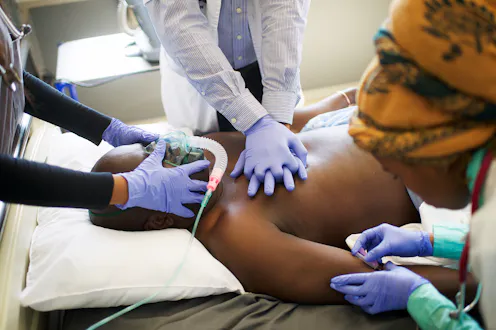
For a population of around 59 million, the country has limited intensive care unit beds and ventilators. And supplies of personal protective equipment for health workers are sub-optimal. These are some of the resources needed most in this epidemic, given the lack of specific treatment. Ventilation will only be needed for the most seriously ill patients – approximately 5% of proven coronavirus infections. However, the number of such patients may exceed the number of ventilators in South Africa.
Resource constraints are not new to the South African healthcare system. Every day, healthcare professionals make difficult decisions about rationing access to intensive care beds, dialysis machines, organ transplants and other specialised services. Such decisions are supported by the limitation clause in the bill of rights of the South African constitution. This makes provision for healthcare access when resources are limited.
The principle of distributive justice – the fair distribution of limited resources – has always been central to healthcare decision making in the public sector. It will, however, be stretched to its limits if the outbreak in South Africa mimics that in other settings. Even the most resilient healthcare workers will need to make soul-wrenching decisions based on a number of carefully thought out criteria. These include severity of illness, age, other health conditions, frailty and quality of life after intensive care treatment.
Access criteria
In developing criteria for admission to intensive care units during humanitarian emergencies, healthcare professionals are guided by broad ethical principles developed by bioethicists and physicians globally. The overarching aim is usually to save as many lives as possible while also saving more years of life after treatment. Such an approach will favour the young and healthy, but this must be balanced with many other factors.
Assessing medical suitability for ventilation is always necessary. It takes into account the severity of COVID-19, co-morbidities or underlying conditions and failure of other organ systems. Each patient will need a careful assessment based on clinical condition, medical history (diabetes, hypertension, cardiac disease, chronic lung disease) and prognosis. In South Africa, HIV infection would also be a co-morbidity. Those with AIDS-defining illnesses or uncontrolled disease with a poor prognosis are more likely to score lower on medical grounds in admission policy frameworks.
If several patients of similar age, disease severity, medical history and prognosis had the same chance of being admitted to an intensive care unit for ventilation, how would doctors choose among them? Would anyone be prioritised for ventilation?
The most likely group according to ethical principles would be frontline healthcare workers who are actively involved in the COVID-19 response and become seriously ill with the disease. This is because they have placed themselves at risk to treat others and society would have a reciprocal obligation to save them. These are also highly skilled professionals who would continue to save many more lives.
Some authors have suggested a “first come, first served” approach to choose between people with the same medical status. But as a first round of triage when choosing among the general population in epidemics, that approach will not work. The patients who arrive first at a hospital may not require intensive care or they may not benefit the most from such care. Social factors also influence who will arrive at a hospital first.
Using a lottery system of random allocation is not generally supported either, unless one is choosing among equals, when all patients have the same chance of being chosen and beds or ventilators are limited.
Apart from choosing the patients most likely to benefit from ventilation, it would also be necessary to be able to predict how long a patient would require ventilation. From experiences in other countries, it is becoming apparent that some patients may need to remain on ventilators for one or two weeks. In some cases, this can be longer.
If a patient occupies a bed and ventilator for too long and is not improving, others with a better prognosis may not get a chance at survival. Such situations may call for withdrawal of patients from ventilators, after careful consideration, to give others with a better prognosis a chance. As a result, families and patients admitted to intensive care units must be clearly informed that a trial of ventilation is offered. The patient will be reviewed on a regular basis and could be withdrawn.
Some decisions will depend on whether patients wish to have life support via artificial means such as ventilators. It’s important to ensure that the patient’s wishes are known in advance, for example through living wills.
Planning ahead
Having a national prioritisation plan in place is critical during a pandemic for a number of reasons. First, it’s important to ensure fairness in how limited beds and ventilators are allocated. Second, it’s necessary for the smooth functioning of busy environments in crisis situations to ensure the best medical care for all.
South Africa is still awaiting a national directive from the health department so that all intensive care units (private and public) have uniform admission criteria. Once criteria are agreed upon, communication to the public is important. Transparency and governance are necessary to build and maintain public trust. Resource allocation decisions such as these are difficult for all healthcare professionals and are never made lightly. Everyone needs to accept that not all people with COVID-19 will be able to access ventilators should the outbreak worsen substantially.

Keymanthri Moodley receives funding from the National Institutes of Health (USA).
Source: The Conversation – Articles (AFRICA)
Read more on The Conversation.
Join the fun: Add Your event | Submit a Press Release | Add your listing.


