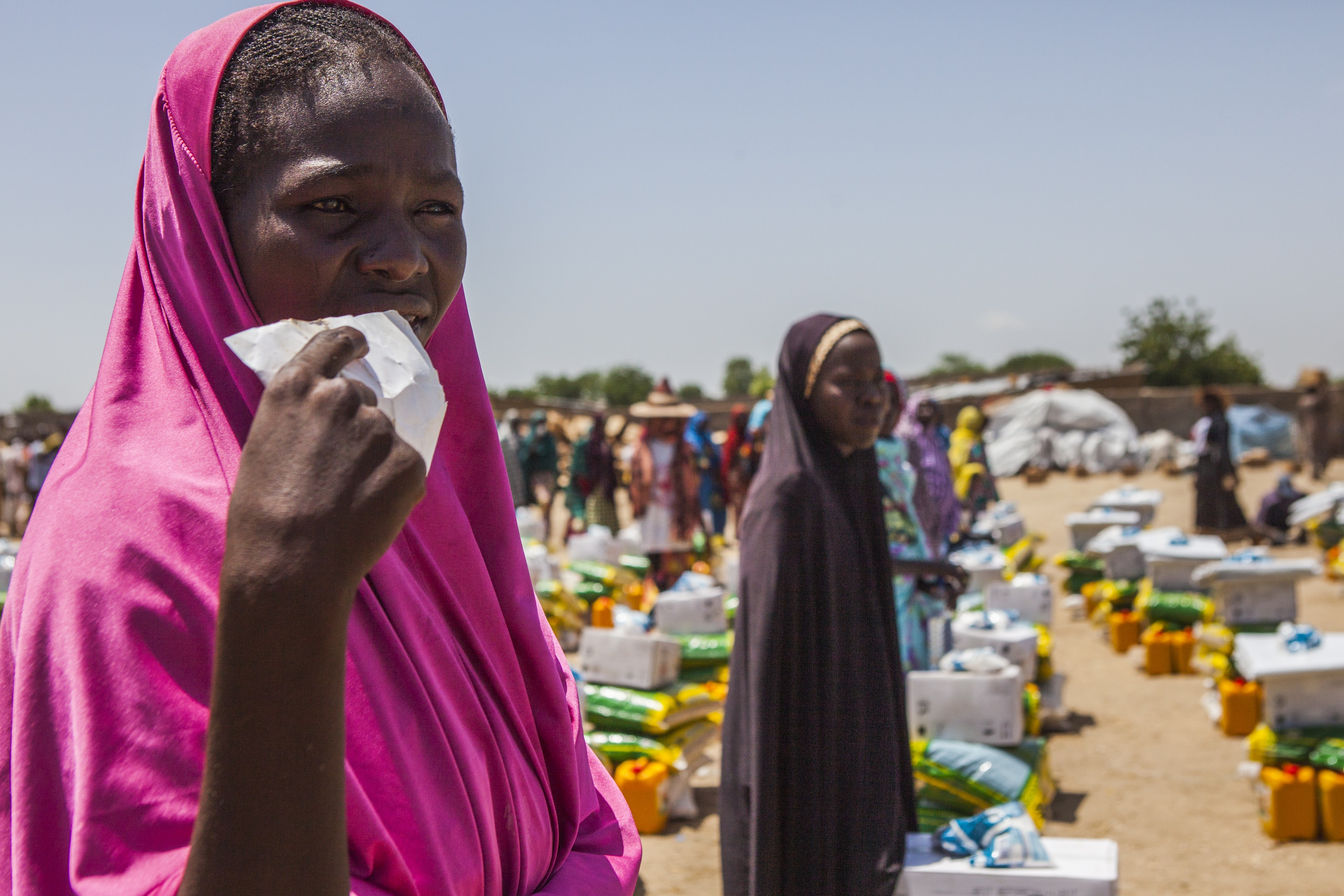
There have been multiple instances of sexual violence against women and girls in the Lake Chad region since terrorism activity started in the area in 2009. The region includes Nigeria, Chad, Niger and Cameroon.
Acts of sexual violence have been carried out by government security forces, aid workers and members of the local population. Amnesty International has called the situation in north-eastern Nigeria, which is near Lake Chad, a “rape epidemic”.
In a recent paper we explored the factors behind conflict-related sexual violence. Our focus was on on terrorism-affected north- eastern Nigeria. We argued that terrorism creates poor economic conditions that, in turn, worsen the unequal power relations between women and girls, on the one hand, and security forces and aid workers on the other.
These power relations are affected by the fact that, in particular, women are unable to earn a living from subsistence farming. This makes them dependent on aid. As our research found, this dependence intensifies their vulnerability to sexual violation by security force personnel and aid workers who may exploit their positions of relative power.
Our research also showed that the dire economic conditions in the region meant that women and girls were compelled to engage in transactional sex in exchange for money, food, shelter, protection and marriage. This added to their vulnerability to sexual violence.
In addition, we argue that the lax government response to the rise of conflict-related sexual violence has contributed to its growth. State security agents and humanitarian aid workers play a significant role in the perpetuation of conflict-related sexual violence. The government’s docile responses enable and reinforce the continuation of this violence.
Our research highlights the importance of effective management of the camps for internally displaced people, and of prosecution, in preventing offences.
Terrorism and loss of livelihood
Terrorist attacks by Boko Haram and the Islamic State of West African Province have destroyed commercial agriculture business in the Lake Chad region. The attacks have forced millions from their homes, destroying their means of subsistence.
The result is that material inequality and poverty have worsened in the Lake Chad region.
The impact on women has been particularly acute because agriculture is the only means of support for most. Women in northeastern Nigeria cultivate crops like peanuts, beans, groundnuts, maize and rice.
In our paper we explored the implications. We found that, due to the loss of subsistence and forced displacement, women and girls were being forced to engage in transactional sex to get by. This made them more vulnerable to sexual violence perpetrated by security personnel and aid workers.
We found, for example, that aid workers used their position to coerce vulnerable women and girls into sex relations in exchange for food and other supplies. We also found cases where aid workers deliberately withheld supplies to force starving women and girls to sell their bodies in exchange for food and other necessities.
Lastly, we found that women and girls in internally displaced persons’ camps often had to engage in transactional sex with government security agents to feel safe. Some of the interviewees brought up instances where girls and women traded their bodies for safety. State security actors exploited their vulnerability to make sexual demands.
Even though these women and girls were promised money, food, shelter, protection, and marriage in exchange for sex, some were raped over and over again and abandoned.
The Nigerian state’s inaction
Our findings show that the Nigerian state covertly tolerates sexual violence and exploitation committed by state security actors. Nigeria’s government has denied allegations that its security forces engage in sexual violence. Most of the time, the government’s initial reaction is rejection.
These rebuttals suggest that the government is placing a premium on maintaining established institutions, guarding the credibility of its police and military, and preserving their reputations at home and abroad.
It is true that the Nigerian government and security agencies don’t condone sexual violence during anti-terrorist operations. Nevertheless, their inaction suggests that sexual violence is accepted and tolerated. We conclude that this means that sexual violence is enabled and reinforced by government inaction.
Implications
Women and girls are affected in many ways by sexual violence. They suffer social, cultural, psychological and physical consequences. They experience social isolation and harm to their mental health as well as trauma.
The Nigerian government’s apathy towards addressing the rise of sexual violence in its counter-terrorism operations and the various internally displaced persons camps has led to negative unintended consequences for its counter-terrorism initiatives. For example, local communities don’t wish to co-operate with the security agencies.
In addition, human rights violations by security forces during anti-terror operations have hurt Nigeria’s image abroad. One consequence is that the west has been reluctant to give the country weapons to stop terrorist groups.
Way forward
Nigeria adopted a UN National Action Plan in response to the UN Security Council Resolution 1325. This required parties in a conflict to prevent violations of women’s rights, to support their participation in peace negotiations and in post-conflict reconstruction, and to protect women and girls from wartime sexual violence.
But the Nigerian government has not actively enforced the plan. This is particularly true in cases where state actors are the perpetrators.
Nigerian security institutions and humanitarian organisations need to recognise sexual violence exploitation. And they need to take action to enforce the country’s official ban on sexual violence by ensuring that perpetrators are prosecuted.
Food and other necessities must be provided in sufficient quantities if the government is to make a dent in the socioeconomic status of women and girls in the northeast. If it wants to keep tabs on how these food supplies are distributed, it needs to team up with reputable non-governmental organisations.


