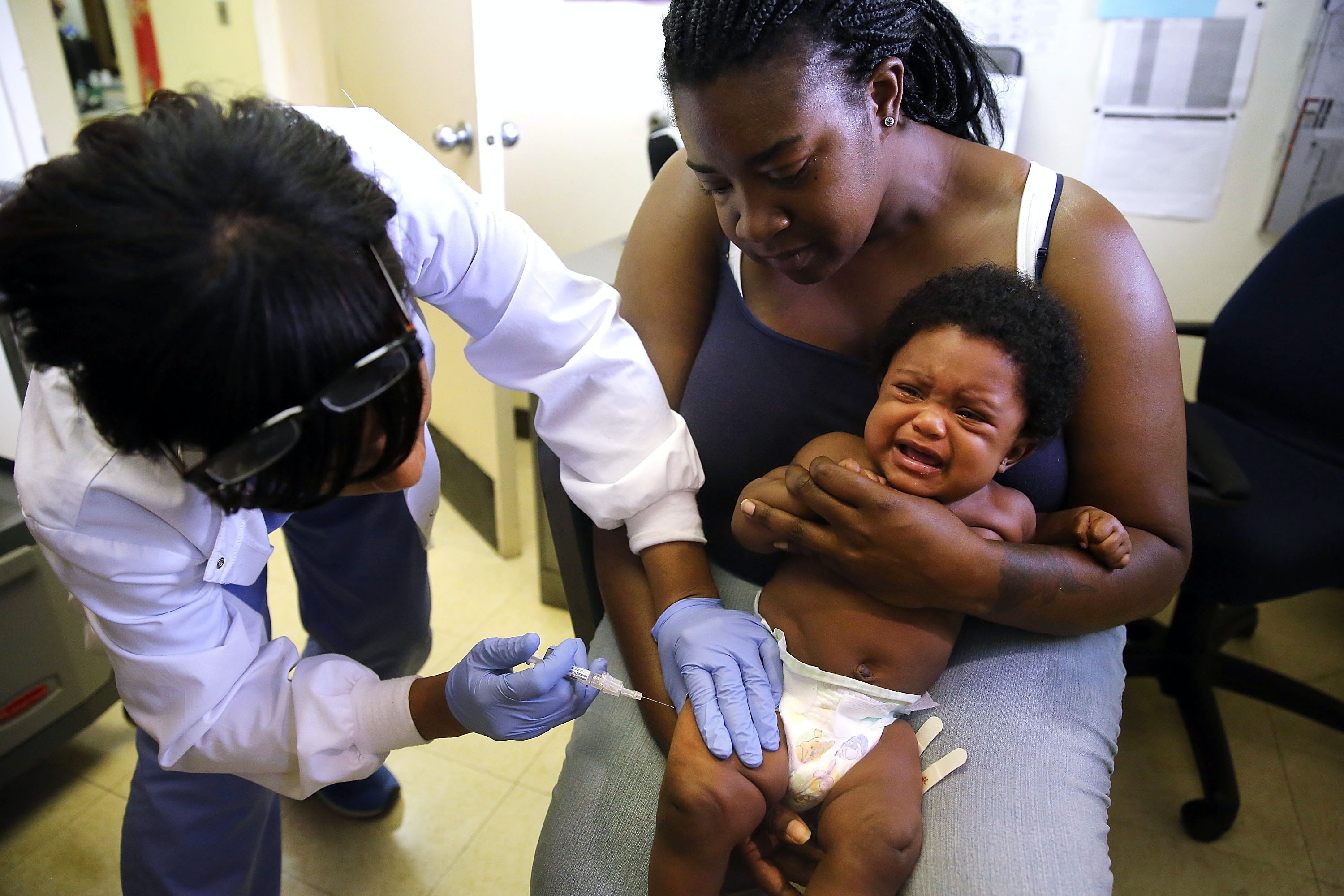
For many of us, the case for childhood vaccination seems self-evident. Every year, this powerful public health intervention protects billions of children from deadly and debilitating infections like polio and measles. Yet worldwide, many parents are reluctant – if not outright refusing – to vaccinate their children. This includes parents who have access to vaccines, are well-educated, and have enjoyed the benefits of having their children grow up in a world free of many vaccine-preventable diseases.
This phenomenon is now referred to as vaccine hesitancy. It’s not new. Public concerns about vaccination, and controversies surrounding it, are as old as vaccines themselves. Yet with the recent global outbreaks of diseases such as measles and diphtheria, and more recently COVID-19, vaccine hesitancy has been placed firmly on the global public health agenda.
In a recently conducted Cochrane review we analysed qualitative studies of parents’ views, experiences, and practices around routine childhood vaccination.
We included 27 studies in our analysis. Studies were conducted in Africa, the Americas, South-East Asia, Europe, and the Western Pacific, and included urban and rural settings, as well as high-, middle-, and low-income settings.
We found that vaccination uptake, as with so many health interventions, is influenced by many factors and carries a variety of meanings – social, political, economic, ideological, moral as well as biological. Through their vaccination choices, parents are often communicating not just what they think about vaccines, but also who they are, what they value and with whom they identify.
We found that parents’ vaccination views and practices are shaped by factors like:
-
their broader worldviews surrounding health and illness
-
the vaccination ideas and practices of their social networks
-
wider political issues and relations of power and particularly the impact these have on parents’ trust (or distrust) in those associated with vaccination programmes
-
access to and experiences of vaccination services and their frontline healthcare workers.
Our findings suggest that childhood vaccination, whatever stance is taken, is a complex social process. It is deeply embedded in the wider social worlds in which people live. Understanding these social worlds, and placing them at the centre of public health interventions, is critical.
Reasons for vaccine hesitancy
Vaccine hesitancy is not a single problem. The way it manifests and why it occurs varies considerably across place, time, and even vaccines. Local contexts and framing matter. Yet we found certain overarching patterns across the studies that help to explain why parents may be hesitant about routine vaccines for their children.
The first reason relates to the view that healthcare is a matter of personal risk, choice, and responsibility. Many parents, across the spectrum of vaccination attitudes, hold this worldview. Yet some parents see this worldview as being in conflict with vaccination promotion messages. These messages emphasise population-level risk and community health. This perceived tension may lead some parents to be hesitant about vaccination for their children.
Read more: Low trust in authorities affects vaccine uptake: evidence from 22 African countries
The second reason relates to the impact of social exclusion. Exclusion can take many different forms: economic, political, and cultural. All these forms can lay the foundation for distrust, alienation, resentment, and demotivation. Parents who are socially excluded may be hesitant about vaccination because they distrust vaccines and those delivering them. Or it may be a form of resistance or a mechanism to bring about change. It may be that vaccination takes time and comes with opportunity costs for these parents.
An alternative approach
Parents who resist vaccines for their children are commonly portrayed as ‘ignorant’, ‘misinformed’ or ‘irrational’ – or selfish or evil. It is often assumed that the attitudes of these parents can be corrected with biomedical education and advanced risk communication strategies. The findings from our review suggest that a more nuanced and less clinically oriented approach may be needed.
Such an approach involves taking seriously, on their own terms, the complex factors and meanings shaping parents’ vaccination choices. It means recognising that parents’ values and priorities, and their responses to these, do not always align with the goals of vaccination programmes.
“Hesitancy” does not only have negative connotations, as seminal work published over two decades ago demonstrated. In fact, for many parents, “hesitancy” may also be about a striving for or desiring something: to protect their child’s health, to be part of healthcare decision-making, to belong and feel included among peers, to feel confident that expert systems have their best interests at heart, to have their own priorities recognised and basic needs met.
Approaching hesitancy with this understanding is unlikely to translate into one-dimensional and “quick-fix” interventions. Yet we believe it could provide avenues for the development of more sensitive and effective strategies for engaging with parents who decide against vaccination for their children.


