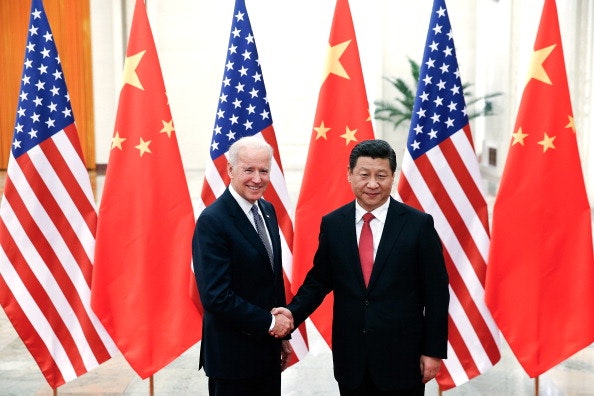
China’s foreign ministry published a 4,000-word analysis entitled US Hegemony and its Perils on 20 February. It’s an indictment of alleged US foreign interference, intimidation and interventions that began 200 years ago.
This was followed by President Xi Jinping’s accusation at the Communist Party National Congress in March that the US was pursuing an unprecedented global policy to contain and suppress Chinese development.
US official reaction to the Chinese accusations has been muted. But the recent US shooting down of an alleged Chinese spy balloon escalated tensions. There are fears that escalating US-Chinese tensions might threaten the independence of African and other nonaligned nations.
This essay seeks to contribute to an overdue debate among Africans about how to avoid being entangled in US-China global rivalry, while maintaining productive partnerships with both nations. It draws on my many years of teaching and research on Africa’s changing international relations.
Read more: Africa can use great power rivalry to its benefit: Here is how
I hope it will encourage other scholars and policy makers across Africa to assess the hegemony statement in the light of their own interests and values. Finally, this essay is intended to encourage debate about what each topic realistically implies for Africa continent.
The topics in the statement are:
-
political hegemony – (America) throwing its weight around
-
military hegemony – wanton use of force
-
economic hegemony – looting and exploitation
-
technological hegemony – monopoly and suppression
-
cultural hegemony – spreading false narratives.
Although Chinese rhetoric is harsh, the initiatives and interactions of China and the US in Africa under each heading illustrate my general belief that their competition in Africa has been – and can be – both peaceful and productive.
Political hegemony
China’s indictment ranges from US efforts at hemispheric domination beginning in the early 19th century to fomenting the “colour revolutions” – non-violent protests that overthrew autocratic regimes in the three post-Soviet republics Georgia, Ukraine and Kyrgyzstan.
But, China’s vision of the US glosses over the volatility of US domestic politics. Domestic concerns can alter foreign policy, a leader’s ideology, and political and historical circumstances.
Domestically, China too has undergone several political upheavals since the civil war that brought the Communist Party to power in 1949. If China underestimates US domestic swings, US analysts may exaggerate the global impact of Chinese internal pressures. During my election work for the Carter Centre in Africa, from 2006-2015, I was impressed by Chinese and American representatives able to seek common ground and learn from each other.
At higher levels of diplomacy, China and the US have used summits with African leaders to set broad guidelines of cooperation in trade and investment, climate, public health, building infrastructure and other areas. These should help African leaders decide areas of comparative advantage for them, in dealing with the two major powers. The Forum on China-Africa Cooperation differs from US initiatives, the most recent being the US-Africa Partnership in Promoting Peace, Security, and Democratic Governance. Neither major power appears to me to harbour hegemonic presumptions, as African leaders test their abilities to be productively nonaligned.
Read more: US-Africa summit: four things African leaders should try to get out of it
These high-level channels to both superpowers might yield more if African regional economic communities and the African Union made more concerted efforts to develop complementary and cumulative strategies for pressing African priorities. Extending the US African Growth and Opportunity Act to ensure favourable access to US markets is one example. Managing debt obligations for China’s important “Belt and Road” investments in African infrastructure is another.
Military and economic hegemony
The differences in what Africa had to contend with during the US-Soviet Cold War and today’s US-China rivalry are most pronounced in areas of military and economic hegemony.
Neither China nor the US seem poised to use Africa to test political military resolve, as the US and Soviets did when they fought proxy wars in Angola during the 1970s, for example.
African national and multilateral bodies should lobby China and America to back African-led peace operations within African states.
Globally, economic interdependence between China and the US will remain vital for sustained growth and prosperity for both nations. Presidents Joe Biden and Xi Jinping are committed to reviving their domestic economies. They both want greater equality, less corruption, and sustained growth. Neither appears to want or need to foment conflicts in Africa.
African governments rightly pursue support from both China and the US for regional integration and cooperation, such as the African Continental Free Trade Area. Greater Chinese and US economic engagement in response to African collective appeals could also become a confidence building measure between China and the US. This rarely happened during the Cold War. Back then, the US was aligned with European colonial powers and the apartheid regime in South Africa. The Soviets backed liberation forces. Today, such polarisation doesn’t exist.
Read more: Peace and security in Africa: how China can help address weaknesses
The Chinese statement on US hegemony rightly notes the US is plagued by domestic violence and has a history of failures in military interventions. [US analysts acknowledge] this.
But US domestic resistance to new foreign military adventures became bipartisan and popular for the past decade.
African nations should hold America and China to account for their avowed commitments to respecting core UN principles of sovereign equality and territorial integrity. Equally, they must hold Russia to account for blatantly violating those principles by invading Ukraine.
Technological hegemony
Benefits and risks of new technologies are well known. Communication, data retrieval and collection, and artificial intelligence bring both promise and peril that Africa must navigate carefully. This is becoming all the more pressing as progress in artificial intelligence accelerates. Neither China nor the US need to be hegemonic in making available technologies that spur Africa’s development.
More issues of contention need to be resolved with the help of scientists and scholars from China, US, and Africa. The availability of Huawei 5G is a particularly contentious issue. Perhaps interested scientists and members of the African Research Universities Alliance could work with their Chinese and US counterparts to establish guidelines and mediation capabilities.
Cultural hegemony
US crimes against Africans began in earnest in 1619 with the trans-Atlantic slave trade. Its sediments persist today.
But? The African diaspora has become a key political constituency of the Democratic Party. It is a fast growing demographic. In music, sports, arts, these Americans are invaluable conveyors of soft power in Africa.
Read more: The China-US rivalry is not a new Cold War. It is way more complex and could last much longer
China does not have similar ties with Africa. But, it has recently become more active culturally across the continent, as evident in its network of Confucius Institutes. China has also become the biggest donor of foreign scholarships, enabling future African leaders to study in China. Graduates enrich African universities and, interacting with graduates of US institutions of higher education, represent potential channels to explore options for three way, useful collaboration in their fields of applied research.
Looking forward
This essay reflects my belief in the value and prospects for greater African agency in response to rising tensions between China and America. I have used China’s indictment of alleged US hegemony only to debunk fear of Africa becoming a pawn in another Cold War. There is no evidence I have seen to suggest that will happen.


