South Africa has notoriously high levels of violence against women. The latest police figures show that 10,818 rape cases were reported in the first quarter of 2022. The country has among the highest rape incidence in the world.
How can gender-based violence in the country be reduced?
It’s important to first understand the causes of gender-based violence – with a focus on sexual violence – globally and in South Africa. There are many contested theories.
Louise du Toit, a Stellenbosch University philosopher, analysed four explanations that are often offered:
-
past perpetrator violence
-
social and economic exclusion
-
injured masculinity or patriarchal politics (reaction to women gaining rights)
-
violence that is a condition of human existence (ontological violence).
She showed that each theory on its own could not explain sexual violence.
-
Many men were involved or caught up in apartheid or liberation struggle violence. Yet, women were also victims of that violence. They very seldom commit sexual violence.
-
Poverty and loss of breadwinner status does not explain why men of all classes rape.
-
If women’s progress undermines men’s status and dominance, why do men retaliate with sexual violence?
-
Ontological violence makes the most sense. It relates violence to men’s sense of entitlement to women’s bodies and hypermasculinity.
It is, therefore, hard to find suitable common ground for interventions to reduce violence.
Having researched gender-based violence extensively, I concur with Du Toit’s analysis. Most theories fall short of explaining all aspects of gender-based and sexual violence. I believe interventions need to be anchored in solutions for ontological violence and have to be multi-faceted.
Ontological violence is difficult to address because its origins are diffuse and it relates to men’s treatment of women that has long histories. Yet, there are studies that aim to create multi-faceted solutions to deal with different dimensions of gender-based violence, and sexual violence that have become normalised as part of human existence. Below I single out three such studies.
Gender-based violence and political economy
Jacqui True, an Australian professor of international relations, uses a political economy approach to analyse gender-based violence globally.
Read more: 16 Days of Activism: how South Africa’s TV news gets it wrong
In her view, all violence stems from relations of inequality. A political economy approach shows the connections between the economic, social and political realms. It looks at the distribution of resources, benefits, privileges and power in the home, the state and transnational communities.
Secondly, such an approach engages the global macroeconomic environment. It shows how neoliberal economic policies and capitalist competition depend on cheap labour and precarious jobs that make women more vulnerable to violence. This contributes to structural inequalities in which women are the worst off.
Unregulated markets disrupt local economies as well as the division of labour in the household. The struggle for power and resources leads to violent conflict that gets normalised in societies suffering from increasing inequality.
Research on good and bad countries for women to live in shows that equality lessens sexual violence; inequality and conflict worsen sexual violence.
South Africa is one of the most unequal countries in the world and has a history of conflict.
Thirdly, True’s approach shows the connections between gender-based violence and global conflicts. Hypermasculinity and military masculinity contribute to the normalisation of violence in societies, even after conflict has stopped.
Addressing gender-based violence
Canadian political scientist Laurel Weldon’s research shows the importance of government responsiveness through policy to reduce gender-based violence. There are seven areas where policy can make a difference:
-
legal reform dealing with domestic violence
-
legal reform dealing with sexual assault
-
government-funded shelters for victims of domestic violence
-
crisis centres for victims of sexual assault
-
training for service providers such as the police, judges and social workers
-
educating citizens about gender-based violence
-
coordinating national policies on gender-based violence.
Read more: Rape is endemic in South Africa. Why the ANC government keeps missing the mark
A government that creates a broader, more multifaceted response, early in the rise of the problem, has more success in tackling it.
Weldon also found that national identity, culture and level of development don’t strongly predict sexual violence. What makes the greatest impact to reduce violence is a strong, independent women’s movement.
The number of women in government counts less than whether they put gender violence on the legislative agenda. It also helps to have state structures that promote gender equality, such as an office of the status of women. Successful policy responses are, therefore, driven by committed feminist women in state structures.
American political scientist Hannah Britton, in her 2020 book, Ending Gender Based Violence: Justice and Community in South Africa, rightly points out that mass incarceration does not work. That’s because it holds only individuals responsible. Structural conditions underlying violence are ignored. The state is then absolved from responsibility for dealing with violence.
No easy solutions
If we apply Weldon’s seven points to South Africa we see the following: significant law reform was done during the first decade of democracy. For example, parliament passed the Domestic Violence Act and the Sexual Offences and Related Matters Act, amended in 2022. But the laws are not consistently implemented or enforced by the police.
For instance, shelters for domestic violence are underfunded by government. Also, one-stop Thuthuzela care centres at police stations to treat rape victims with the necessary sensitivity are being rolled out too slowly.
Police training on gender-based violence is limited. The establishment of the National Council on Gender Based Violence, the central agency that’s supposed to coordinate official responses, has been stalled since 2012.
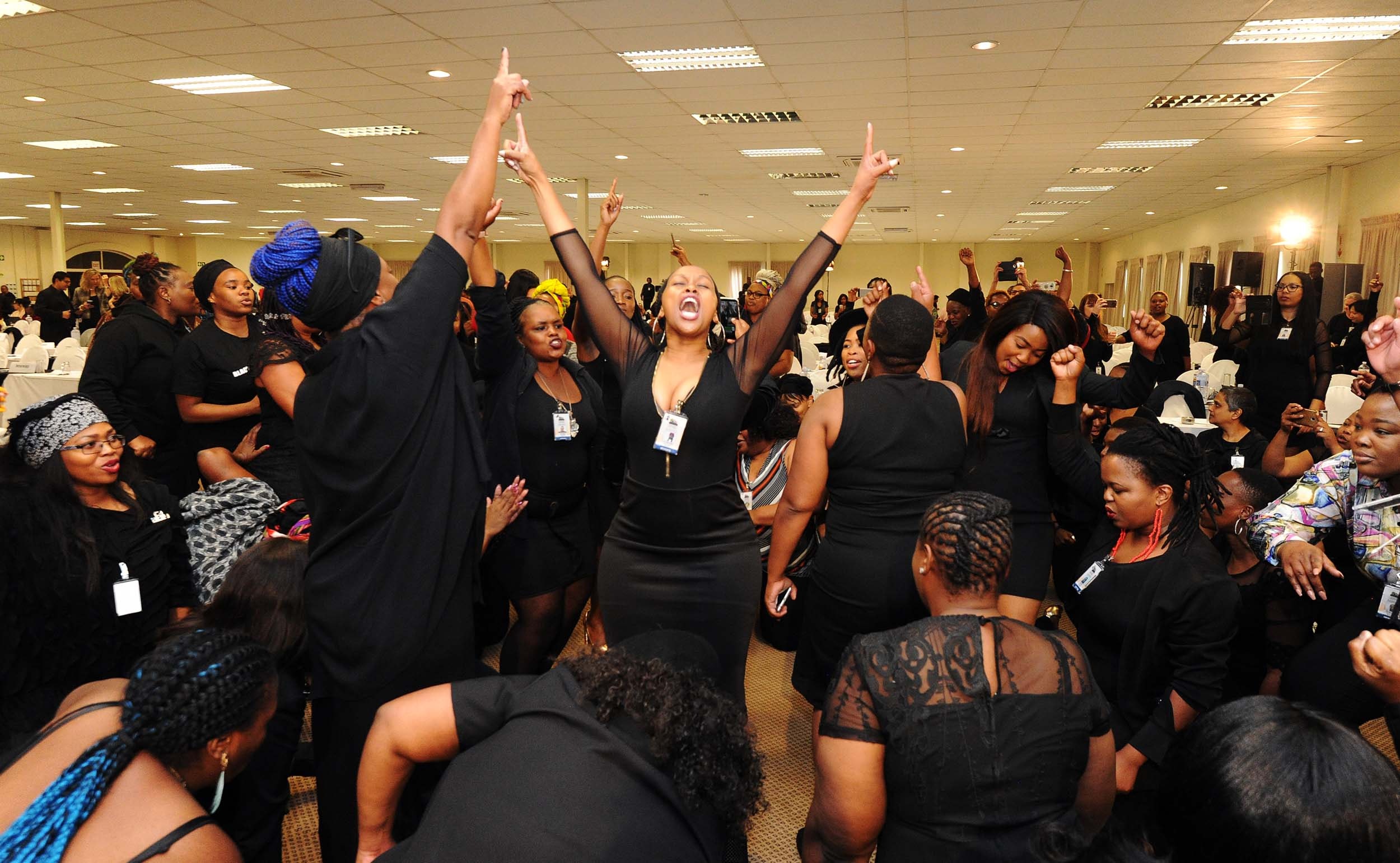
South Africa has an impressive 46% women’s representation in parliament, because of the ANC’s policy of 50% representation for women. But, these women have not spearheaded policy against gender-based violence. Instead, the government was forced to draw up a National Strategic Plan on Gender Based Violence and Femicide by the #TotalShutDown movement in 2018.
South Africa had one of the best national gender machineries globally. It had structures in the legislature (such as the Joint Monitoring Committee on the Quality of Life and the Status of Women and the multiparty women’s caucus, in the executive (Office of the Status of Women) and the independent constitutional body, the Commission for Gender Equality.
Most of these structures were dismantled and replaced with a dysfunctional Ministry for Women, Youth and People with Disabilities that is supposed to initiate interventions on gender-based violence.
Read more: Change what South African men think of women to combat their violent behaviour
As Weldon’s research has shown, the most important cog in the struggle against gender-based violence is a strong women’s movement. In South Africa there is currently no coherent, active women’s or feminist movement. The Women’s National Coalition that spearheaded feminist equality during the democratic transition in the 1990s has since fractured and disintegrated.
Activism now takes the form of sporadic issue-driven action, such as the campaigns by #TotalShutDown and #EndRapeCulture. While this type of activism is laudable, it does not sustain pressure on government for action.
There is thus no simple suggestion for how to reduce gender-based violence. All interventions are contextual and political and need to address different dimensions of a multi-dimensional problem.


