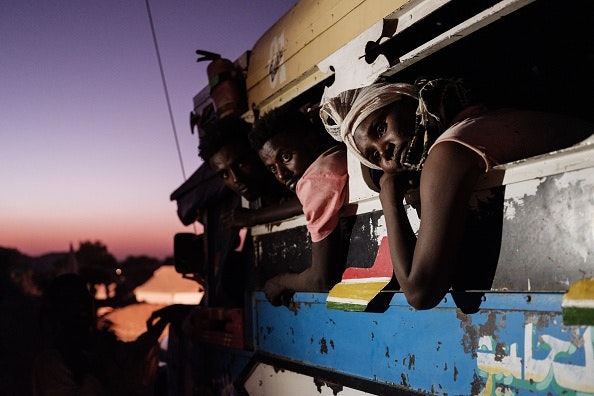
The effects of war on the mental wellbeing of people is given much less attention than the physical harms of conflict.
We have been researching and working on the mental health challenges faced by different sub-populations. In a recent opinion piece in The Lancet our group applied some of our earlier findings to the situation in Ethiopia.
The country is the second most populous in Africa. It has a total population of approximately 115 million and 12 administrative regions. Conflict broke out in late 2020 between the central government and the Tigray People’s Liberation Front. The war has been ongoing ever since, with battles spreading out to the regions of Afar and Amhara.
Mental health problems are major indirect consequences of armed conflicts. They can have short-term and long-term effects on the wellbeing of individuals living in war-affected areas.
In a new report the World Health Organization (WHO) estimates a high burden of mental health problems in conflict settings. This includes depression, anxiety, post-traumatic stress disorder, bipolar disorder and schizophrenia.
There has been limited data on the potential mental health consequences of the war in Ethiopia. To try and bridge the gap we applied the WHO’s estimates to the populations in the war-affected regions of Afar and Amhara in the country.
What we found suggests that a minimum of 28, 560 individuals are facing severe forms of mental health disorders that require immediate intervention. Of these 12, 566 are children and 14, 565 are women.
Treatment of these people has been impossible. The war led to the damage and looting of more than 40 hospitals, 453 health centres, 1,850 health posts in Amhara and one hospital, 17 health centres and 42 health posts in the Afar region.
We argue that the burden of mental disorders and their short-term and long-term consequences in communities in the war-affected regions of Amhara and Afar should be a priority in the post-war period.
Given the large population in need of mental health interventions in northern Ethiopia, there is an urgent need to offer effective collaborative care that’s affordable and accessible.
The impact
Over 12 months of sustained conflict has resulted in massive internal displacement, homelessness, financial and family loss, and disruption of the culture and values of millions of people living in Amhara and Afar.
Several religious institutions that have been playing a crucial role in maintaining public resilience and the mental wellbeing of the community have been destroyed. This has been in the absence of government and community-based facilities, which have been looted.
Women and children have borne the brunt of the conflict. This can be directly due to violence or indirectly due to various health consequences.
All of these issues exacerbate the mental health problems of individuals living in the war-affected regions and indirectly affect their families and friends.
Another adversity that could increase the risk of mental health problems in the population is gender-based acts of violence and assault. This includes rape and gang rape.
The intergenerational effects of armed conflict are also of concern. Sexual violence can lead to family breakdown, leaving children unattended, uncared for, and traumatised throughout their childhood and adulthood.
What can be done
Awareness raising, psychoeducation, skills training, rehabilitation, and psychological treatments are considered effective interventions in post-war settings. These could be provided in homes, schools, communities, and religious and health institutions.
In addition: training health care workers, leaders and educators; using social or community support as well as methods that are sensitive to people’s faith and culture, and equipping them with the knowledge and competency to provide trauma-informed care. The engagement of community leaders – such as religious leaders, elders and public figures – and the use of cultural institutions, would further help these interventions to reach the broader population.
Several UN agencies (the UN Population Fund, the UN High Commissioner for Refugees, UNICEF, WHO, and the International Organization for Migration) have been actively working to identify women affected by different types of violence, and training community-based counsellors who provide dignity kits and psychological support such as counselling in the Tigray region.
These post-war mental health services should also be scaled up for affected populations in Amhara and Afra regions.


