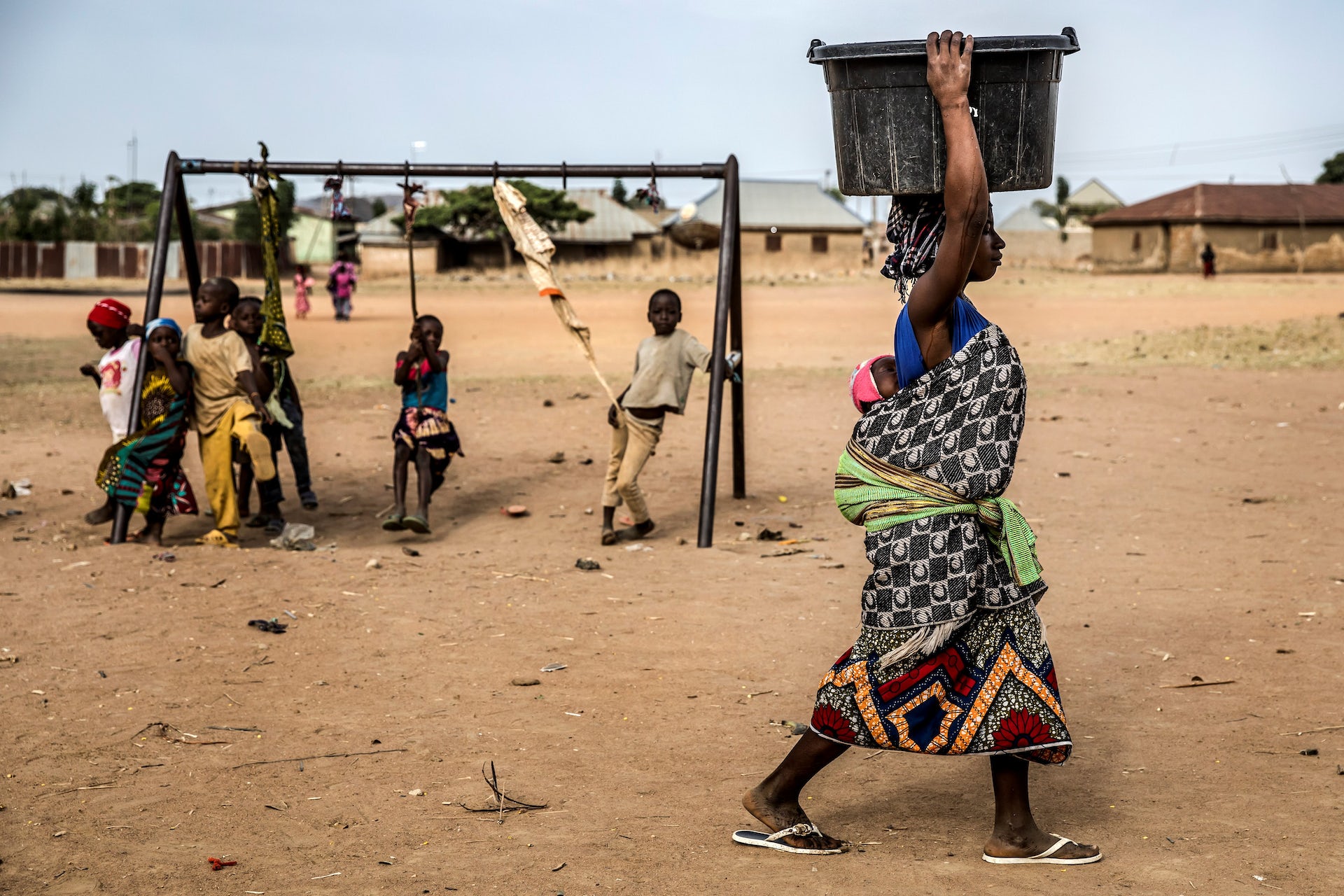
Imagine waking up before dawn every day to fetch water for your family. You trek to the nearest water source, miles away, with only a jerrycan to carry the precious liquid. You brave scorching heat or heavy rain, while trying to avoid dangerous animals and strangers along the way.
This is the reality of many women in Nigeria’s coastal areas, particularly in the Ilaje region, Ondo State, south-western Nigeria. Water scarcity is a persistent problem in the region and climate change is making it worse. Women bear the brunt of this crisis, as they are responsible for fetching water, cooking and other household chores. This leaves them little time for other activities, such as education or income-generating work.
The effects of climate change are evident in the region. They lead to crop failures, erosion and loss of livelihoods due to extreme weather events such as droughts and floods. The coastal region of Nigeria is particularly at risk, with a projected one-metre rise in sea level potentially resulting in the loss of 75% of the land in the region. Women in the region are especially vulnerable to the effects of climate change. Many rely on farming and fishing for their livelihoods and are responsible for collecting and using water.
We conducted a study of vulnerability of women to climate change in the region. This involved focus group discussions with women and men in the community and key informant interviews with local leaders and officials. Our findings showed that women face water scarcity and climate change challenges. They are vulnerable to water-borne diseases and gender-based violence. We also found that women’s participation in water management and decision-making was limited, which affected their ability to influence policies and strategies related to water governance.
To further investigate the vulnerability of women to climate change in Ilaje coastal region, we collected data from 10 coastal communities. Our study found that extreme weather events have been occurring in the region for the past 44 years. The communities were vulnerable to flooding and erosion. Women were particularly vulnerable to climate change impacts because of factors like their economic status, poor education, cultural norms and political marginalisation.
The intersection of gender, climate change and water scarcity creates a complex challenge that demands a comprehensive and inclusive approach. There are six steps that would improve the situation. They include governments, civil society organisations and local communities tackling the underlying causes of water scarcity. And involving women in water management and decision-making.
Nigeria’s water crisis
Nigeria’s water scarcity crisis is not limited to this region alone. In 2019, approximately 60 million Nigerians didn’t have basic drinking water services. Globally, 122 million people have to collect unsafe water from streams or ponds. Two billion people lack safe drinking water. Similarly, two out of every five people defecate in the streets or bushes.
According to the United Nations, poor water, sanitation and hygiene cause 1.4 million deaths annually and shorten the lives of 74 million people. Nearly half of all wastewater from households globally, which contains toxic substances from toilets, sinks, drains and gutters, flows back into nature without proper treatment.
The implications of this discharge of toxic substances are especially dire for people who live on coasts, such as those in the Ilaje region in Nigeria. Women and girls are at increased risk of waterborne illnesses because they are often the primary collectors and users of water resources in these communities.
What can be done
Governments, civil society organisations and local communities can take the following steps to ensure that their efforts to address water scarcity are gender-sensitive and inclusive:
• Educate and empower women: Education is critical in empowering women to participate in water management and decision-making. Building women’s skills and knowledge enables them to take a more active role in addressing the water crisis.
• Involve women in water management and decision-making: Women are often disproportionately affected by water scarcity, as they are responsible for water-fetching, cooking and other household chores. Involving them in decisions can help ensure that their needs and concerns are considered.
• Support women-led start-ups and businesses: Women are often under-represented in entrepreneurship but have unique perspectives and insights that can be used to develop innovative solutions to the water crisis. Supporting women-led startups and businesses can help create a more equitable and sustainable future.
• Provide access to sanitation facilities for women and girls: Lack of access to sanitation facilities can have a significant impact on women’s and girl’s education, health, safety and dignity.
• Support women’s groups and initiatives: This can help to ensure that women’s voices are heard and their needs are addressed.
• Address gender-based violence: Violence can hinder women’s access to safe and reliable water resources. Addressing gender-based violence is crucial to ensuring that women and girls can safely access and use water resources.


