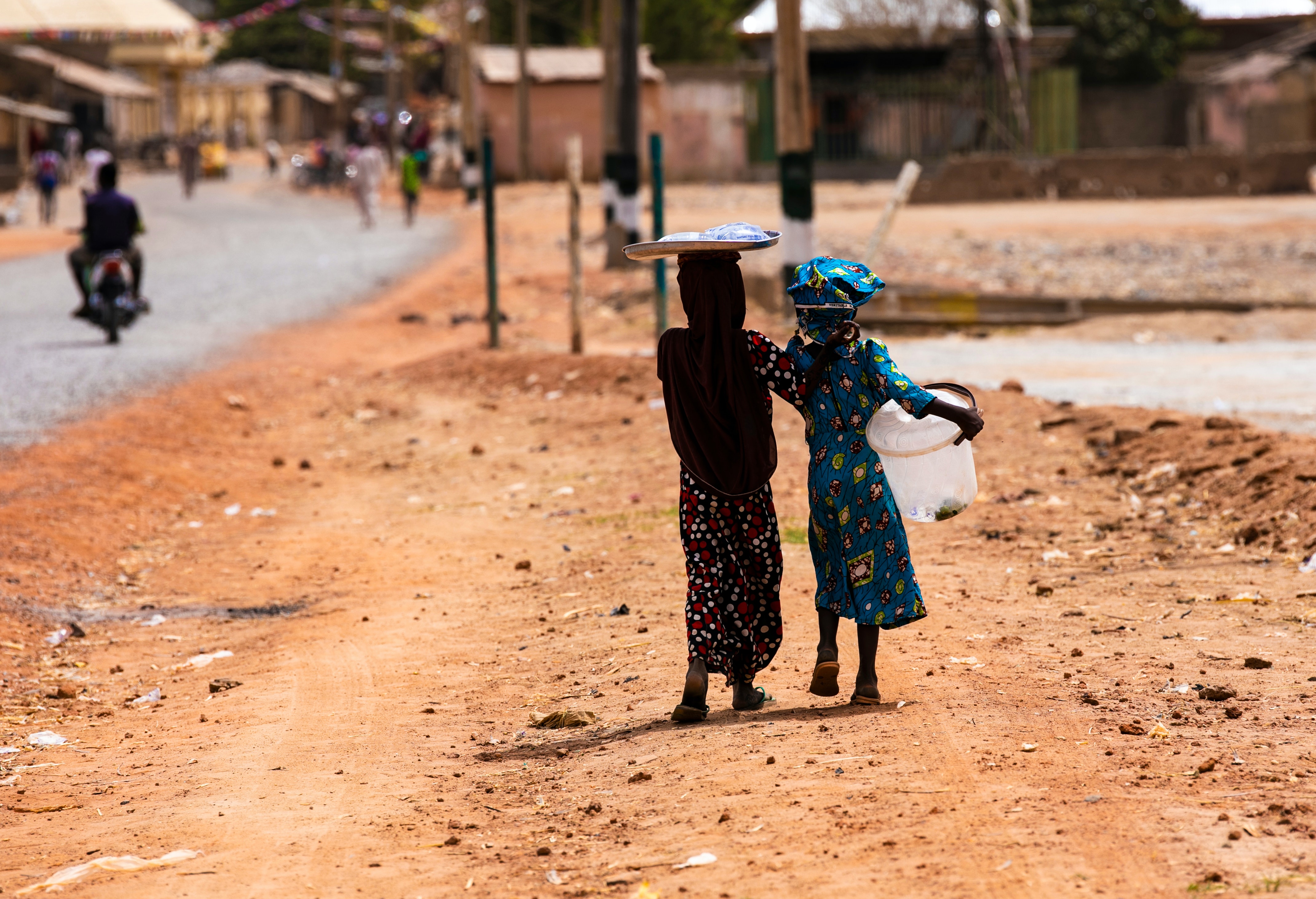
Childhood is a unique phase in the life of an individual. People think of childhood in different ways though, and this determines whether they think children should do any kind of work.
Child work such as selling goods at markets can be seen as unharmful to the wellbeing of the child and was the norm in many parts of precolonial Africa. Child labour, on the other hand, typically involves detrimental and hazardous activity which can disrupt the overall development of the child.
Global data shows there are 168 million children in child labour – 32.1% of children aged 7–14 years. In the Nigerian context, the prevalence of children engaged in child labour is estimated at 12 million to 15 million, which is one in four children. The International Labour Organisation estimates that nearly half of working children in Nigeria are stuck in child labour, with about 43% of children engaged in dangerous activities. Socially acceptable labour involves children performing activities that do not hinder their development, and are not detrimental to their health, development and wellbeing. This is different from child labour.
Popular notions have sought to link child labour only to domestic and agricultural work. But children in Nigeria are also working in extractive industries such as quarrying granite and artisan mining. Their labour is also seen in the construction and scavenging sectors, where they collect debris and decayed materials from dump sites.
As a social worker, I wanted to explore the physical and health issues associated with child labour in Nigeria, from the children’s own perspective. This could point to the implications for social policy and welfare strategies. I carried out qualitative research in which I asked working children to tell me about their own experiences.
It emerged that children were put in harm’s way in four areas: carrying loads of goods and garbage, on construction sites and in factories, on roads and in all kinds of weather. The children spoke about the ways they suffered as a result of their work. They said they had to continue because they needed to earn money. I believe that government and nongovernmental organisations need to do more to protect children from harm.
Child labour poses significant threats
For my study, I selected eight children between the ages of 7 and 14 who were working in market places, business streets, construction sites and factories. The sample was small because the study aimed to get in-depth information. I was careful to obtain properly informed consent from the children and their guardians. I interviewed them in their working environment to hear what they said about the realities and challenges in their daily lives.
Two of the children described how they carry loads of goods and garbage and scavenge for scraps of irons to earn money. One said:
My head aches badly because of my work … The work is more demanding on me when I am not in school. At such days, I carry loads at the market from 9:00am till 1:00pm, and then I return the money home. Thereafter, I leave to search for iron from 2:00pm till 6:00pm. Most times I am also required to help fetch water for the house, some evenings. At night it will look as if I was beaten by ten persons, because of pains.
Another said:
Most times, I feel pains in my head, my shoulder and my waist because of the load and waste I carry. Bad water or substances from the waste often pours on my head down my body. Some time ago I fell in the rain … and I fall sick regularly during the rains.
A child spoke about working on a construction site:
The work at the site is dirty … Some time ago, a sharp iron pierced into my hand, it was serious and painful … I have experienced hurts on my legs several times, since I do not have good shoes like ‘boots’ that can protect my legs from injuries.
Some children work on busy roads as vendors. Some carry petrol which they sell to motorists. One spoke of being hit by a car and said:
The areas I sell more are too busy with cars, it requires me (even my mates) running with moving vehicles, to enable me to sell fast.
All these kinds of work expose children to heat, cold and rain. They also spoke of fear and stress.
This labour clearly poses significant threats to children’s safety and physical health as well as their psychological wellbeing and social development. Most are poorly supervised.
In a previous study, I have found that injuries, stunted growth, illness and disease experienced by working children have significant links to working long hours, with constant exposure to unfavourable environments.
What should be done
Children’s work circumstances put their welfare in danger. Policy and action are needed urgently from government and NGOs.
Social workers, child protection networks and policy makers must harmonise efforts to ensure the full implementation of the provisions of the Child’s Rights Act (2003).
Governments must also follow international child labour guidelines, presently the minimum age for work is below international standards. There is also the need for a comprehensive child protection system across the country.


