The Democratic Republic of Congo (DRC) is rich in natural resources – its untapped deposits of minerals are estimated to be worth US$24 trillion. Gold, diamonds, cobalt and zinc are among them.
Another strategic mineral mined in the DRC is coltan – a name derived from “columbite-tantalite”. In 2021, the DRC’s coltan production amounted to an estimated 700 tonnes, making the Central African country the world’s largest coltan producer by far.
Coltan is indispensable to the manufacture of all modern technological devices. The mineral is refined to tantalum powder, which is used to make heat-resistant capacitors in laptops, cellphones, and other high-end electronic devices.
The global coltan market was valued at US$1,504.81 million in 2019. It is expected to reach US$1,933.92 million by the end of 2026, growing at a rate of 5.58% a year between 2021 and 2026.
But activists, journalists and scholars have found a relationship between coltan exploitation and large-scale environmental degradation, human rights abuses, violence and death.
This can be seen in violation of environmental laws, child labour on mining sites, and complicity of mining companies in the abuses of populations at risk.
In my new study, I asked two research questions: what harms do coltan mining and trading cause to the environment and local people in north-eastern DRC? And what can the DRC government and private sector do to ensure responsible sourcing of coltan?
Coltan exploitation is destroying ecosystems and affecting wildlife habitats. Animals are being displaced from their natural habitat, leaving them vulnerable to poachers. The chemicals used in washing coltan are polluting water bodies and are harmful to people and animals.
My study raises awareness of the implications of this illicit mining and suggests multi-stakeholder interventions to halt environmental crime.
Environmental crime
The information for my analysis came from a qualitative field survey, legislation and UN reports on extractive conflicts in the DRC.
Data also came from interviews with officials of the Certification, Expertise and Evaluation Centre, the Ministry of Mines, civil society coalitions, the Congolese Environment Agency and nongovernmental organisations in North and South Kivu.
My study conceives environmental crime as activities that breach environmental legislation and cause significant harm or risk to the environment, human health, or both.
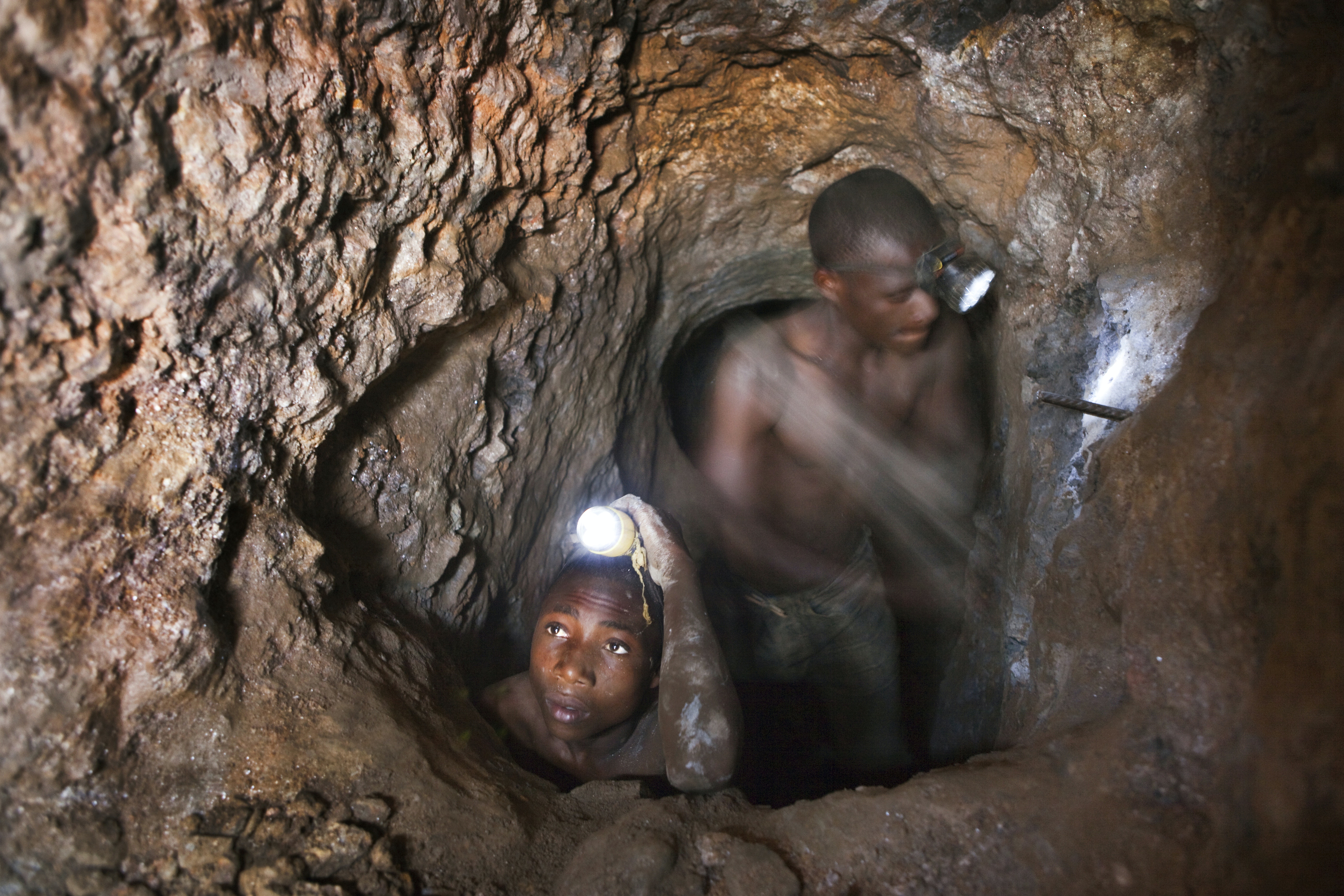
Coltan is mined through a fairly primitive process. Miners work together digging large craters in streambeds, scraping away soil from the surface to get to the coltan underground.
The indiscriminate exploitation of coltan is dramatically affecting environmental biodiversity and disrupting ecosystems around mining sites.
According to data available on the Global Forest Watch platform managed by the World Resources Institute, the DRC has lost 8.6% of its tree cover since 2000. One of the major causes of deforestation in the DRC is mining.
Observers I spoke to note that environmental impact assessments are seldom carried out prior to coltan mining. Artisanal miners and foreign companies even violate sites of historical heritage such as Kahuzi Biega National Park.
The first impact of coltan mining is when miners remove vegetation and topsoil. This increases the rate of erosion.
Most of the artisanal coltan miners work on sites where there is no state control. They take as much coltan as they can without any regulation. For instance, while the Ministry of Mining recommends that miners should dig no deeper than 30 metres below the surface, they sometimes dig as deep as 200 metres.
Environmental activists in Bukavu confirm that coltan exploitation has led to loss of trees. That is known to destroy ecosystems, decrease the carbon stock, disrupt the photosynthesis process and affect air quality. It is also affecting wildlife habitats.
For instance, North and South Kivu provinces contain most of the DRC’s coltan. Kahuzi Biega National Park, one of the last sanctuaries for the critically endangered eastern lowland gorilla, spans both provinces. Coltan mining has destroyed much of the gorillas’ natural habitat, leaving them vulnerable to poachers. The population of eastern lowland gorillas in the park plummeted from 8,000 in 1991, when coltan mining started there, to about 40 in 2005. The present population is now estimated at 250.
The process of mineral separation, sieving and sorting is done manually through washing at streams and rivers. The chemicals used are polluting water bodies and are harmful to aquatic creatures. The chemicals are also known to produce radioactive substances that are detrimental to human health.
Human harms
The activities of the coltan miners and the associated businesses are exploitative and impoverish communities. Observers note that coltan mining businesses rarely compensate affected communities by implementing development programmes, which is a statutory requirement in terms of the mining laws.
At Mwenga in Shabunda, 50 artisanal miners died in September 2020 as a result of coltan mining-related activities.
Holes dug by artisanal miners are rarely covered after mining activities have ceased. And landslides have trapped miners underground.
Conflicts between members of an artisanal miners’ cooperative called Cooperamma and the coltan mining company SMB led to violence that claimed lives on the mining site at Rubaya in North Kivu.
Child labour
The DRC’s mining code was reformed in 2017 to penalise the use of child labour or the sale of ore mined by children. Yet much of the country’s coltan is extracted through the labour of over 40,000 child miners. They work in dangerous conditions as washers and diggers.
Doing adults’ work in a hazardous environment, child miners face the risks of ill health, harassment and abuse. They may either drop out of school or never have the opportunity to attend.
The quantity of coltan mined through child labour remains unaccounted for, uncertified and untraceable. It is traded in the underground economy and funnelled into the coltan global supply chain through smuggling, counterfeiting and collusion.
Recommendations
The approach to extractive reform in the DRC is currently inadequate to deal with the human and environmental harms associated with coltan mining.
My study provides specific recommendations to address the identified challenges.
The government must reform the Congolese Environment Agency to enforce environmental impact assessments and implementation of environmental management plans.
Civil society organisations should train and equip observatory groups at the local level to monitor and report on coltan mining sites. This will provide a shadow report to compare with audits carried out by state agents.
In line with global best practices the upstream companies that mine and refine coltan are advised to mitigate environmental risks associated with their operations.
- The full report was first published by the ENACT project, a partnership between the Institute for Security Studies, Interpol and the Global Initiative against Transnational Crime, funded by the EU.


