It takes more than a town crier reading off a scroll to close a polio outbreak in any country. Rather, it takes multi-disciplinary teams of experts wading through country-level data from polio eradication programmes – often more than once. They scrutinize evidence, crunch numbers to analyse information, and interview health workers, polio teams and high-level authorities, among other activities, before arriving at a conclusion.
The recent poliovirus outbreak in Sudan
Sudan’s circulating vaccine-derived poliovirus (cVDPV) type 2 outbreak began with the importation of the virus from neighbouring Chad. Confirmed in August 2020, the outbreak affected and paralyzed 58 children in 42 districts of 15 states. Additionally, 14 sewage samples in Khartoum tested positive for cVDPV2, indicating circulation there.
In mounting a robust response to the outbreak, Sudan conducted 2 high-quality nationwide campaigns delivering monovalent oral polio vaccine type 2 (mOPV2) to children in all 18 states and 184 localities in November 2020 and January 2021. Each round, supported by the World Health Organization (WHO), UNICEF and other partners, vaccinated more than 8 million children aged under 5.
Who makes the decisions
On 7 October 2021, a virtual technical assessment mission kicked off the process of analysing the absence of polioviruses across Sudan. Members of the assessment group shared recommendations with Sudan’s polio eradication team to ramp up their efforts across the country.
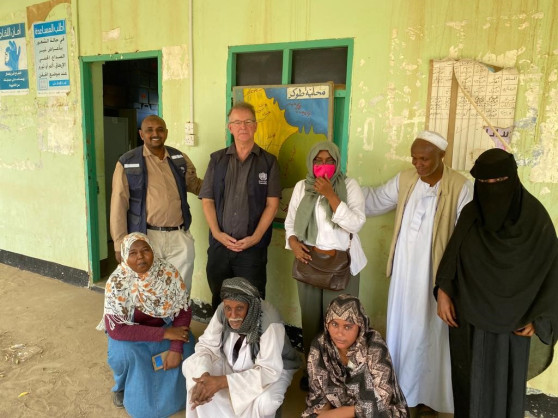
Then, from 24 July to 1 August 2022, an official outbreak response assessment team undertook a second phase of this detailed task, visiting Khartoum and 6 of Sudan’s 18 states as part of its work.
Both review teams comprised experts from WHO and the United Nations Children’s Fund (UNICEF) with skills and experience in global public health, epidemiology and biostatistics, surveillance, vaccine management and communication. They worked closely with the Federal Ministry of Health of Sudan, with state-level ministry staff and with health workers at ground level.
Spotlight on polio surveillance
In particular, a review of the surveillance system is important to close any disease outbreak. In line with this, the assessment team analysed the functionality and sensitivity of the polio surveillance system in Sudan to ensure no polio cases have been missed. They noted that Sudan’s acute flaccid paralysis (AFP) surveillance indicators are meeting the necessary indicators, and that the 14 environmental surveillance sites across Sudan are collecting and testing samples regularly and in line with international protocols.
As per standard protocols, the team in Sudan collects stool samples from both children who are healthy and those with AFP. A review of data showed that all samples collected since 18 December 2020 – the date of onset of paralysis of the last child affected in the outbreak – were processed like clockwork in the laboratory in Sudan, reported as poliovirus negative and recorded.
Speaking to the role of surveillance in this process, Dr Hamid Jafari, WHO Director for Polio Eradication in the Eastern Mediterranean Region said, “The programme has to be extremely diligent and careful before it declares an outbreak to have ended. The most important element that drives that decision is the quality of surveillance; the ability of the country to detect any remaining circulating poliovirus.”
Holistic overview of all technical work
The technical mission also reviewed the core functions of Sudan’s laboratories, the country’s preparation mechanisms for poliovirus events or outbreaks, data on population immunity and childhood immunization, and vaccine management protocol.
Following this extensive work, the outbreak team concluded that the spread of cVDPV2 has indeed stopped, and that the outbreak is over.
“Credits go to the Public Health Officers and immunization staff on the ground. A fast and well-planned response enhanced immunity among children and contained this outbreak in early months after the declaration. Despite the fact that this outbreak is over, we have received sufficient recommendations to maintain sensitive AFP surveillance, ensure better preparedness and response, enhance coverage of essential immunization, and strengthen cross-border coordination,” said Dr Ni’ma Saeed Abid, WHO Representative to Sudan.
While debriefing with the Government of Sudan and partners, the mission reiterated that Sudan remains at high risk of poliovirus, and that the current robust level of functionality and preparedness must be maintained in order to promptly detect and respond to any future emergence or importation of poliovirus.
Distributed by APO Group on behalf of World Health Organization Regional Office for the Eastern Mediterranean.


