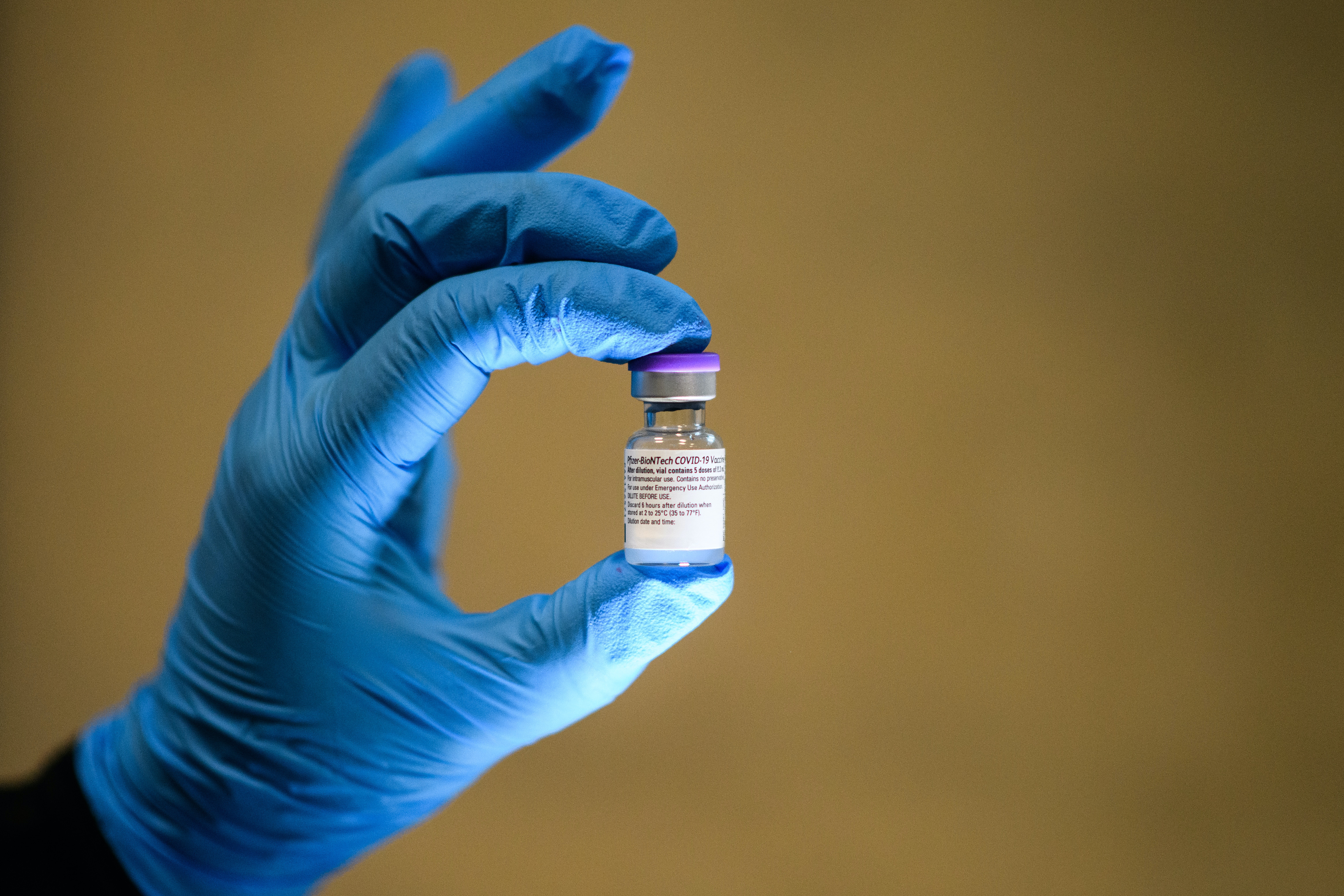
The Nigerian government recently released N10 billion (about US$26 million) in support of the local production of COVID-19 vaccines. Wale Fatade, from The Conversation Africa, asked Daniel Oladimeji Oluwayelu, a professor of virology, for his views on this and how the country can get full benefits from the money.
How do you see the federal government’s decision to give N10 billion to support local production of COVID-19 vaccines?
I think the allocation of the funds to initiate local vaccine production is a step in the right direction, but I doubt that the amount will be sufficient. The reason is that Nigeria does not have a functional vaccine production facility in place. The only laboratory for human vaccine production is at Yaba, Lagos, but it has not been functional for many years now. It will need a lot of money to revamp it and increase its production capacity. It will also need to be staffed with people who have the requisite expertise and experience in modern technologies for production of safer and more efficacious vaccines such as recombinant DNA technology. So, in addition to the N10 billion, there is a lot more that government would have to do to get local vaccine production going.
Where is Nigeria in vaccines production?
Well, it’s a mixture of what I will call the good and the bad. I’ll start with the good. What Nigeria has up and running is an animal vaccine production laboratory. The National Veterinary Research Institute in Vom, Plateau State produces vaccines for the livestock industry. It makes a number of vaccines for the local market and for export to other countries in the West African sub-region. It produces viral and bacterial vaccines against several diseases of livestock including cattle, sheep, goats and chickens.
The bad side to the story is that, to my knowledge, human vaccine production is non-existent in Nigeria at the moment. The last time any human vaccine was produced at the Federal Vaccine Production Laboratory was in 1991. There have been recent attempts to resuscitate that facility. The immediate past Minister of Health made some efforts three years ago to revive it. Unfortunately, that effort did not yield the desired results. Nigeria has virologists, molecular biologists and experts in genomics of infectious diseases who are making attempts at local vaccine production, but these are individual efforts using grant funding which cannot sustain such an enterprise.
Why has Nigeria’s veterinary vaccine production succeeded? What lessons can be learnt to get human vaccine production up and running?
Success depends primarily on the leadership of an institution. Although the National Veterinary Research Institute has had its fair share of rough times in the past, in the last two decades it has had visionary leaders who did their best despite the meagre resources at their disposal. Vaccine production requires major investment in power supply to preserve the cells and cell lines, viral and bacterial seed stocks, and reagents needed for production and keeping the equipment running. The management of the institute has done a lot in that direction. The institute’s leadership also focused on capacity building by encouraging staff to pursue Masters and PhD degrees. A lot has also gone into infrastructural development, especially the purchase of equipment. For instance, the institute recently commissioned a biosafety level-3 laboratory for working with highly pathogenic organisms which seems to be the only one in the country.
But I believe more still needs to be done to upgrade the operations and improve the production capacity of the institute.
Why is grant funding not suitable for investment in vaccine production?
Most grants are for stipulated periods of time – they have an expiry date. So, any vaccine production facility set up with grant money as the only source of funding will die a natural death. Once the funding window is over and there is no other means of sustenance, the facility will become moribund and all the initial efforts would be wasted. That is why there should be some level of government support to ensure continuity and sustainability of the project.
Other than funding, what public policy interventions are required to revive Nigeria’s vaccine production?
I think sustainable funding remains the main public policy intervention for revamping Nigeria’s vaccine production capacity. There should be annual budgetary allocations to that sector; government must see this as a priority. We cannot afford to pay lip service to it, otherwise we will be caught napping, as we are experiencing with this COVID-19 outbreak. Apart from funding, I think government should also work with universities by harnessing the knowledge and expertise of researchers working in relevant fields.


