What it’s like curating ancient fossils: a palaeontologist shares her story:
Not many people can say their working days involve living in the past – but as a museum curator, that’s a big part of what I do.
Curation is an interesting field, and one that’s not well known or understood. It involves preserving and managing a collection of some scientific significance; tangible scientific assets housed either at a museum or a university. A curator safeguards these heritage objects for future generations.
That’s no easy task, particularly when you’re curating a specialist museum that houses a collection of fossils and other heritage objects such as ancient art and artefacts.
I’m the curator of the Plio-Pleistocene collection at South Africa’s Ditsong National Museum of Natural History. This collection comprises of hominin specimens from a variety of sites located in the Cradle of Humankind.
As is often the case in the world of palaeontology, where we deal with scarce fragmentary materials, once a heritage object is damaged or lost, it is gone forever. It cannot be replaced. Even a cast of that particular item does not hold the same significance as the original material.
I protect a sort of treasure. Museums might look dull and old from the outside, but they house a wealth of knowledge that we cannot afford to lose.
## Expertise
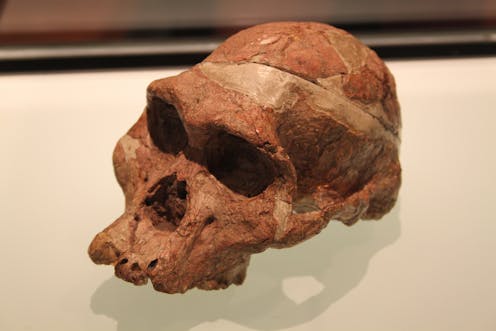
As a curator of Plio-pleistocene material, I curate specimens aged between five million and 12 000 years old. That includes early hominids and associated fauna. The most famous “member” of the Plio-Pleistocene collection is the skull of a human ancestor discovered in South Africa and known as Australopithecus africanus.
The skull is affectionately known as Mrs Ples – though more recent research I conducted with a colleague suggests it belonged to a male. Whatever its sex, the skull provides further evidence that Africa was the cradle of humankind.
Curation isn’t a “one size fits all” job. I handle the Plio-pleistocene collection because that’s where my expertise lies – I have a PhD in palaeoanthropology, and specialised in dental morphology. It is essential to have different curators managing different collections in museums, because each collection needs a specialist who studied species from that particular time period in detail.
A palaeontologist specialising in dinosaur morphology will not be able to properly curate a hominin collection, for instance. Curators generally include or add items into their collection based on their speciality area.
Items come to a museum in different ways. Field work is one approach; actually getting out to a site to find and identify more specimens that fit into a particular collection. Ditsong undertakes ongoing field work at Bolt’s Farm, a heritage site in the Cradle of Humankind where we’ve excavated numerous materials and fossils.
Sourcing from other experts is another way. I’m not an artist, so I would approach artists to reconstruct a specimen in its life form or a palaeo-environmental reconstruction of a particular period.
It’s very rare for palaeontological objects to be donated to a museum. This is because they are meant to be sourced through some sort of fieldwork with permission from the South African Heritage Resources Agency. We must carefully check an item’s provenance before accepting it as a donation.
Varied responsibilities
Creating a collection is only one part of a curator’s job. I also need to keep the collection safe and undamaged. Items must be properly stored to guard them against humidity or temperature fluctuations. It’s also important to keep them out of sunlight.
The collection also needs to be carefully inventoried to check if what’s displayed corresponds with the electronic or hardcopy databases. On any given day, I will randomly select specimens from the electronic database and go check if they are still present in the collection.
And there’s no point in having a great collection if people can’t see or study it. Researchers are continually studying different specimens and confirming old conclusions or breaking new ground. But not just anyone can walk in and start measuring priceless ancient fossils; researchers must ask for permission, in writing, with a proposal outlining their planned study.
Once permission is granted and a researcher arrives at the museum, I pull out the requested specimens and later return them to the collection.
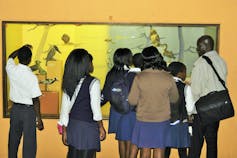
Curators often lead tours for the general public. Our museum attracts local and international tourists, as well as scholars; I take them on a tour and discuss human evolution. This happens quite often, sometimes twice in a week, depending on the arrival of visitors at the museum.
Finally, curators must also be researchers. I study the museum’s existing collection and any new heritage objects that are added to the collection. Then I share my findings with relevant stakeholders, including the scientific and the general community, as well as policy makers in government structures.
Guarding heritage
I like my job. Every day it feels like I just walked years back into the past, at that particular moment, and can possibly infer events of that time in history. It is rather amazing.
Curation is a field that has plenty of potential in South Africa; it’s a career choice young people should consider. With all the wealth of heritage in the country, as well as continuous discoveries taking place in palaeontology, young curators have the potential to participate in solving the mystery that is our existence on planet earth.

Gaokgatlhe Mirriam Tawane does not work for, consult, own shares in or receive funding from any company or organisation that would benefit from this article, and has disclosed no relevant affiliations beyond their academic appointment.
Source: The Conversation – Articles (AFRICA)
Read more on The Conversation.
Join the fun: Add Your event | Submit a Press Release | Add your listing.


