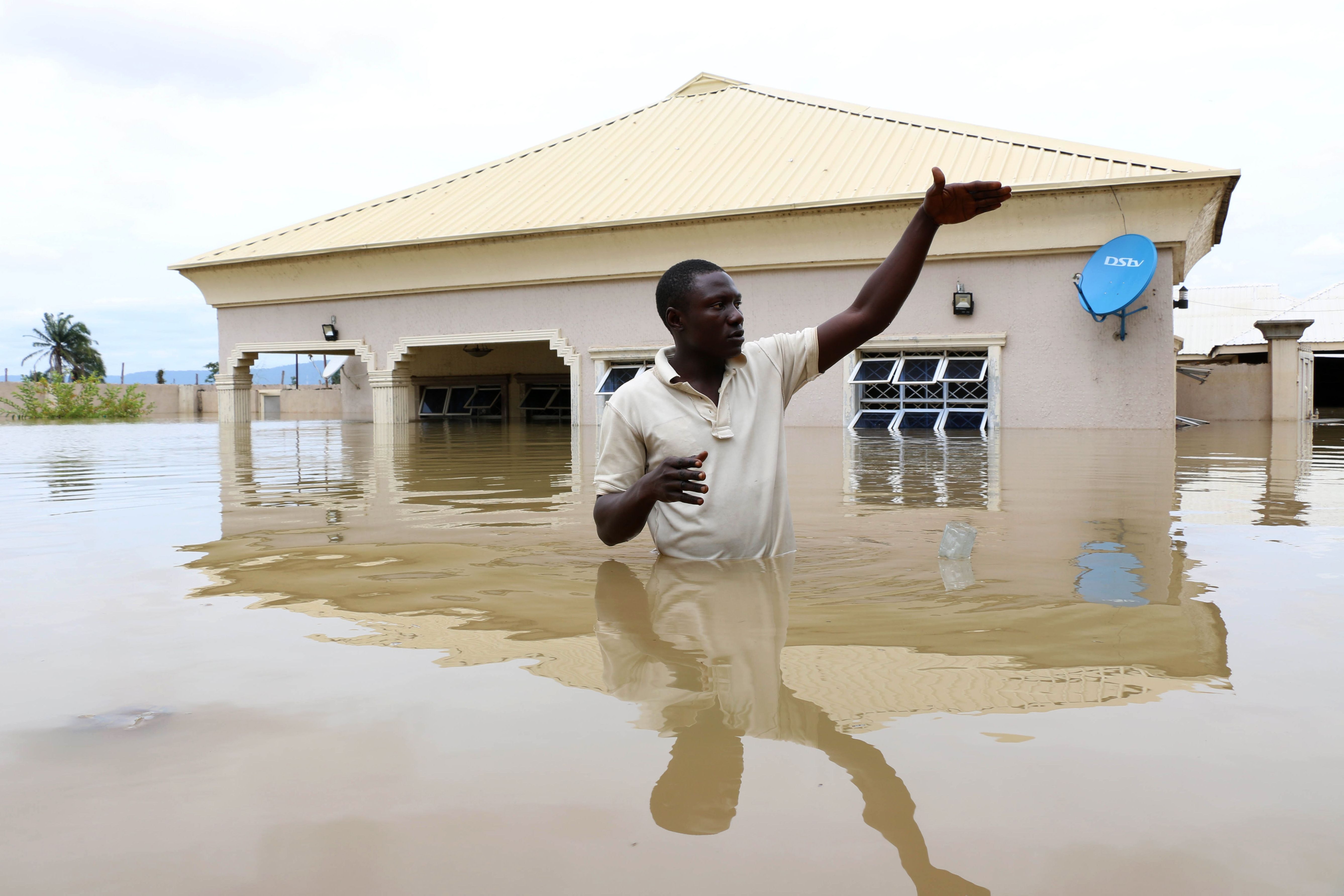
Flooding is one of the most prevalent and devastating disasters in Nigerian cities. It happens every year in many states of Nigeria. And it has significant social and economic impacts. In 2010, approximately 1550 people died and 258,000 displaced by 19 flood events. In 2012, Nigeria experienced its worst flooding in recent history. Two million people were forced from their homes and 363 died. The same year, a monetary loss of approximately $6.5 billion in damages was recorded.
The frequency and intensity of flooding in Nigerian cities is attributed to many factors. These include inadequate drainage, haphazard physical developments, and blockage of drainage channels by solid waste. Population growth and illegal erection of buildings and other structures are also cited. A link has also been made between increasing flood incidence and climate change. A combination of these challenges is a recipe for flood disaster in cities.
Attention to the issue is increasing in Nigeria, with a view to reducing vulnerability.
In my PhD thesis, I looked at the typology, trend and impacts of flooding in Lagos and Port Harcourt, cities in the southern part of the country. I also examined factors influencing residents’ level of vulnerability, using the Sendai Framework.
The Sendai Framework is a global framework the United Nations adopted in 2015 to reduce disaster risk. It emphasises four ways to minimise the risks of disasters. These are: understanding disaster risk; strengthening disaster risk governance; investing in disaster risk reduction; and enhancing preparedness.
Nigeria has not implemented any of the components of the Sendai Framework.
Read more: Nigeria has a flooding challenge: here’s why and what can be done
My research
I distributed 443 questionnaires to household heads and conducted 32 in-depth interviews with officials of key government ministries and agencies. These were the ministries of environment, physical planning and urban development and the state emergency management agency in Lagos and Rivers states, the Nigeria hydrological services agency, and the national emergency management agency. I also spoke with representatives of community groups and faith-based organisations.
I found that institutional failures, inadequate infrastructure, socio-economic challenges and disaster education are factors influencing Nigerian cities’ vulnerability to flood disaster.
Some of the respondents said disaster risk management agencies were not able to consistently carry out flood preparedness and mitigation activities in their cities. These were the national emergency management agency, state emergency management agencies and ministry of environment. They were not carrying out awareness campaigns, identifying hazards, assessing risk or studying vulnerability. Respondents also said the state ministries of physical planning and urban development were not properly monitoring development in Lagos and Port Harcourt. They said these problems were direct consequences of institutional failures.
I discovered, however, that the state ministries and agencies faced challenges. Funding, personnel, operational equipment and remuneration were all inadequate. The cities also lacked appropriate legislation and harmonised emergency systems that would help institutions to do their work.
About 67% of respondents said their cities lacked adequate infrastructure such as roads and drainage system. And development of buildings and facilities did not always conform with regulations and controls.
The study showed that most residents were not well informed about flood hazards and impacts. Disaster education should include early warnings and flood preparedness.
Respondents said a series of floods had resulted in widespread poverty and unemployment. Their ties with families and friends were also affected.
Read more: Lagos state is likely to get hotter and more humid, leading to greater health risks
What needs to be done
It is essential for government, non-governmental agencies, community-based organisations and residents to join forces to prepare for floods and reduce their impact. Funding, staff development and technical assistance are particularly important. This will enable and encourage communities to follow effective practices.
Community participation will also strengthen social cohesion and cooperation. It will provide opportunities to integrate disaster management into local development planning processes and systems.
Modern technology, which uses geospatial infrastructure to identify and map out areas prone to flooding, should be embraced. It should inform appropriate action toward disaster preparedness, rescue, and recovery. This is in line with the United Nations International Strategy on Disaster Reduction concept of living with floods rather than fighting them.
As a result of continuous increase in the built-up surface and growing settlements in low-lying areas, the existing infrastructure in Lagos and Port Harcourt cannot cope with the run-off and water volume it faces. This leads to frequent, localised flooding. State governments should invest in roads and drainage systems for effective flood risk reduction.
Public information campaigns in the media and through community-based organisations would encourage a culture of flood preparedness, prevention, mitigation, response and recovery.


