Nigeria faces the triple challenge of providing reliable power supply,
reducing greenhouse gas emissions, and keeping energy affordable to consumers.
The availability of electricity in Nigeria has worsened over the years. The country has been unable to meet demand because of its policies, regulations and management of operations. Its failure to provide adequate and reliable energy is well documented, specifically its impact on the economy.
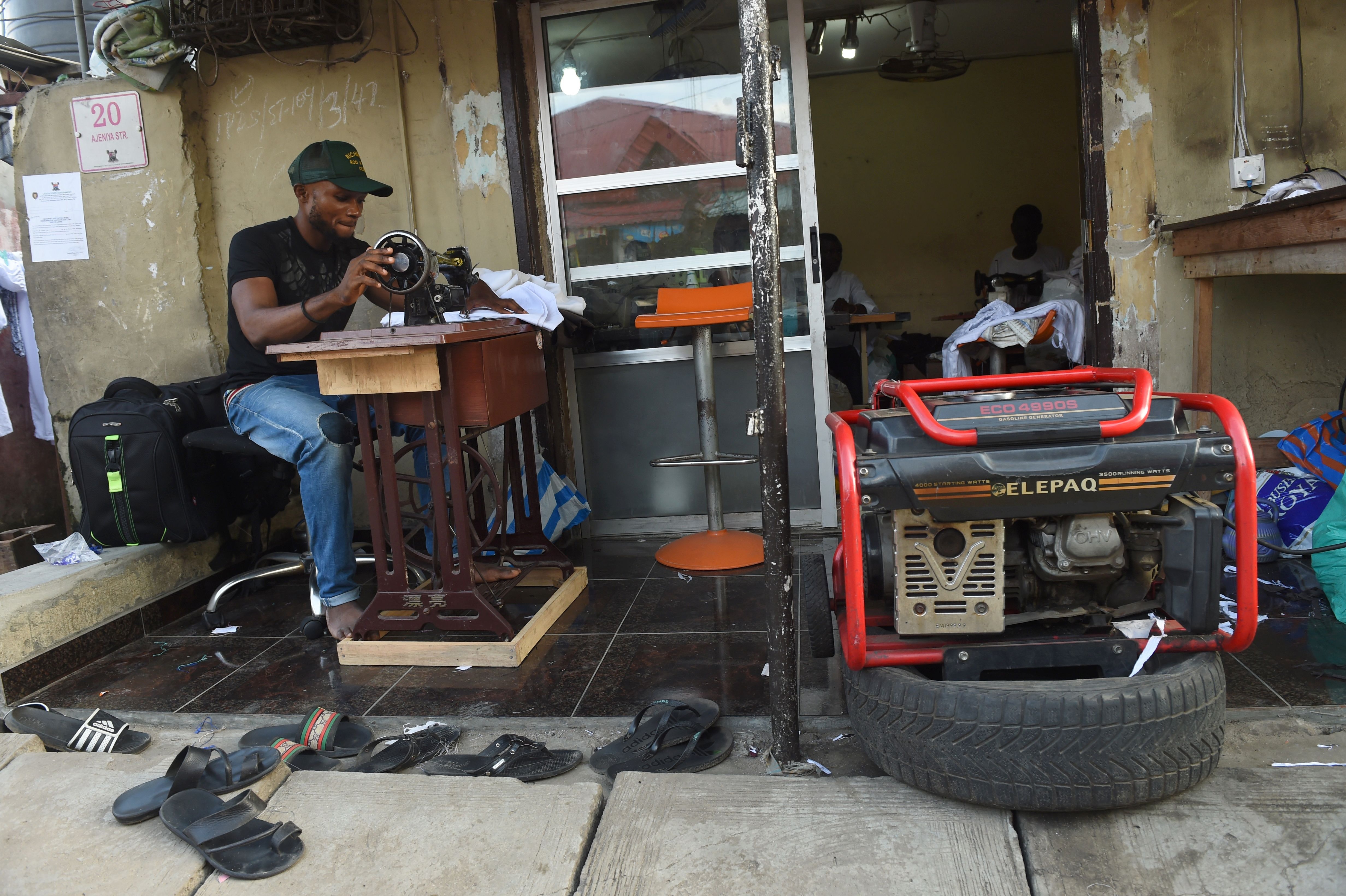
Its commercial and industrial sectors have become heavily reliant on self-generated power, using petrol and diesel generators. This accounts for nearly half of all electricity consumed.
Nigeria’s shortage of reliable power supply is a constraint on the country’s economic growth. The country needs to diversify its economy beyond oil and gas revenues, because that market is volatile. But if the energy-hungry private sector invested more in self-generation to make this possible, pollution would rise. An increase in self-generation would increase greenhouse gas emissions.
There’s extensive literature on the energy solutions that could provide reliable power supply. But most of it has focused on small-scale systems such as solar power for rural homes. There is still need for power in urban areas, not just for lighting homes but for powering commercial and industrial operations.
We sought to address this gap by examining the economic and environmental viability of hybrid off-grid power generation solutions for urban commercial centres. We looked for solutions that were affordable, reliable and sustainable. We took into consideration the fact that unreliable supply imposes indirect costs on people. Our work suggests that a combination of power generating technologies could help meet Nigeria’s triple challenge.
We surveyed 40 commercial centres in the capital city, Abuja, to establish their most common activities. This informed load demand projections. We then modelled a single commercial centre catering to these activities. We found that the majority of businesses in these commercial centres were boutiques, cyber cafes, salons, tailoring and grocery shops. Small-scale petrol generators served most of the commercial outlets on every shop floor.
We also interviewed three business owners from the commercial, education and entertainment sectors, who told us more about the economic, social and environmental costs of unreliable power supply.
Economic and social costs
A respondent in the commercial sector discussed the impact of electricity unreliability on business performance. He runs a male grooming salon. He said he couldn’t operate air-conditioners for long periods and the heat affected his business productivity.
In the education sector, our respondent highlighted the amount of time spent shuttling the school and business centres to ensure learning materials are always available to students. When the power is off, these centres are the cheapest places to produce paper-based learning materials.
And the entertainment sector interviewee said his turnover was halved when the power was off. Being a musician and music record producer in the digital era means that everything in music’s creative and distribution process is online and depends on power supply.
In evaluating the impact of electricity unreliability on quality of life, the commercial sector interviewee enabled us to draw the link between power supply, business profitability and personal stress. Financial worry can take a toll on mental and physical health. We heard about the stress of working around the power supply situation. Particularly, the disruption to sleep patterns caused by having to catch up work outside normal hours. The power supply situation also has an impact on the health sector. Especially, in providing health care services.
Unreliable power supply comes with environmental cost too. Petrol and diesel generators increases pollution, with a negative impact on climate change and human health. In turn, environmental damage can result in agricultural job losses.
National electrification efforts
Nigeria’s electrification initiatives have favoured the expansion of centralised power systems to meet urban energy demand and decentralised power systems for rural areas. Such an approach could still leave a shortage of electricity in urban areas because of the continued movement of people from rural to urban areas in search of better quality of life. Extending the electricity reach of centralised systems might be costly, particularly in meeting the demand of the new urban population.
The most practical solution for countrywide electricity access is the combination of centralised and decentralised power systems. These solutions would ideally provide uninterrupted power supply, have cheap operating costs and be environmentally clean.
Our case study on commercial centres met all three objectives with a system that combined power generating technologies (renewable and non-renewable sources). Results further suggested that excess energy generated by these systems can provide electricity to other sectors, including residential areas.
The model solution was an integrated hybrid solar-photovoltaic based power system without battery storage.
The system operates on solar power for an average of six hours a day. Solar-PV is the preferred renewable energy technology for Nigeria because of abundant sunshine. Diesel and petrol generators are used for the other 18 hours of the day. Solar-PV and a diesel generator meet the average and peak daily load demand. The petrol generator meets the daily low load demand. The system takes one to three months to set up, directly where it is needed. It’s modular and scalable and puts energy security in the hands of households and businesses. They can monitor energy costs, savings and emissions.
In our model, the system met 56% of the commercial centre’s total energy demand from solar-PV and the rest from generators. It was assumed that the system would be maintained four times a year to prevent unplanned downtime.
The operating costs were minimised by meeting the bulk of the daily demand with solar-PV. This also helped reduce environmental pollution.
Our study shows that such a hybrid system can help Nigeria address its triple challenge of unreliable power supply, pollution and the economic cost of electricity to businesses and households. But for such a solution to power residential areas and communities from its excess energy, government would have to create an enabling environment.
Policy changes
The electricity market would need to be structured to make energy trading possible. This is where an autonomous energy producer can sell excess power to a residential estate, for example, at a price the buyer and seller agree on.
At present, anyone generating over 1MW of electricity needs a power generation licence to legally trade energy. A more realistic benchmark would be about 10MW, so that licensing doesn’t become a bureaucratic stumbling block.
Effective energy policies and regulatory frameworks would be needed to guide climate change mitigation efforts as well as energy trading.


