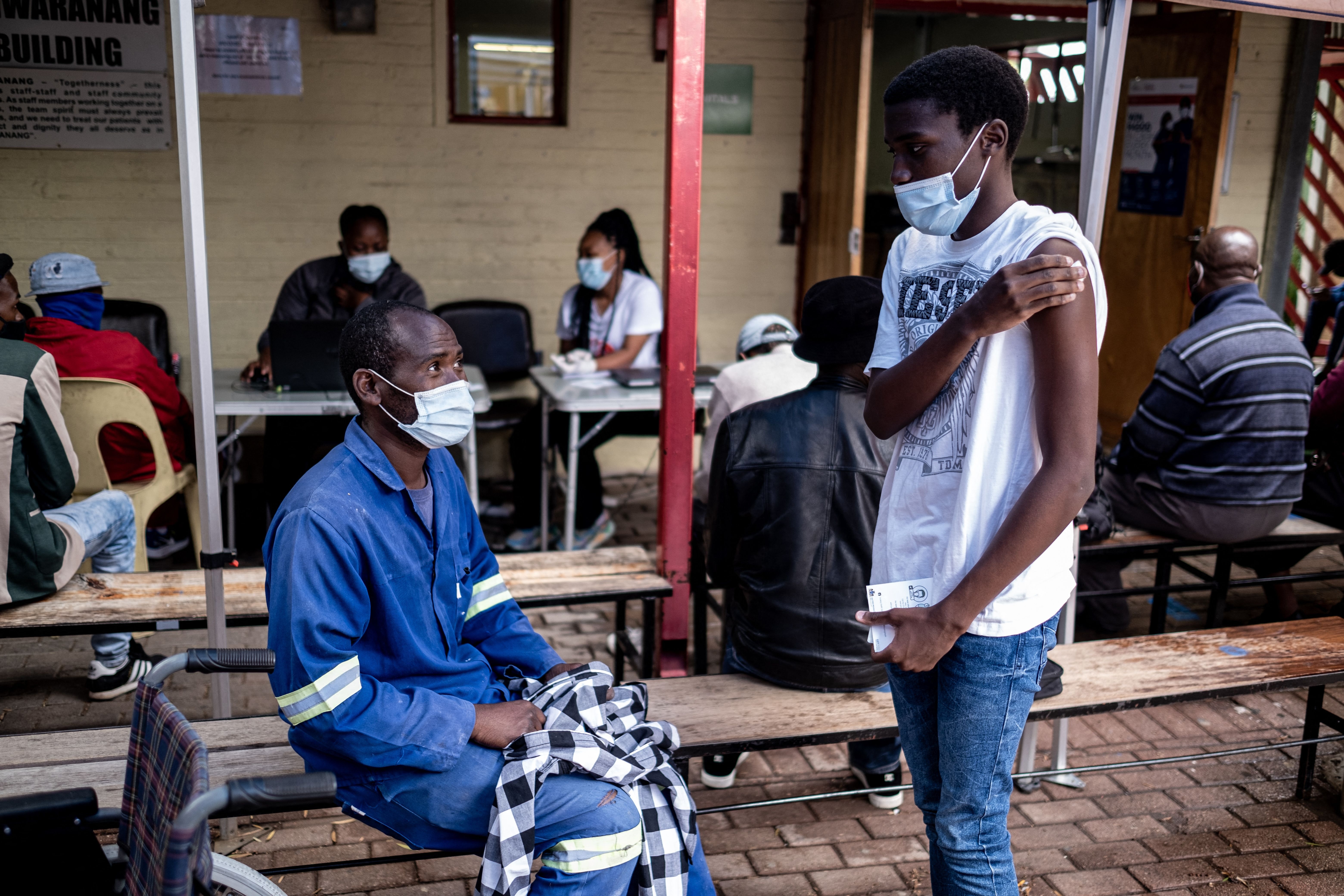
After around two years of hyper vigilance and restrictions, pandemic fatigue is beginning to set in. Globally, there are waves of protests against public health measures to curb the spread of COVID-19, including vaccination. At the same time, countries are easing restrictions or lifting them all together. Does this spell the end of the COVID-19 pandemic? Infectious diseases expert Veronica Ueckermann takes a closer look at the situation in South Africa and what may lie ahead.
What do we know about COVID-19 at this point?
The omicron variant is currently dominant in South Africa and worldwide. It is highly transmissible, but associated with less severe disease in the South African context. Hospitalisations and deaths are still seen worldwide, though, particularly among the unvaccinated and vulnerable groups. So there is no room for complacency.
The rapid spread of the omicron variant worldwide, together with increased global vaccination, should result in high levels of immunity worldwide to SARS-CoV-2. This is likely to change the face of the pandemic to less severe infections, less pressure on healthcare facilities and an easing of restrictions. This does not mean that COVID-19 is over. We are still likely to experience periods of increased cases, smaller-scale outbreaks and even the development of new variants.
Recent evidence shows that HIV-infected people who have a weakened immune system have a greater quantity of SARS-CoV-2 in their bodies when they get infected with it, and they can infect other people for longer. It’s speculated that omicron arose in this context. Researchers are concerned that new SARS-CoV-2 variants could arise in people whose HIV has not been detected and treated adequately. This is an important consideration in South Africa, where there is a high prevalence of HIV.
A recent publication in the Journal of the American Medical Association focuses on the one-year outcome of patients who were admitted to intensive care with COVID-19 in Canada. Nearly three quarters of patients studied had persistent physical symptoms. One quarter reported mental health effects of their admission. This highlights the need to look beyond the mortality and morbidity of acute COVID-19. Severe COVID-19 can have long-term physical, mental and financial repercussions.
What does that mean for the way individuals behave in future?
According to the World Health Organisation (WHO), the acute phase of the pandemic could end by the middle of this year, provided the world reaches the target of vaccinating 70% of the population. WHO Director General Dr Tedros Ghebreyesus recently told media in South Africa that vaccination behaviour would certainly influence the way forward.
It’s in our hands. It’s not a matter of chance. It’s a matter of choice.
By mid February around 42% of South Africans were fully vaccinated. Despite ample availability of vaccines, vaccine hesitancy remains a reality in South Africa and is the main contributor to the country falling short of WHO targets.
After the recent omicron wave, restrictions have been relaxed in South Africa. Isolation guidelines and contact management have been changed. The core principles of prevention are still maintained. These include mask-wearing, hand hygiene and vaccination.
The effectiveness of mask-wearing has been heatedly disputed. But there is good scientific evidence that mask-wearing does decrease the risk of contracting COVID-19 and curbing its spread. So despite the general COVID fatigue, this behaviour remains an effective one.
It’s a relief that the pandemic may be shifting from the acute phase that has so radically affected daily lives. History would caution us though to remember we are not yet over the pandemic. Just as the 1918 flu pandemic was celebrated as having ended and restrictions were lifted, a wave of disease followed. Healthcare facilities were overwhelmed and many people died. Our behaviour should, therefore, remain cautious and we should not lose the race in its last lap.
What does that mean for policy?
South Africa has already seen a change in policy as the general climate of the pandemic has shifted. This involved decreased isolation periods for symptomatic, infected individuals; abandoning the practice of quarantine and contact tracing; and even allowing asymptomatic positive individuals to continue without isolation. Restrictions on gatherings and interactions in public places have been eased under adjusted level 1 restrictions.
Going forward, the looming fifth wave and sub-optimal vaccination coverage are likely to slow our path to normality.
Policy will be dictated by the burden of COVID-19 infections and the possible emergence of new variants. Changes in policy that favour the resumption of economic activity, education and social well-being are welcomed by all South Africans. But history has taught us that caution remains the order of the day. Drastic policy changes (such as complete abandoning of mask-wearing and lifting of all restrictions) that may need to be retracted when case loads increase are unlikely to be helpful.


