When temperatures rise, so do crime rates: evidence from South Africa:
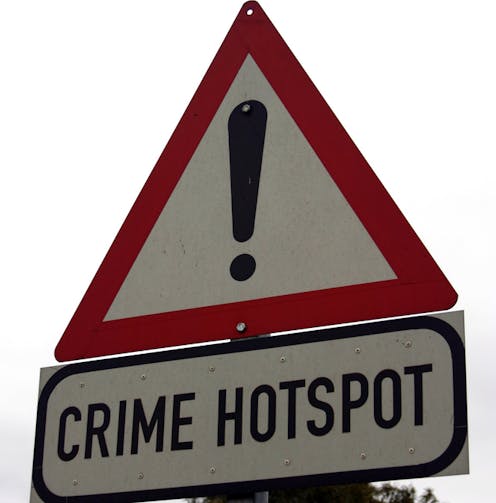
Over the past few decades there has been a growing worldwide interest in examining the relationship between weather and various types of crime. Most research in this area has however produced inconsistent and often paradoxical results. For example, some studies have found no seasonal fluctuations in crime. Others have however found an increase in crimes during either the colder winter months or warmer summer months.
Very little is known, however, about how the magnitude and spatial distribution of criminal activity in South Africa is affected by climatic conditions. So we set out to determine whether there is an association between criminal activity and climate in the country’s capital city, Tshwane.
We were specifically interested in whether the magnitude of crime changes depending on extreme weather conditions, notably temperature and rainfall. In other words: do extremely hot days or high-rainfall days experience higher or lower rates of violent, property or sexual crime?
We also wanted to know whether the spatial distribution of violent, property or sexual crime changes depending on the type of extreme weather event. Simply put, does crime occur in different places on extremely cold days than it does on really hot ones?
Our results indicate a strong association between temperature and criminal activity. That is, as the temperature goes up, so too, does crime. There’s a less significant association between rainfall and crime. The spatial distributions of all types of crime are found to differ significantly depending on the type of weather extreme observed.
The results could help law enforcement agencies better understand how weather affects crime patterns in South Africa’s urban areas and develop and implement appropriate crime prevention measures.
Diving into data
The notion that there’s a relationship between criminal activity and climate is nothing new. Over a century ago Belgian sociologist and scholar Adolphe Quételet observed that crimes against people reach a maximum during the warmer summer months, while crimes against property reached a peak during winter.
He later developed the temperature-aggression theory, which provides a psychological explanation for the increase in crime during warmer months. It suggests that warmer temperatures will lead to an increase in an individual’s frustration and discomfort levels and so increase the likelihood of aggression. This could in turn result in interpersonal crimes such as assault.
We used data and statistical analysis to find an association – if any – between extreme weather conditions and crime in the nation’s capital, Tshwane. We obtained climate data for the city from the South African Weather Service for a 5-year period from September 2001 to the end of August 2006.
Next, we calculated daily average temperatures before extracting the ten hottest for each year of the five years. That gave us a dataset of 50 days. The process was repeated for low-temperature days, high-rainfall days, no-rainfall days and random-rainfall days.
Then came crime data for the same period. We obtained this from the South African Police Services’ Crime and Information Analysis Centre. The data included the geographical location of each crime; the date and time of day that each crime was committed; and the specific type of crime committed. A total of 1,361,220 crimes were reported in the five-year period across 32 different categories. All crime was then categorised into either violent, sexual or property crimes before we calculated a count of crime per type per day.
Next, we used a recently developed spatial point pattern test to determine whether the spatial distribution of crime on the three types of days – very hot, very cold and rainy – changes. That is, does the spatial patterning of crime in Tshwane change depending on certain rainfall and temperature conditions?
What we found
Our findings demonstrate that the amount of violent, sexual and property crime in the city of Tshwane is significantly affected by temperature and, to a lesser extent, rainfall.
The magnitude of violent, sexual and property crime was higher on hot days compared to cold or random temperature days. Violent crimes increased by 50% on hot days compared to very cold days. Sexual crimes increased by 41% and property crime by 12%. Violent and sexual crimes in Tshwane also decreased on high-rainfall days. Surprisingly, property crime was found to increase slightly on heavy rainfall days, though only by 2%.
Second, the spatial distribution of violent and property crime was found to differ on days by temperature and rainfall. There is a considerable change in the way that particularly violent and property crime is spatially distributed in Tshwane depending on the weather conditions. We also found that the distribution of sexual crime did not seem to differ significantly by temperature or rainfall.
More research is needed to confirm these findings and to determine if the results can be generalised to other urban areas in South Africa.
Applications
The results of this research have the potential to inform how law enforcement agencies and other relevant stakeholders tackle crime in South Africa.
Our findings can be used to identify communities that are more prone to crime under certain meteorological conditions and allow stakeholders to target these neighbourhoods and plan interventions. It also allows stakeholders to adequately develop and implement suitable intervention practices in similar at-risk neighbourhoods.
For the police and others responsible for specifically addressing long-term solutions to crime, crime pattern analysis can utilise the understanding of how weather events influence crime patterning and provide measures to take appropriate action.

Gregory Breetzke does not work for, consult, own shares in or receive funding from any company or organisation that would benefit from this article, and has disclosed no relevant affiliations beyond their academic appointment.
Source: The Conversation – Articles (AFRICA)
Read more on The Conversation.
Join the fun: Add Your event | Submit a Press Release | Add your listing.


