Why April 27 in 1994 marked a point of no return for South Africa:
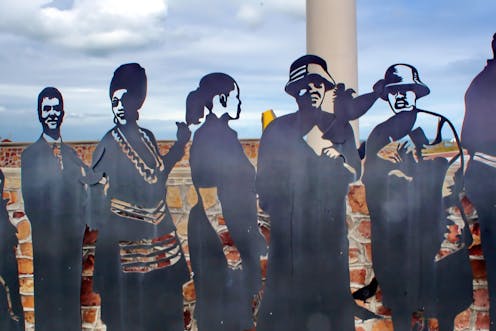
Every year most states celebrate something special. Their independence day, monarch’s birthday (Thailand, Japan, Oman or the Netherlands), patron saint day (Ireland), beginning of a revolution (Iran, France or Egypt) or their constitution (Norway and Poland). In South Africa Freedom Day, celebrated on April 27, is one of them. It marks the first day on which all the country’s citizens cast their vote for a democratic government 24 years ago.
The day’s importance in South African history cannot be underestimated. It captures the ideal of political democratisation, a new foundational contract in the form of the new Constitution. And a fundamental transformation in the country’s power relations.
Associated with the elections was also the notion of a “new South Africa”. This included a new state identity premised on a new definition of citizenship, new national symbols as well as new forms of state representation. It also included new diplomatic relations and new national sports teams as well as being accepted into the Organisation of African Unity. Acceptance by international organisations was also set in motion.
With 24 years of hindsight, what was the significance of that day?
A peaceful transition
The 1994 election marked the point at which the constitutional negotiations had reached a peaceful point of no return. It stands in strong contrast to electoral violence or instability in many parts of the world, such as Kenya and Zimbabwe, Côte d’Ivoire or the Ukraine.
The other big difference is that in most countries new constitutions have to be accepted by a national referendum before their implementation. In South Africa the election ratified the negotiated agreement, thereby becoming the social contract of the new South Africa.
In the two years that followed, the final Constitution had to be negotiated. But the fact that the 34 negotiated Constitutional Principles were binding on the Constitutional Assembly meant that the constitutional framework had already been cast in stone by 1994.
Election day in 1994 made concrete the notion of the “new South Africa”. It represented the overwhelming endorsement of a Constitution that established a non-negotiable democratic value system. In real terms, it meant that the constitutional values in Section One of the Constitution could only be amended by a 75% majority of the national assembly. These included non-racialism, non-sexism, a united state and regular elections.
Over and above the democratic values, 27 April also entrenched values underscoring the transition. These included political tolerance, reconciliation, nation building, dialogue and negotiation, and diversity. Together with the moral values of public service, socio-economic transformation and South Africa’s international responsibility to promote liberation, democracy and human rights, a political culture was set in very idealistic terms.
But the “new South Africa” has become tattered and torn in the last decade. “State capture” embodied the fact that the public service ethos was replaced by elitism, career politics and neo-patrimonial enrichment.
President Cyril Ramaphosa’s entry into national politics could arguably be the beginning of a “second transition”. It could mark the point at which an embattled South Africa moves to becoming a renewed South Africa. That’s if in practice it’s in line with his presidential mantra of renewal and unity, firstly in the African National Congress but also in general.
27 April 2018 can therefore signify a difference: a renewal and a return to the values of the 1994 social contract, and, importantly, the beginning of a new contract about a socio-economic paradigm shift. The fact that state capture implicated and contaminated the private business sector so severely has created a ripe moment for a major rethink about its role. Could for example, the 1994 values of nation building be converted into values of economy building? Economic integration, reconciliation, unity and respect for human dignity would then be a reaffirmation of 1994.
Rethinking Freedom Day
As a national symbol, 27 April should be considered along with South Africa’s other public holidays. These include Human Rights Day, Youth Day, Women’s Day, Heritage Day and the Day of Reconciliation. All of them contribute towards what constitutes “freedom” in the country. Maybe 27 April should, therefore, not be called Freedom Day, but South Africa Day. This would emphasise the constitutional and democratic transformation it symbolises. And its significance for the South African state, as part of a broader “freedom” concept.

Dirk Kotze does not work for, consult, own shares in or receive funding from any company or organisation that would benefit from this article, and has disclosed no relevant affiliations beyond their academic appointment.
Source: The Conversation – Articles (AFRICA)
Read more on The Conversation.
Join the fun: Add Your event | Submit a Press Release | Add your listing.


