Why integrating HIV with non-HIV services in Uganda won’t work:
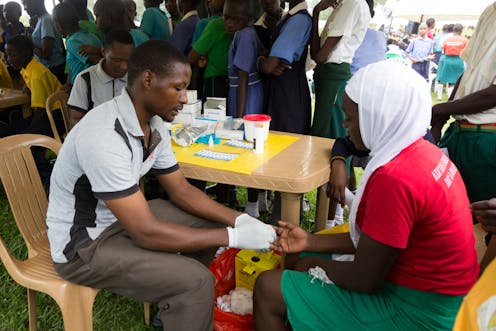
In many countries in sub-Saharan Africa, HIV services are still offered separately within health facilities. These HIV clinics have their own dedicated staff and infrastructure such as waiting areas, a separate patient flow system and they typically run on designated days of the week. This is known as a vertical model and was touted as a pragmatic emergency strategy to overcome sub-Saharan Africa’s weak health systems in the quest to rapidly enrol millions on HIV treatment.
Vertical HIV clinics are very common in sub-Saharan Africa. Studies conducted in Kenya, Swaziland and Zambia suggest that stand-alone HIV clinics are the rule rather than the exception in the region.
Stand-alone HIV clinics have depended substantially on donor aid especially from the US’s President’s Emergency Plan for Aids Relief (PEPFAR. But over the past five years, there have been persistent reports of declining international assistance to scale up HIV services in sub-Saharan Africa. This has been one of the main drivers of calls for integrating HIV services with non-HIV services to avoid duplication and promote long-term programme sustainability.
Numerous studies have been done evaluating the integration of HIV services with other health services such as sexual and reproductive health service or those for non-communicable diseases. In addition, several policies, including World Health Organisation guidelines, have outlined ways in which HIV services can be integrated into general health services.
But, research we conducted across eight geographic sub-regions in Uganda shows that the country is not prepared for this integration. This is because general clinic staff don’t have specialist HIV knowledge, as well as the fact that sheer numbers of HIV clients will make it difficult. We argue that a more nuanced approach should be taken.
Why not
Our study identified a number of potential challenges in doing away with stand-alone HIV clinics.
Firstly, we found that HIV-related stigma was widespread among health workers. For example, we found that some health workers in the labour ward of a public health centre refused to touch HIV positive expectant women.
Secondly, we found that HIV-positive patients were discriminated against. In one large hospital we visited, the pharmacy prioritised patients who paid for their medication while HIV patients were treated last because they don’t pay.
Thirdly, health workers maintained that HIV disease management is a speciality skill. They argued that requiring all health workers to learn how to manage HIV treatment overnight was not feasible because of continuous updates in HIV treatment protocols. Also, the one-on-one touch by clinicians in HIV care would be hard to maintain in general clinics.
Fourthly, there’s the problem of numbers. HIV clinics in Uganda were described as “a hospital within a hospital” because of the large patient volumes. Uganda has 1.6 million people living with HIV with 898,200 enrolled on antiretroviral therapy in 2016. This suggests that the sheer volume of HIV clients at health facilities is too large simply to be merged with the general pool of patients.
What we found
Most studies evaluate integrating HIV with non-HIV services under experimental settings. Our study is different in that the majority of health facilities we surveyed had actually experienced having specialist HIV clinics, as well as been through the experience of integrated care.
Several hospitals we visited had reverted back to a stand-alone clinic model after failed attempts at integrating HIV with non-HIV services. Health workers and patients cited a number of reasons for this happening. These included:
-
The chaos that ensued when all hospital laboratory services were brought under one roof. This included multiple accounts of HIV patient samples being lost.
-
The increased workload while implementing an integrated package of services.
-
A shortage of physical space.
-
The ability of health facilities to conduct HIV and non-HIV laboratory tests concurrently.
-
The absence of counselling rooms when facilities were integrated into general out-patient services. This affected the ability to offer HIV positive patients’ privacy.
-
Increased waiting times in integrated facilities.
What next
Our study suggests that a wholesale switch to integrated health services is not feasible and a more incremental approach is advisable. From our findings it is clear that the health system in Uganda is unprepared for integrated care.
Retraining health workers, preparing people for the changes and shortages of space are among the issues that need to be addressed. Blanket integration policies are impractical and need to be tailored to country context.

Henry Zakumumpa received funding from The Wellcome Trust (UK) through the Consortium of Advanced Research Training in Africa (CARTA).
Source: The Conversation – Articles (AFRICA)
Read more on The Conversation.
Join the fun: Add Your event | Submit a Press Release | Add your listing.


