Why it’s important to recognise multiple food systems in Africa:
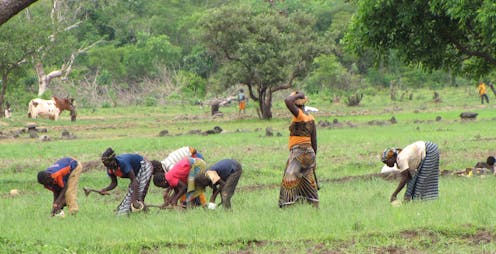
There are more than 815 million malnourished people in the world today. Almost 243 million of these are in Africa, where the problem is highest. Unfortunately, development organisations may be making food insecurity worse as they push the most advanced forms of agriculture to the detriment of other food systems. These include methods like foraging and subsistence agriculture, on which poorer households often rely.
Historical changes in food systems – the way food is produced – have, for a long time, been conceptualised in terms of agricultural revolutions. According to this thinking, the world has experienced three major agricultural revolutions.
-
When hunting and gathering was replaced by crop farming around 10 000 BC;
-
When intensive organic agriculture arose in 18th century Europe and displaced less productive forms of farming; and
-
When industrial farming began in 20th century North America, gradually spreading around the world.
But viewing the world in terms of these agricultural revolutions is problematic. According to this sequence, an older practice – like gathering – is no longer deemed practical; it’s even considered extinct. This logic suggests that the best way to address global malnutrition is to focus on the most advanced system. Today, that’s industrial food production where farmers use improved seeds, pesticides and inorganic fertilisers to produce more food.
But this view is flawed. We conducted research on gathering, or foraging the leaves and fruits of wild plants as well as insects, in West Africa. Our research suggests that hunting and gathering was never entirely displaced by crop farming.
This older form of food production is especially important for dietary diversity and nutrition. It’s also largely accessible to all income groups in rural communities in Burkina Faso, the focus of this piece of research. In fact, 92% of the female farmers we studied had eaten at least one foraged food in the past 24 hours. Our work showed that foraging is not a standalone livelihood. It’s something that nearly all farmers do on the side to supplement their diets.
These insights are important for those working to promote food security globally. It shows that multiple food systems often coexist in the same space. Unfortunately, an understanding of how food systems change in terms of agricultural revolutions typically means that we don’t recognise the existence, or nutritional contributions, of older food production systems that may be important for the poor.
Foraging for food
Our ongoing research in the region focuses on the nutritional impact of the New Green Revolution for Africa. This is a concerted attempt by international development organisations, such as the Alliance for a Green Revolution in Africa and the US Agency for International Development, to introduce industrial agriculture to African farmers in the form of improved seeds, pesticides and inorganic fertilisers.
When we found that foraged foods, such as baobab leaves, African locust beans and tamarind, were an important part of the local diet, we decided to develop a side project on it. We interviewed 150 female rice farmers in five different villages and made an inventory of everything they and their families consumed over the past 24 hours. We also asked about the types of foods they foraged for and how often.
We found that foraging persists as an important source of nutrition for the vast majority of rural households alongside many approaches to farming in Burkina Faso. Foraging happens in relatively undisturbed tracks of forests, but more regularly happens within and around existing farm fields. Fruits and leaves are collected from trees deliberately left standing in agricultural fields. Some seasonal insects are gathered as rich sources of protein, and leaves are harvested at the edges of fields or on recuperating plots.
This shows that foraged foods are not only an incredibly important part of rural farmers’ diets, but a critical element in dietary diversity. Foraged foods, unlike other sources of nutrition like purchased items or farmed crops, are equally available to all. They are especially important during the hungry season, typically from about May to July in Burkina Faso, when poor households run out of food before the next harvest.
Foraging was just one example of a food system we encountered. There was also intensive organic agriculture in almost all of the rural farming households we surveyed. Some households produced cash crop fields of cotton which use purchased seeds, pesticides and fertilisers. There was also shifting cultivation at the periphery of village territories, where land is more plentiful and access to inputs more challenging.
It’s not that one type of farming or food procurement is better than the other, but that these different approaches –- all along the spectrum of agricultural revolutions – often complement one another and correspond to particular constraints and opportunities.
The way forward
Modern agricultural development often amounts to the building up of wealthy people’s food production strategies at the expense of poor people’s approaches. While this leads to the production of more food, it typically undermines the food security of the poor. This paradox of modern agricultural development, which often leads to more crops and more hunger, must be addressed.
This means moving away from “agricultural revolution thinking” that favours one type of farming dominating an area, towards using an all encompassing approach that recognises multiple food production approaches and makes these work together as a system.
Practically, this means thinking about how to improve the overall productivity of a system – which may combine different approaches like foraging and farming, rather than one piece of a system that experts have defined as the best or most advanced.
Julia D. Morgan contributed to the writing of this article. She is a recent graduate of Macalester College, majoring in geography and minoring in biology. Her Honours thesis was entitled “Correcting for the Inconveniences of Cultivation: Foraging as a Food Source in Southwestern Burkina Faso.”

William G. Moseley receives funding from US National Science Foundation (grant # 1539833) and the Womadix Fund.
Source: The Conversation – Articles (AFRICA)
Read more on The Conversation.
Join the fun: Add Your event | Submit a Press Release | Add your listing.


