Why it’s proving hard to eliminate the eye disease trachoma by 2020:
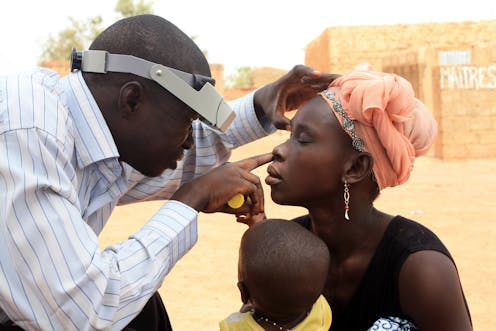
Trachoma is a disease that can cause blindness and visual impairment in about 1.9 million people every year. Poor communities in rural areas of countries in Africa, Central and South America, Asia, Australia and the Middle East are most affected.
What is trachoma?
It is a bilateral eye disease ranked as the leading cause of preventable blindness of infectious origin in the world. It is caused by the vector borne Chlamydia Trachomatis bacteria.
The particular strains of the bacteria are the Serovars A through C. Flies spread the disease by coming into contact with infected individuals. The bacteria can also be contracted through bodily fluids either by physical contact or sexual intercourse. The bacterium is also spread through contaminated bedding and clothing materials.
The bacterium is notoriously stubborn as it has the ability to alternate between its reticulate (smaller) and elementary (larger) bodily forms.
This bacterium is an obligate intracellular pathogen similar to Trypanosomia and Rickettsia. This means it can only survive inside a host cell. Therefore, properly eliminating the disease means loss of cell bodies in the host.
Poverty, poor sanitation habits and overcrowded areas are common factors that encourage the spread of the disease.
Young people are most susceptible to the disease. A study out of northern Cameroon showed a higher prevalence in participants younger than nine than in participants older than 15. Pupils come in contact with their peers’ bodily fluids or get infected from flies.
Trachoma is characterised by episodes of a keratoconjunctivitis (inflammation of the conjunctiva and cornea). This presents with redness and pain in the eye.
In the early stages of infection, the edges of the eyelid get deformed, causing the eyelashes to fold into the eye. This can lead to the cornea being scarred or eroded. This inward turning of the eyelashes is called a trachomatous trichiasis.
Twenty years ago the World Health Organisation (WHO) passed a resolution to combat the scourge of trachoma.
What are the rates of incidence and distribution of the disease?
Trachoma is currently endemic in 44 countries. The African continent is most affected. The disease is endemic in the inner countries of the Sahel belt such as Sudan and Ethiopia. The one ray of hope has been Ghana which last year became the first country in Africa to be declared trachoma free.
Available data show that the situation has improved dramatically over the past 20 years. In 2009, 41 million people still had trachoma. That was down from 83 million six years earlier. The WHO’s most recent data show that there are 1.9 million people who have been blinded by trachoma or suffered severe visual impairment. With the implementation of the WHO’s resolution, there has been a reduction in the prevalence worldwide.
What can be done to control it? How is it treated?
The WHO has provided a rapid grading system for the assessment of trachoma. This is to help manage the disease. The aim is to minimise damage to the eye during specific stages of the disease.
As part of the drive it set out a strategy to combat the disease that included:
-
Surgery to correct Trichiasis. In 2018 146,112 people underwent surgery for correction of trachomatous trichiasis, while another 89 million sufferers received various antibiotics for the earlier stages of the disease.
-
Antibiotic coverage to control infection: Pfizer is the producer of aithromycin and has donated more than 500 million units of the drug so far.
-
Face washing to improve hygiene
-
Environmental health improvement to reduce the transmission of the disease and breeding of vectors.
Improving the health of an environment and promoting face washing are geared towards preventing the spread of the disease.
Cleaner environments would mean little or no breeding space for the flies that serve as vectors. It would also mean that personal contact from infected individuals’ infected personal belongings will be minimised.
Face washing is especially important in rural communities where the disease is endemic.

Musa Mutali does not work for, consult, own shares in or receive funding from any company or organisation that would benefit from this article, and has disclosed no relevant affiliations beyond their academic appointment.
Source: The Conversation – Articles (AFRICA)
Read more on The Conversation.
Join the fun: Add Your event | Submit a Press Release | Add your listing.


