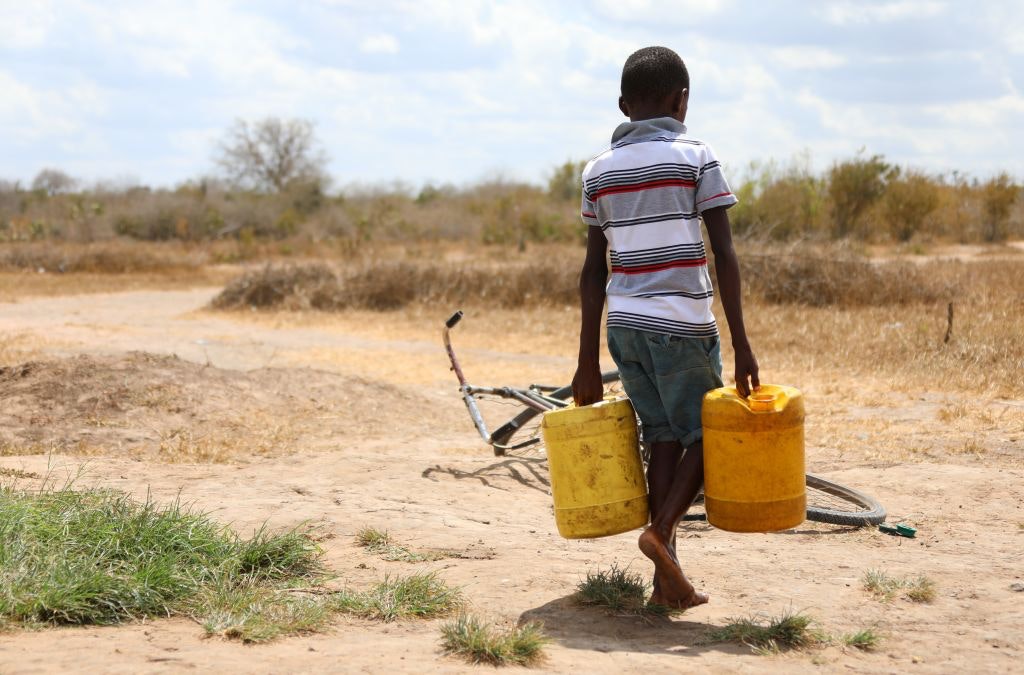
The ability of Kenya’s 47 county governments to manage food security has been met with various challenges. These have crippled their capacity to deal with the impact of the ongoing drought, as well as resource-based and inter-communal conflicts that have left about 3.5 million people at risk of hunger. These people live in arid and semi-arid areas, occupied by 38% of Kenya’s population. Environmental politics researcher Oscar Gakuo Mwangi explains why devolution has had a limited impact on local communities and what changes are needed to make it effective.
What is devolution in Kenya?
Kenya’s 2010 constitution introduced a decentralised system of government that took effect in 2013. Its main objective is to devolve power, resources and representation to 47 political and administrative counties.
The functions and powers of county governments are set out in chapter 11 of the constitution. The idea is that they promote social and economic development. They also ensure state services are easily accessible across the country. Devolved state services include agriculture, health, urban planning, housing, infrastructure and energy.
Devolution recognises the right of communities to manage their own affairs and further their development. It’s also expected to protect and promote the interests of minorities and marginalised communities, and share national resources fairly.
How can devolution contribute to food security?
Food is an economic and social right under the Kenyan constitution. Ensuring food security is, therefore, an objective of devolution – helping people access and realise their rights.
Kenya has several food policies, strategies and regulatory frameworks to guide its human and economic development agenda. They include the National Food and Nutrition Policy and its implementation framework (2017-2022).
County governments execute these national strategies through their integrated development plans. These are expected to be more attuned to the needs of local communities and households.
The national food policy covers the four dimensions of food security: availability, access, useu and stability. Kenya has various programmes and interventions that address each of these elements.
These interventions include enhancing irrigation and water management systems, improving linkages between research and industry, and boosting production and marketing of smallholder produce.
Read more: Scientists sound the alarm over drought in East Africa: what must happen next
County governments are responsible for planning, coordinating, implementing and monitoring food security and nutrition activities. They can also mobilise relevant stakeholders to help meet local needs.
County governments can establish steering groups to coordinate drought and early warning information. Steering groups comprise local leaders and professionals appointed by county leaders. They review relevant data, present proposals for action and implement risk management activities.
They can work with national bodies such as the National Drought Management Authority and the Kenya Food Security Steering Group. This steering group is a multi-agency body of state actors, non-state actors and external development partners. It focuses on emergency responses and planning around food security. It also mobilises resources, brings national and county stakeholders together, and conducts regular rainfall assessments.
One of the short-term risk management measures that can be implemented through these collaborations is improving water supply. This can be done by protecting and rehabilitating existing water sources, or drilling new boreholes.
What has been the impact of devolution on food security?
Devolution in Kenya has brought both opportunities and challenges for food security.
On the upside, County Integrated Development Plans bring together national food security policies, and county development plans and budgets.
Devolution has also improved analyses of the impact on households of various shocks to food supplies. These shocks include climate change, crop infestations, high staple food prices and conflict. This allows for responses that are better aligned with local risks.
On the downside, inadequate resource allocation, weak governance systems, and skewed political-administrative priorities have affected the capacity of county governments to implement food security policies and programmes.
In addition, sound policy and administrative linkages between national and county institutions have yet to be fully developed. That’s nearly a decade after devolution was introduced. This affects the capacity of county governments to plan, budget and implement food security programmes.
Financial resources for food security, and food monitoring and evaluation systems are also inadequate. That’s largely because Kenya allocates less than 3% of its national budget to agriculture. This, despite the country’s commitment in 2003 to allocate at least 10% of national budgets to the sector.
Read more: What the budget holds for the agriculture sector in Kenya
There are also the political priorities of county leaders. These have affected the implementation of food security policies. Leaders pay undue attention to electoral campaigns and rent-seeking projects that are awarded on the basis of political patronage and nepotism
What can be done to improve the benefits of devolution?
The country must first strengthen its governance systems, in particular inter-governmental policy and administrative linkages. This means supporting the mechanisms for coordinating the work of the central government and counties. They include the ministerial-level Intergovernmental Forum on Agriculture and the County Agriculture Executive Members Caucus.
Read more: Is eastern Africa’s drought the worst in recent history? And are worse yet to come?
The capacity of county governments to implement national policies must also be enhanced. County leaders have long complained about the national treasury’s delays in disbursing funds. National leaders and government bureaucrats need to provide counties with sufficient support, which includes financial resources.
But county politicians must also put food security ahead of political patronage projects.
Finally, the consequences of failing to support the role of county governments in providing food security can be detrimental. Food insecurity adversely impacts human security. In the long run, it is a threat to national security and political stability.


