Why linking rural and urban areas matters for development: a Ghana case study:
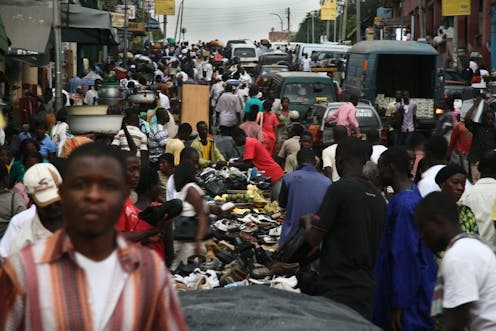
There’s rapid urbanisation happening across Africa. But the rural population hasn’t stopped growing. In fact, Africa is considered a rural continent – only 43% of its total population lives in cities and towns.
Often policies focus on rural areas, or urban expansion. In fact the key issue for regional development is to take into account the relationships and linkages between the two. This includes the flow of people, information, goods and services between rural and urban areas. Vibrant local economies and regional growth depend on the inter dependency between local production in rural areas, the urban market and enterprises.
In our study we set out to discover how these interconnections can promote local businesses in rural areas of the Ejisu-Juaben municipality outside Kumasi, Ghana’s second largest city.
We found that people living in rural areas were attempting to diversify their livelihoods through agro-processing, manufacturing and services. But poor infrastructure limited their ability to link to the urban centre. This in turn held back the area’s economic development.
Our study showed that the limited interaction between urban centres and rural areas was because of poor road conditions and networks, inadequate rural service centres, and poor investment in local markets.
This holds lessons for other countries across the continent. For example, for urbanisation to support regional development, intensive investment in quality transport infrastructure in rural areas is necessary. Diversifying and boosting investment in rural economies is also fundamental.
Ghana’s development model
Ghana has a district capital centred development model. This combines a decentralised system of government with local government structures.
For the most part, the structure is defined by one or a few urban centres and adjoining rural areas.
The system is anchored on the principle that there’s a symbiotic relationship between the district capital and surrounding rural areas. The two are supposed to reinforce each other to ensure local economic development.
In theory, this model applies to all the 254 metropolitan, municipal, and district assemblies in Ghana, including the Ejisu-Juaben municipality which is just 15km from Kumasi.
Ejisu functions as a major urban centre for other rural areas within the district.
As most of the district is rural, Ejisu is expected to stimulate local economic development throughout the surrounding rural areas. This is meant to happen in a number of ways. This includes providing social services, improving access to resources as well as markets, and creating non-farm employment.
The primacy of economic linkages
Our study showed that urban and rural communities in the area were connected through economic, social, cultural and political linkages.
Economic ties were established as the strongest and most significant. Nearly half of those living in surrounding rural areas accessed markets for their products in Ejisu’s town centre. Others transported their raw materials for processing and sought trade and investment opportunities in the town.
Social interactions to access social services and amenities such as hospitals and welfare centres were also common.
And several rural micro business owners travelled to Ejisu to interact with peers who were running related enterprises. The purpose of these visits was for peer learning, information on new products, technology and skills improvement.
By comparison, cultural and political interactions were much weaker.
Surprisingly, interactions with the municipal office in Ejisu weren’t considered very important for rural enterprise development. Rural respondents didn’t believe that political institutions would support rural business development. The exception was the decentralised office of the National Board for Small Scale Industries (NBSSI). Rural business owners reported receiving training and business improvement techniques from the institution.
Employees at the local government offices viewed the relationship very differently. They considered their activities as crucial to rural improvement and local economic development.
Broken links
Our findings show that the poor condition of roads, and the network with rural areas, dictated the extent of interactions between rural areas and urban centres.
But road transport – the main mode of transport between rural areas and urban centres – was deplorable.
Rural business owners listed high transport costs and accidents caused by the poor condition of the roads as their reasons for not taking up opportunities in Ejisu.
Other issues – such as lack of opportunities to partner with relatively bigger local businesses and limited investment in rural enterprises – also mitigated against effective interactions with the urban centre.
The Way Forward
Policy makers need to advance from recognition to start planning for the interrelationship between urban and rural areas so that they can come up with practical, workable and locally embedded solutions.
First, intensive investment in quality transport infrastructure is a prerequisite to make sure these ties are strengthened to boost development.
Second, there is a need for investment in rural areas’ local economies. To achieve this, production and processing centres could be established to intensify the manufacturing and service sectors of the rural economy.
Thirdly, revamping the now defunct trade fairs could provide market opportunities for rural enterprises. This could also boost production and open up rural economies for local investment.
The current district capital centred development model should go further. It should invest in areas such as social infrastructure and service centres in small towns and rural areas. This would help to reduce dependency on a few district urban centres. It would also ensure that linkages thrive, and that development happens.

Seth Asare Okyere is part of a collaborative research team that receives funding from the Japan Society for the Promotion of Science (JSPS) for urban socio-spatial studies and action research in Accra, Ghana.
Matthew Abunyewah receives funding for his PhD in Disaster Management from the University of Newcastle International Postgraduate Research Scholarships since 2015.
Anastasia Amoako-Arhen does not work for, consult, own shares in or receive funding from any company or organisation that would benefit from this article, and has disclosed no relevant affiliations beyond their academic appointment.
Source: The Conversation – Articles (AFRICA)
Read more on The Conversation.
Join the fun: Add Your event | Submit a Press Release | Add your listing.


