An estimated 281 million migrants span the globe. The remittances they send home get a lot of attention from policymakers and development agencies like the World Bank due to their positive impacts on developing economies. This is because the movement of money is – for the most part – quantifiable, as much of it goes through formal banking channels. Migrants from developing countries, for instance, sent about US$605 billion home in 2021.
But there’s also an entire ecosystem that’s not measured and not monitored: gift-giving.
Many migrants bring gifts from abroad for their relations when returning to their home country. We examined this practice in a study of Ghanaian migrants living in Australia and the US as well as people in Ghana who have relations living abroad.
Gift-giving is common among migrants from other countries in the global south too.
We found that when migrants return to Ghana many bring consumer goods in their suitcases as gifts for their relations. Migrants feel obliged to bring these gifts because their family and friends in Ghana expect them. Migrants fear a social backlash if they fail to bring them.
One major implication of our findings is that these gifts may do the opposite of what remittances do. As imports, they may have unintended negative consequences for the local economy.
What gifts do migrants bring and why?
We interviewed 47 Ghanaian migrants living in Australia and the US as well as people in Ghana who have relations living abroad. Some migrants also allowed us to do a “video ethnography” of their suitcases full of gifts just days before they went to visit Ghana. We took videos and photos of the gifts as they explained each gift item, who they were going to give the gift to, and why.
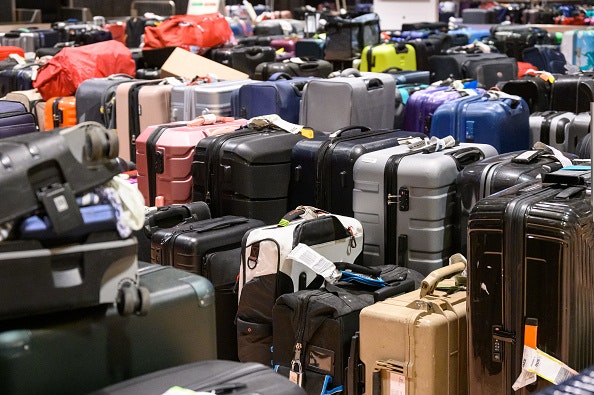
In the suitcases of people travelling from Australia and the US back to Ghana we found an array of gifts, including clothes, shoes, bags, perfumes, makeup, accessories, phones, computers, food items and medicine.
The most common explanation for bringing these gifts is that it is an obligation. Gifts go to extended family, friends, friends of the family, and even “big people” from whom migrants will need help to ease the transition back home.
We were told that family and friends back home expected – and sometimes even demanded – these gifts.
One migrant in the US noted:
I can’t just go back home (to Ghana) without buying anything for them; it will be suicidal on my part, because the looks I’m going to get and probably the utterances, I wouldn’t even like it. So, I don’t have a choice; I have to.
Our participants who lived in Ghana confirmed that they had these expectations. One of them commented:
You can’t come just like that (empty-handed) when you are coming home (to Ghana) from abroad. You have travelled to the white man’s land so you must bring something home from there.
The obligation to bring gifts is well known and understood.
Two related beliefs account for this obligation.
The first is that life abroad is better than in Ghana. The migrant is perceived to be economically better off than someone living in Ghana. Other research has also found that migrants enjoy higher status in Ghana. Thus, they are believed to be able to afford gifts.
The second belief is that things from abroad are of better quality than things made in or imported into Ghana. Thus, the visiting migrant is a trusted carrier of good quality products from abroad.
Even when they are unable to visit Ghana themselves, migrants frequently send gifts for family and friends via other migrants who are visiting Ghana.
Taken together, these beliefs confer an obligation to bring gifts. Some migrants we interviewed embraced this obligation as a way to support and delight their families. For others, the gifts were a way to show gratitude to people who had contributed to their upbringing and their ability to migrate abroad.
All migrants, however, admitted the fear of social backlash if they failed to bring the gifts.
The consequences of the gifts
We conclude that this gift giving has wider implications.
Firstly, we argue that it plays a different role than remittances. When migrants send monetary remittances, they take money from the developed country and send it to help development back home. Gifts do the opposite – the money to acquire them is spent in the developed economy. Then, they travel to Ghana as “hidden imports” that are neither taxed, nor accounted for.
The gifts also encourage the belief that what is from abroad – specifically from the “white man’s country” – is better than what is made locally. This reinforces the desire for foreign things and a desire to migrate to these foreign countries.
The implications are not positive for migrants’ home economies.
Taming the shrew
Attempts to control migrant gifting practices would be difficult and counterproductive, however.
They have important social implications for the relationship between migrants and their families. Customs regulations on gift items beyond a certain value can be easily evaded by presenting them as personal items and not gifts.
Rather, we should accept these practices and encourage migrants to report the value of gifts without taxation or punishment. This information could help policy makers to account for the gifts as imports, and to design policies that address the effect on the local economy.


