Why poor parents in Nairobi choose private over free primary schools:
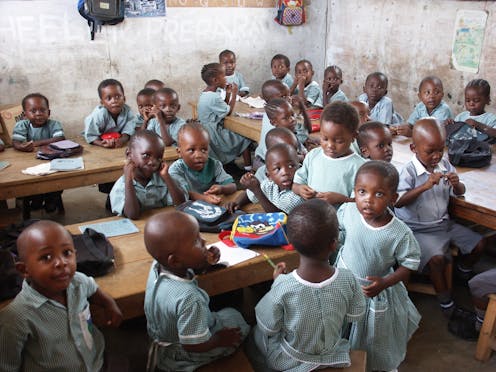
The numbers of low cost private schools in low and middle income countries have exploded in recent years. These schools charge fees that are affordable to the poorest segment of the population, and often target these populations specifically.
But, in many countries, these schools have been criticised for failing to meet minimum standards set by the government for facilities, infrastructure, and learning materials. There are also claims that they exacerbate inequality because they are not accessible to the poorest children and tend to be located in urban areas, and allow national governments to abandon their efforts to serve poor students.
Kenya is no exception. Evidence suggests that more than half of primary school students in Nairobi attend private schools. This is despite the fact that 15 years ago the government implemented a free primary education programme. So why do poor parents, struggling to support their families, elect to pay school fees when they could send their children to school without paying fees?
One hypothesis is that there are simply not enough public school seats to accommodate children, particularly in densely populated informal settlement areas like Kibera or Mathare.
But research conducted by myself and my colleagues supports another theory: we found that parents make great sacrifices to avoid public schools and place their children in private schools at significant financial cost. The main reason is that parents believe private schools offer better quality education than public schools. Other contributory reasons included perceptions of superiority and that younger parents were more likely to have children in the private schools than older parents.
Private perceptions
We interviewed more than 1,000 parents and head teachers at 93 public and private schools in Nairobi. We asked them about their schooling decisions and what words they would use to describe low cost private schools and public schools.
Low cost private schools were described as being high quality, with harder-working teachers who were consistently present in the classroom. Homework was assigned regularly and teachers were observed by supervisors.
Public schools were described as corrupt, with lazy teachers who were often absent. Survey participants were more likely to describe public school teachers as well-trained, however, and said that the school had many learning materials available. In interviews, some parents also discussed their concerns about social class issues – such as wanting to keep their children away from the “dirty” children in public schools.
Overall, low cost private schools were seen as the better quality choice, when they were available for parents. For eight in ten parents whose children were in them, quality was a strong motivator. For public school parents, quality was a factor for 56%, with affordability of fees and proximity being the next greatest concerns.
Financial sacrifices
On average, having one child in one low-cost private school cost 12% of the income of the household’s main earner. Given that families in the study had on average three children, this is a significant portion of household spending.
Parents in the survey said that, on average, low-cost private school were twice as expensive.
Our study found that low-cost private school were seen by most parents in Nairobi as superior to the local public schools. We also found evidence of a generational change – younger parents were more likely to have children in the private schools than older parents. This could be because younger parents are more likely to be educated themselves, and are therefore more sensitive to school quality.
Some parents indicated the “flexibility” of head teachers in the low-cost private school, since parents were sometimes allowed to pay fees over a period of time as the children continued learning.
Moving forward
Given that the number of educated parents is expected to grow it’s important for the government to engage with low cost private schools as critical components of the education system, rather than as competitors to the public system. The ministry of education has guidelines in place to govern how low cost private schools are registered, which is a welcome step. For example, to register, private schools must meet basic minimum requirements for teacher training and facilities.
Finally, parents need consistent, verifiable information on the available schools in their area including accurate pupil-teacher ratios, literacy and numeracy outcomes data, and pass rates on the Kenya Certificate of Primary Education examinations. Parents should be making decisions about school quality based on accurate learning data rather than on gut feelings and popular perceptions. When a very poor family makes the choice to pay school fees, it is not able to pay for something else, so it’s important to ensure that families making this choice are actually getting a return for their investment.
_Benjamin Piper, Senior Director in Africa Education for RTI International, contributed to the writing of this article. _

Stephanie Simmons Zuilkowski does not work for, consult, own shares in or receive funding from any company or organisation that would benefit from this article, and has disclosed no relevant affiliations beyond their academic appointment.
Source: The Conversation – Articles (AFRICA)
Read more on The Conversation.
Join the fun: Add Your event | Submit a Press Release | Add your listing.


