In public health, an important goal of vaccination and immunisation is to reach population or herd immunity. This is why the term comes up often in relation to the COVID-19 pandemic. And it helps to be clear about what it means.
Think of a community where some people have been immunised against an infectious disease and others have not. “Herd immunity” or “population immunity” is the protection that at-risk people get indirectly from immunised people. The indirect protection is attained when a certain proportion (threshold) of community members has acquired immunity to the infectious disease.
The threshold for reaching population immunity depends on many factors. One is the effectiveness of the vaccine. Another is how many people get the vaccine. A third is how long the immunity given by the vaccine lasts.
Then there’s the infectiousness of the disease. For example, the population immunity threshold for a highly infectious disease, like measles, is estimated at 95%. Only when 95% of a population is immune from measles will the remaining 5% of the population be protected.
The estimates are highly variable for COVID-19. They range from 50% to 85%, assuming the effectiveness of the available vaccines is not greatly changed by new SARS-CoV-2 variants.
Vaccine-induced immunity following complete vaccination against measles is long-lived. We don’t know yet how long COVID-19 vaccine-induced immunity lasts. But data is rapidly accumulating.
People acquire immunity either from being infected and recovering, or from being vaccinated, or a combination of the two. There are risks to relying on natural acquired immunity in the case with COVID-19. The outcome of an infection is unpredictable and sometimes fatal. Therefore, the safest and fastest way to attain population immunity is through vaccination.
Smallpox was eradicated in 1980 through vaccination-induced population immunity. We no longer need to administer vaccines against smallpox. Ideally, vaccination-induced population immunity can control the COVID-19 pandemic.
But evidence is emerging that the effectiveness of currently available COVID-19 vaccines may be declining, because of continually mutating SARS-COV-2. This has led some experts to caution that we can “forget about herd immunity” and instead, “vaccinate enough people quickly enough”.
It is still worth acknowledging that vaccine rollout is speeding up. But presently, COVID-19 vaccine-induced population immunity appears to be a moving target and unrealistic.
Population immunity through vaccination
Sweden’s attempted to attain population immunity through natural infection proved to be highly risky and unattainable. It resulted in a sharp increase in COVID-19 cases and loss of lives. The country then turned to public health interventions and is now rolling out COVID-19 vaccines.
In contrast, Israel quickly rolled out its vaccination programme in December 2020 with the Pfizer/BioNTech COVID-19 vaccine. The efficacy of the vaccine is as high as 95% against the original SARS-COV-2. This efficacy is reported to be reduced to around 88% against emerging variants.
At the time of writing, Israel had fully vaccinated 5.39 million individuals, representing 59.6% of the total population. The public health benefits were almost immediate. These included a significantly lower COVID-19 disease burden and a return to the pre-pandemic way of life.
This was unfortunately interrupted by the delta variant. The delta variant is 60% more transmissible than the alpha variant. If vaccine coverage in Israel was higher and included younger population groups, the country would likely not be experiencing a resurgence in SARS-CoV-2 infections.
Israel provides valuable lessons on the benefits of vaccinating as many people as quickly as possible – even without attaining population immunity. Evidently, COVID-19 vaccines must be rapidly deployed and have high uptake to save lives and livelihoods.
Vaccine-induced population immunity in Africa
Key barriers to achieving population immunity through current vaccination approaches include the inequitable supply of and access to COVID-19 vaccines, and emerging SARS-CoV-2 variants.
African countries are among those facing disproportionate vaccine supply delays and shortages. The Africa Centres for Disease Control and Prevention estimated that by the beginning of August 2021, 3.42% of the continent’s population had received at least one dose of a COVID-19 vaccine. Only 1.46% were fully vaccinated. This is in stark contrast to the European region, where 60.9% of the population is estimated to have received at least a single dose. Around 52.5% were fully vaccinated as at 8 August 2021.
Read more: Interested in vaccine rollouts across Africa? Here’s a map to guide you
The unequal coverage is largely the result of most wealthy countries securing large supplies of vaccines early on – often more than they needed. Some high-income countries are considering giving their populations a third dose of COVID-19 vaccines. This will worsen the access problems for countries in Africa. Global agencies have called for these high-income countries to share their surplus vaccines rather than “topping up” vaccine-induced immunity with a third dose.
Read more: COVID: WHO calls for moratorium on booster shots – is it justifiable?
Aside from vaccine supply bottlenecks, other logistical and operational barriers exist in the African context.
In some cases, low vaccination rates have been recorded among populations with negative perceptions of the vaccines, brought on by widespread vaccine misinformation and disinformation, as well as limited knowledge about the safety of these vaccines. It’s difficult to quantify the role of misinformation in vaccine uptake given that vaccine demand currently outstrips supply in most African countries.
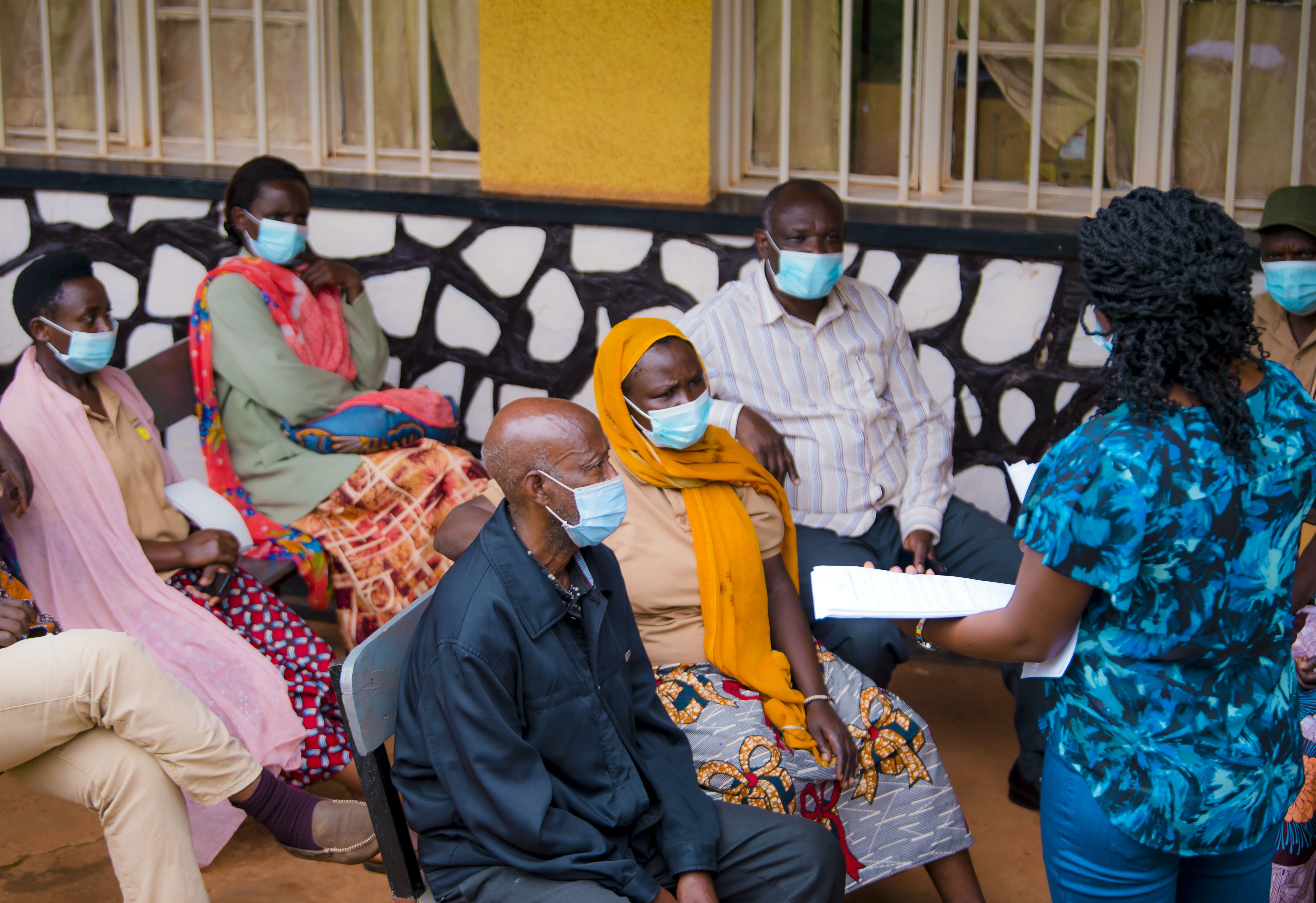
Still, there is a need for intensive, context-specific, and culturally appropriate community engagement campaigns to improve knowledge about COVID-19 vaccines and address public concerns about these lifesaving interventions.
With the delays in vaccination in Africa, concerns are growing that some variants of the virus could continue to fuel outbreaks of the disease or make the available vaccines less effective.
Under these conditions, attaining population immunity on the continent is unrealistic. The continental goal to vaccinate at least 20% of the African population by the end of 2021 currently appears far off. But still, the only way ahead is improved vaccine access, rapid rollout of the available vaccines and community engagement to encourage uptake.
Looking ahead
In general, vaccine-induced population immunity is critical to interrupting the transmission of deadly pathogens and controlling outbreaks and pandemics.
Some community members (young infants) are currently not eligible for COVID-19 vaccination. They will therefore have to depend on the decisions that adults make when offered COVID-19 vaccines.
Authorised COVID-19 vaccines are safe, effective, and integral to global public health efforts aimed at attaining population immunity.
Without equitable access, rapid and high uptake of COVID-19 vaccines worldwide, vaccine-induced population immunity against COVID-19 is merely an illusion. Therefore, vaccination rollout in Africa should be complemented with non-therapeutic interventions: social distancing, wearing face masks, regularly washing and sanitising hands.


