Why reducing post-harvest losses is a priority for Africa:
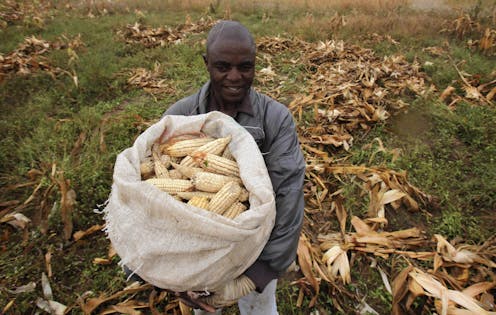
The the Food and Agriculture Organisation estimates that one third of the food produced globally for human consumption is lost or wasted along the supply chain. Losses are even higher in Africa, and have a negative effect on food security, nutrition and economic stability. Jane Ambuko, a Senior Lecturer and Postharvest Specialist from the University of Nairobi examines the challenges for Africa and possible solutions available to the continent.
What constitutes post-harvest losses?
The loss of harvested maize and other food commodities can be qualitative or quantitative. Quantitative losses are easy to determine and report since they constitute a physical reduction in the marketable volume and can be easily measured. Globally, quantitative grain losses are estimated to be 10–20% of the total volumes.
Qualitative losses refer to deterioration of nutritional quality, safety or grade. Qualitative loss data is hardly ever reported. But it’s a loss that must concern everyone. For example the levels of qualitative losses due to aflatoxin contamination, although not reported, have dire long-term effects on health. Chronic dietary exposure to low doses of aflatoxins is a known risk factor for liver cancer and other health-related issues.
How serious is the problem of post-harvest losses in Africa?
According to the Food and Agriculture Organisation of the United Nations, 30% of food produced for human consumption is lost or wasted along the supply chain every year. This is a whopping 1.3 billion metric tons of food that doesn’t ever reach the consumer. Some reports have estimated that this lost or wasted food could be used to feed 1.6 billion people every year.
In Africa, the losses are even higher: between 30% and 50%. They occur mainly downstream, between the production and retail stages of the supply chain. Fruit and vegetable losses are estimated to be 50% or more. This estimate is cumulative because losses occur at every stage of the supply chain – from production to the consumption. Losses at the farm level can be attributed to poor harvest practices and poor handling.
Generally, any loss of produce translates to lost production resources, mainly land, water, energy and inputs. It is also lost income for the various actors in the supply chain. A 2011 World Bank study estimated the value of African grain losses alone at USD$ 4 billion for grains alone in Africa. This could feed 1.6 billion people each year.
This study further showed that 470 million smallholder farmers suffer a decline of 15% income, while 25% of fresh water and 20% of farmland is wasted on unconsumed food. These figures are alarming. But they’re important in highlighting the seriousness and impact of post-harvest losses.
The world’s population is projected to reach 9 billion people by 2050, with Africa contributing more than half of that increase. To feed these people, production must increase by up to 70%. However production resources – land, water, energy and so on – are limited and inelastic. Instead of producing more, we could increase the amount of food available by ensuring that most of the food produced for human consumption reaches the end user.
Quantitative and qualitative losses negatively impact on all aspects of food security – access, availability, utilisation and stability. There can be no sustainable food systems when 30% of food produced using limited production resources is lost or wasted along the supply chains.
What are the main drivers of Africa’s post-harvest losses?
Losses occur at all stages between production at the farm level through to consumption. There are unique challenges at each stage depending on specific commodities and value chains as well as context. The causes are complex and interrelated; actions or lack of action at one stage of the supply chain could be the driver of post-harvest loss at a different stage.
Qualitative and quantitative losses are driven by poor or wrong harvest practices and poor handling. This includes poor storage or packaging, mode of transport, processing practices, lack or poor access to markets and poor coordination among the actors in the supply chains. There are other broader factors such as poor infrastructure and lack of policies that have a direct impact on post-harvest issues.
** What are the latest interventions to reduce post-harvest losses and what are the limitations or prospects of success?**
Many technologies and innovations have been developed to address the various causes of food losses. However, some of these have either not reached the targeted user or have not had the desired result. This is partly because people aren’t aware of them or can’t afford them. Some technologies are also unsuitable for the African context.
Creating awareness about the applicable technologies and demonstrating their benefits is one way to yield results. This strategy has been used in promoting hermetic storage bags for grains. Hermetic storage is a proven solution for the threat of storage pests like weevils which attack stored grain. Its adoption has risen because of stakeholders’ concerted efforts.
The same aggressive campaign should be adopted for other technologies that are useful for smallholder farmers. Forums such as the one held in Nairobi, Kenya earlier this year provide an opportunity to showcase new technologies and innovations from all over the world. Such forums should be encouraged as a way of creating awareness about food losses and available solutions.

Jane Ambuko does not work for, consult, own shares in or receive funding from any company or organisation that would benefit from this article, and has disclosed no relevant affiliations beyond their academic appointment.
Source: The Conversation – Articles (AFRICA)
Read more on The Conversation.
Join the fun: Add Your event | Submit a Press Release | Add your listing.


