Why regional efforts are key to Africa’s maritime security:
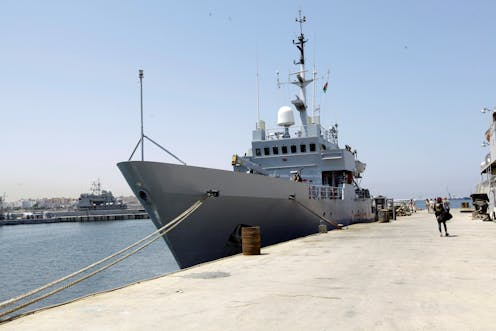
Maritime security has become a priority for most of Africa’s regional communities since the early 2000s when kidnappings were on the rise and later in that decade when Somali piracy became a major threat to international trade.
Members of regional economic communities across Africa now understand the importance of protecting their maritime territories. The threats they’re more conscious of today are armed robbery, illegal, unregulated, and unreported fishing, smuggling and human trafficking. The protection they’re putting in place have other spinoffs. They can boost the economic opportunities available from the sea – known as the blue economy – as well as safeguard the environment.
It’s in the interests of African countries to protect their maritime territories. This is because the continent has a coastline of 18,950 miles. International law permits coastal states to claim as much as 200 nautical miles from their coastlines. This allows states to take advantage of the sea resources.
But if African countries are really serious about maritime security, regional communities must implement the laudable strategies they have on paper. The different regions can learn from each other’s successes and failings with a view to implementing a continental framework.
The current situation
Different regional communities have tended to take different approaches to maritime security. This has been driven by their particular challenges or priorities.
For example, members of the Southern African Development Community have coastlines on both the Indian and Atlantic oceans. The particular threats faced by the sub-region include illegal and irregular fishing as well as smuggling.
The community began developing a maritime security strategy in the early 2010s. The document is not available for public scrutiny. But, in response to a resurgence in Somali piracy, a memorandum of understanding between South Africa, Mozambique and Tanzania was made public.
The three states agreed to conduct joint patrols, military exercises and surveillance. They also started sharing information and put in place mechanisms to pursue and arrest suspected pirates. This agreement bore fruit in April 2012 when the countries successfully fended off a pirate attack in Tanzanian waters.
The Economic Community of West African States has also developed an integrated maritime strategy. Fifteen countries share information, address threats to their maritime domains and manage three joint operational zones. This was in response to illegal and irregular fishing, smuggling, petro-piracy, kidnapping and armed robbery on the seas.
The Economic Community of Central African States, meanwhile, began working on a common strategy eight years ago. This made it the first regional community in Africa to acknowledge the need to address maritime security issues.
It is also a good example of cross-regional collaboration. Central African states face similar challenges to their West African neighbours. So the two regions now work together through a regional coordination centre in the Congo.
Further north, an intergovernmental body brings together a number of coastal states including Djibouti, Eritrea, Sudan and Somalia. It has created its own integrated maritime strategy that was developed to complement the African Union’s continental approach. Now 10 years old, the AU’s approach is to achieve a comprehensive understanding of Africa’s challenges in the maritime domain – and then to allocate resources to address these.
The AU also plans to establish a combined exclusive maritime zone. The aim is to engage civil society, foster political will, promote the application of international maritime law, and promote complementary regional policies. Unfortunately, the union doesn’t have dedicated maritime staff so there’s been no real movement on this front.
More to be done
Over the past few years there has been a steady development of ways in which to improve maritime security across Africa. Some progress has been made. But a lack of resources has affected implementation.
States and regions need to improve their integrated approach to economic development. They must also streamline their security agendas to mitigate maritime challenges because this will, in turn, increase the economic benefits of having access to the sea. Work must be done to pass adequate legislation and to prosecute wrongdoers.
Much remains to be done. But with continued political will and a desire for collaboration and cooperation, Africa’s maritime territories can be strengthened. This will open the door to sustainable blue economy opportunities – a much needed boost to the continent’s collective coffers.

Lisa Otto has in the past received funding from the National Research Foundation and the Oppenheimer Memorial Trust.
Source: The Conversation – Articles (AFRICA)
Read more on The Conversation.
Join the fun: Add Your event | Submit a Press Release | Add your listing.


