Most terrorist campaigns – where a group targets civilians to achieve political objectives – are short-lived. But some aren’t. In some cases, terror campaigns (low-intensity violence) turn into civil wars (high-intensity violence) where militants fight the government for control of the state.
Mozambique and Angola provide examples of countries in which low-level attacks eventually escalated into protracted armed rebellions. But in Spain, the First of October Anti-Fascist Resistance Group remained just that – a resistance group. Similarly, Front De Liberation Du Quebec was unable to turn its campaign into a civil war in Canada.
These contrasting examples inspired our recent study. We examined what makes terrorist attacks more likely to turn into a civil war.
We explored the impacts of three factors:
-
how the state responds to a terror campaign
-
how the terrorist group responds to the state’s counterterrorism strategies
-
the state’s relations with other states.
We found that a terror campaign is more likely to escalate when the state uses repression to stop the terror group and when the group diversifies its attack tactics.
Conversely, we found that a civil war is less likely if the state responds with higher spending on health, education and social welfare. Policies that reduce poverty, inequality and socioeconomic insecurity reduce the incentive to engage in or tolerate terrorism.
We also found, surprisingly, that states that engage in some form of rivalry with other countries are more likely to prevent the escalation of a terror campaign into a long-running insurgency.
How we did it
We reviewed past research on the escalation of violent and non-violent conflicts into civil wars. We found that research focused more on non-violent movements that turned into civil wars, but didn’t pay due attention to terrorist campaigns doing the same.
Against this backdrop, we developed our theory on the three influencing factors listed above. We tested several hypotheses with data, including statistics on terrorist groups from across the world between 1970 and 2007.
We focused on these three factors because the ability of a terrorist group to sustain a long insurgency depends on surviving the initial stage of conflict with the government. About 70% of terrorist groups end their campaigns within a year of their first attack.
To survive this initial vulnerability, a terrorist group needs to be able to mobilise its forces for a more systematic form of warfare. Terrorism doesn’t require mobilisation, but insurgency does.
The findings
Our research led to four major findings.
First, we found that there’s a higher likelihood of an insurgency when a state violently represses a terrorist group. Violent repression helps terrorist groups convince moderate members to wage a rebellion. It also makes recruitment easier by increasing grievances against the state.
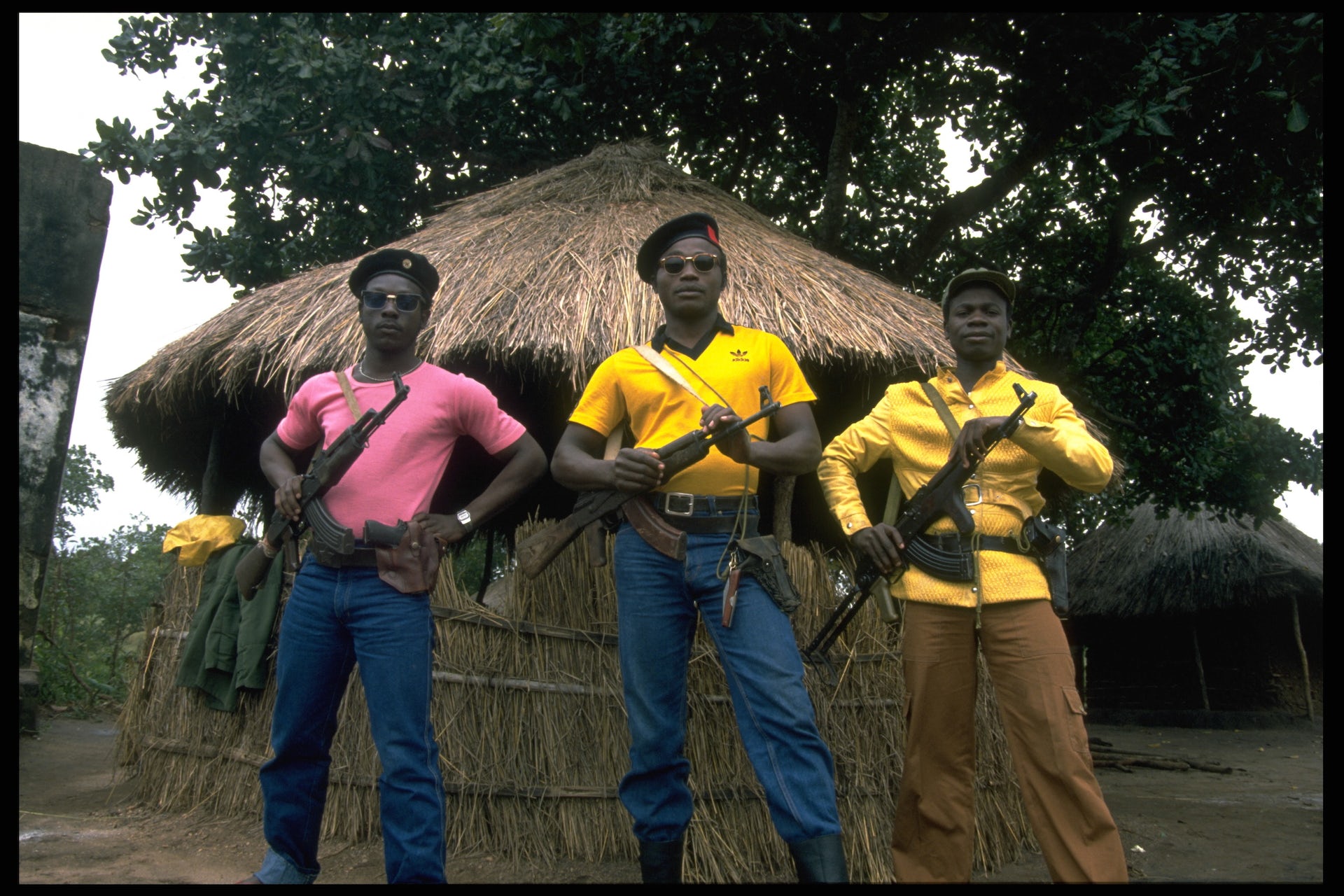
This was seen with the Mozambican National Resistance (Renamo) rebel group. It escalated its violent campaign into a protracted armed rebellion against the country’s ruling party between 1975 and 1992. The group initially emerged in response to the marginalisation of Mozambique’s rural population in the 1970s.
The National Union for Total Independence of Angola (UNITA) similarly turned its violent campaign for Angola’s independence from the Portuguese into a long and brutal civil war against the ruling party between 1975 and 2002.
In contrast, Spain and Canada put policies in place that addressed grievances and gave people less incentive to support rebellions.
The First of October Anti-Fascist Resistance Group in Spain started its terrorist campaign in 1975 with anti-capitalist motivations. Its last attack was in 2006. The government pursued a policy of negotiation to persuade the group to lay down its arms, and enhanced security measures and anti-terrorism laws.
Front De Liberation Du Quebec in Canada launched a violent campaign with the goal of establishing an independent Quebec. It conducted terror attacks between 1963 and 1970. Similar to the reaction in Spain, Canada used negotiation to quell the rebellion. The government also adopted reforms, including establishing bilingualism and multiculturalism policies.
Second, we found that when a state prioritises the provision of public goods over repressive counterterrorism policies, a terrorist group is less likely to turn its campaign into an insurgency.
Read more: Islamist terrorism is rising in the Sahel, but not in Chad – what’s different?
We found that the chances of a group conducting a terror campaign decrease by 57% when a state increases government spending per person by 2%. This indicates that better redistributive policies are more likely to prevent organised rebellions.
Fewer terrorist attacks occur in nations with more generous welfare policies. Côte d’Ivoire, for instance, managed to avoid conflict between several ethnic groups for two decades after its independence in 1960 by redistributing a substantial portion of the government’s budget between regions.
On the other hand, the Tuaregs of Mali in the early 1990s led an insurrection after realising that they had been poorly educated and economically marginalised. This developed into a civil war, with the last attack happening in 2012. There have been sporadic clashes since.
Third, we found that groups with diversified attack strategies are more likely to escalate their campaigns into organised insurgencies against the state. This has important implications for policymakers looking at counterterrorism efforts.
A terrorist group that uses a wide range of tactical strategies – such as assassinations, armed assaults, bombings and hostage taking – could sound an early warning that it’s capable of waging an organised insurgency.
Both UNITA in Angola and Renamo in Mozambique used a wide range of attack strategies. On average, 53% of UNITA’s tactical portfolio included three or more attacks, as did 63% of Renamo’s portfolio.
Our fourth major finding highlights the role of interstate relations on escalation dynamics. It suggests that a country’s involvement in a rivalry with another state reduces the chances of a terror group escalating its campaign into an armed rebellion. Turkey and Greece have had strained relations and last came close to war in 1996. This interstate dynamic helped Turkey unite its citizens against early efforts by the Islamic State to turn its terror attacks into a civil war.
A government facing an interstate rival and a terrorist threat at the same time can use the external conflict to consolidate public support. This can shift public opinion against the terrorist group.
Understanding the effect of interstate rivalry on escalation dynamics is important in Africa. It would help explain why some terrorist campaigns in the continent turn into long and brutal rebellions as external states historically affect the tide of African civil conflicts.


