Why South Africa’s power utility should boost its output of in-house renewables:
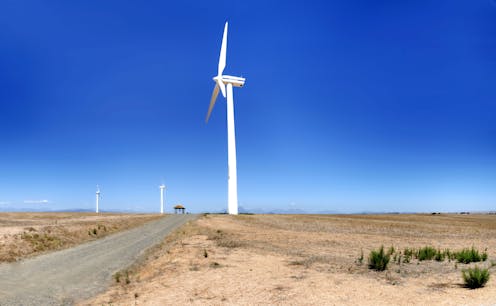
South Africa has exceptionally favourable conditions for solar and wind power generation. But these sources currently only contribute about 3% of energy supplied to the national grid.
Should the country’s power utility Eskom be doing more to use this national resource?
Aside from green considerations, the financial arguments seem convincing. When Eskom backed renewable energy sources some years ago, the costs were still high. Then they started to fall, and continue to do so. But other interests – notably the lobbies for nuclear and coal power supported by the administration of former President Jacob Zuma – interfered with this positive trend.
Pressing ahead with coal and nuclear power generation projects has come at a huge and unsustainable cost – to both Eskom and the country. Now that the power utility is freer to make more financially rational decisions after Zuma’s demise, it should ramp up its efforts to take advantage of renewable energy’s strengths.
Up until now the focus has been on contracting third parties to produce renewable energy. But there’s a case to be made for Eskom to become a major renewable energy producer itself by investing aggressively in its own generating capacity. As the state power utility it could take a leading role in growing South African renewables generation capacity from the estimated 2 GW to well over 100 GW in 2040. This would be much higher than planned, but is advocated as optimal by some studies.
It wouldn’t be unusual for Eskom to assume this role. Across the world power station ownership ranges from state-owned electricity companies (such as Eskom) through to private electricity distributors and independent power producers that sell to electricity distributors. It would therefore be appropriate for Eskom to grow its in-house renewable energy generating capacity. This would also allay criticism that renewable power production should not all be in the hands of private operators.
The road to renewable energy
An abundance of coal made electricity generation cheap in South Africa in the past. There was no great incentive to follow the global trend towards renewable energy. But eight years ago the renewables sector got a great boost through the country’s Integrated Resource Plan for electricity, which projected a total of 8400 MW of wind and 9400 MW of solar power by 2030. That would have taken renewables to 9% of South Africa’s electricity, compared with 65% from coal and 20% from nuclear.
To bring about large scale renewable energy production, the government encouraged investment by independent power producers through a special procurement programme. This was a strategy that had proved effective in other parts of the world, and was very successful in South Africa.
Under the programme, developers bid for power plant construction and operation contracts to sell electricity to the state power utility, Eskom, at fixed rates for 20 years.
From 2013 to 2015 renewable energy plants mushroomed. The additional power they contributed helped alleviate power shortages.
At first, the price Eskom paid for this renewable power was much higher than the cost of electricity from existing coal, nuclear and hydroelectric power plants. But solar and wind technologies were getting cheaper and by 2014 the cost of independently produced electricity was less than what new coal or nuclear plants could have achieved.
The draft 2016 version of the country’s energy plan proposed further growth in the share of renewables. But this plan was set back by political opposition and financial problems at Eskom.
Opposition to renewables
Renewables pose a threat to two powerful lobbies: the established coal industry and those who support a nuclear energy option.
These two groups became more influential when former president Zuma was in power, and achieved the appointment of sympathisers in key positions, including top positions at the power utility. There was also talk that renewables were responsible for the imminent closure of old coal power stations, threatening jobs.
South Africa’s renewable developments came to a halt in 2015 soon after the appointment of Brian Molefe as Eskom CEO. He refused to sign off any further supply contracts. Instead Molefe, and his successor, went to extraordinary lengths to promote a new nuclear build.
But plans for nuclear power came to a sharp halt following the appointment of Cyril Ramaphosa as president and the subsequent shake-up at Eskom.
This has opened the door to progress being made with renewable energy projects. But the perception that the programme will lead to job losses is still a concern in some quarters. This was evident when the National Union of Metalworkers of South Africa unsuccessfully went to court to block the planned signing of outstanding renewable contracts.
Renewable capability versus coal plans
Eskom is in financial difficulties. Its problems however don’t stem from renewables, but largely from two ongoing megaprojects – the gigantic new Medupi and Kusile coal power plants.
These were meant to be fully operational by now. But severe construction time and cost overruns had pushed the estimated total cost to R420 billion by 2016.
South Africa has more electricity than it needs in the short and medium term. So Eskom needs to reconsider its options. This should include putting on hold some of unfinished units at Medupi and Kusile.
It could, simultaneously, intensify its in-house renewable energy production. It is entirely possible that Eskom could now find it advantageous to build its own renewable energy plants on a large scale. The power they generated would come at a nominal cost after construction. Eskom would not be tied into long-term agreements to buy power at a fixed cost.
It’s not a new idea. Eskom has already invested in the 100 MW Sere wind farm and had plans to build a 5 GW solar park.
With international credit agencies highlighting the need for Eskom to determine clear sustainable financial plans, the utility would do well to consider swapping out expensive new coal-powered capability for renewables. And pursuing more wind and solar instead would also mean avoiding coal purchases and lowering harmful carbon emissions.

Hartmut Winkler receives funding from the NRF. He is a member of OUTA and Save South Africa, but writes here in his personal capacity.
Source: The Conversation – Articles (AFRICA)
Read more on The Conversation.
Join the fun: Add Your event | Submit a Press Release | Add your listing.


