The announcement in July that Israel had been formally granted observer status at the African Union drew a sharp reaction from some countries on the continent. These included Algeria and Djibouti as well as South Africa, which said it was “appalled”.
Pretoria moved quickly to lobby other Southern African Development Community states against the decision.
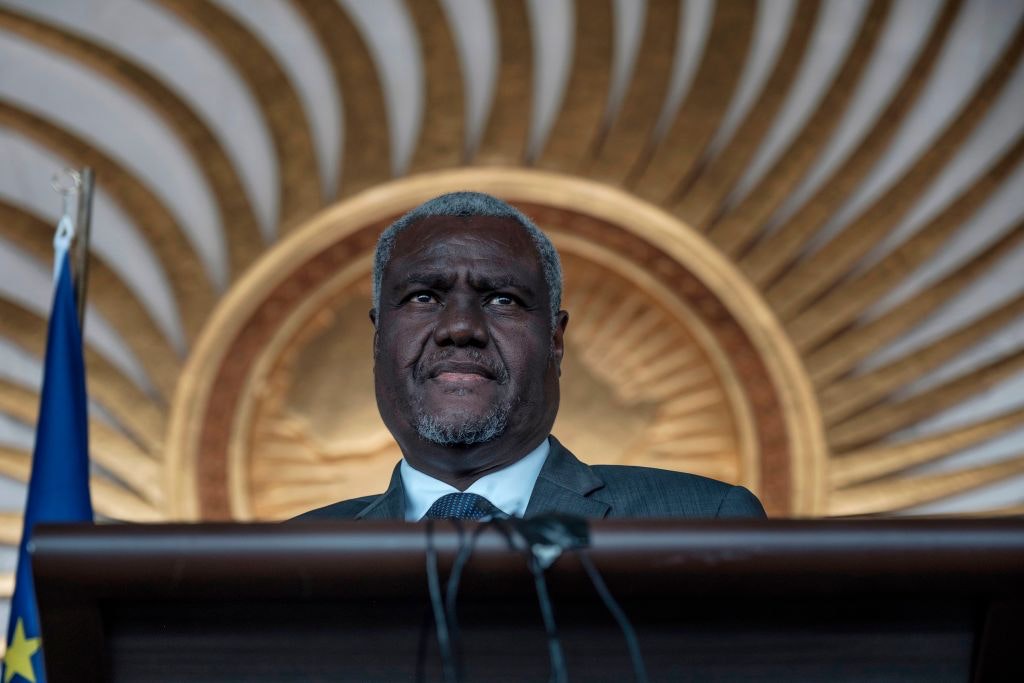
At a meeting of Heads of State and Government in Lilongwe, Malawi, the regional body issued a statement objecting to the decision. It said it had been taken unilaterally by the AU Commission Chair Moussa Faki Mahamat. It also expressed its solidarity with the Palestinian people.
Let us consider the regional body’s main objection – unilateralism on the part of Moussa Faki Mahamat. Did Commissioner Faki act outside his mandate in granting Israel observer status? The AU Commission argues that it acted within its “full sphere of competence” reading of the AU document setting out the criteria for granting observer status and the system of accreditation. It certainly grants the AU Commission discretion in making such decisions.
It should also be noted that Moussa Faki Mahamat’s decision was supported by the current chairperson of the African Union, President of the Democratic Republic of the Congo Félix Tshisekedi.
As Faki noted in August 2021, out of the AU’s 55 member states, 46 already enjoy diplomatic relations with Israel. Logically, then, Israel’s entry into the pan-African organisation, is merely an extension of what is happening at bilateral level between member states and Israel.
I have been involved in the subject of Israel’s relationship with the continent from an academic perspective for three decades. Based on this experience I believe that South Africa, and the regional body, are wrong in their approach. A more mature and sophisticated foreign policy that embraces engagement and dialogue is needed.
This is because Israel is becoming more integrated in the international community. The unprecedented close political, economic, trade and security ties between Israel and its Arab neighbours as well as African countries like Morocco, Chad, Guinea and Sudan speaks to this. This is also the case in East Africa.
In my view, South Africa is out of sync with the views of most African heads of state
In addition, isolating Israel will not work in promoting the well-being of Palestinians. This was tried for decades by Arab countries and has failed.
What is needed is a critical engagement with Israel and concerted efforts to strengthen the pro-peace constitutuency in Israel itself.
The human rights question
South Africa, as well as the Southern African Development Community, raised the issue of human rights in relation to Israel’s treatment of the Palestinians.
I believe the organisation is using this selectively.
The leadership of the regional body did not raise the issue of human rights during the bad behaviour on the part of a number of country leaders. These included the worst excesses of the Mugabe regime in Zimbabwe and the authoritarianism of Edgar Lungu Zambia. It has also been silent about the corrupt despotism of Africa’s last feudal monarch King Mswati III.
Neither did human rights considerations feature when Pretoria attempted to shield Sudan’s Omar al-Bashir from the International Criminal Court to answer for atrocities in Darfur.
A second objection to the position taken by the Southern African Development Community is that, in my view, granting Israel observer status does not undermine previous AU resolutions expressing solidarity with the Palestinian cause.
Commissioner Faki said as much when he stated that Israel’s formal accreditation did not weaken the
unflinching commitment of the Pan-African Organisation to the fundamental rights of the Palestinian people, including their right to establish an independent National State, with East Jerusalem as its capital, within the framework of a global, fair and definitive peace between the State of Israel and the State of Palestine.
Read more: In search of advantages: Israel’s observer status in the African Union
South Africa, Algeria, Comoros, Djibouti, Egypt, Libya and Tunisia have formally requested that the decision to accredit Israel should be rescinded at the October 2021 meeting of the AU Executive Council.
Most other countries on the continent, however, have sought closer ties with Isreal. Many, such as Kenya, Ethiopia, Rwanda, Uganda have secured Israeli investments and expertise in a wide variety of areas from agriculture to tech start ups.
Such a pragmatic approach follows a more pragmatic Arab approach. This was set in train by the signing of the Abraham Accords between Israel and its Arab neighbours in 2020.
Just as Algeria and South Africa could not stop Morocco’s entry into the AU, neither can they stop Israeli accreditation.
In addition, 46 AU Member States already have relations with Israel. And Egypt, which also opposed Israel’s observer status, has since agreed to strengthen bilateral relations following a meeting between President Al-Sisi and Prime Minister Bennett.
In my view South Africa, and those of the same view on the continent, won’t be able to get the accreditation decision reversed. This echoes the failed attempts by Algeria and South Africa to stop Morocco’s entry into the AU.
Malawi, the country where the 41st SADC Summit took place, is seeking to open an embassy in Jerusalem. Harare is also seeking to improve its bilateral ties with Israel.


