Why there’s resistance to coal mining at a world heritage site in South Africa:
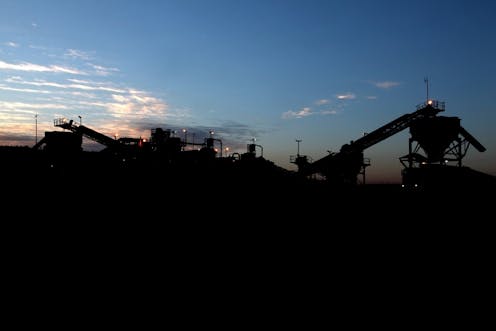
There are fears that new mining operations in the north east of South Africa could threaten communities, tourism and the environment.
Plans to resume coal mining operations at the Mapungubwe Unesco World Heritage Site in Limpopo have been halted and it’s uncertain when mining operations will resume. What’s known is that the government is currently considering approving new mining applications in the province, with some possibly approved already. A rich coal seam runs from Zimbabwe to South Africa through the area.
About 77% of South Africa’s primary energy needs are provided by coal. Mining in Limpopo represents about 13% of South Africa’s total mining sales, with South Africa’s overall coal production totalling 252 million tonnes produced in 2017, with total coal sales of R130 billion.
A study conducted a year ago explored the effect of mining on tourism growth and local development at the Mapungubwe heritage site. It found that mining operations were likely to have a negative impact on the environment, tourism development and local communities.
The Mapungubwe National Park is one of the nine world heritage sites in South Africa . It’s home to the archaeological treasure of Mapungubwe, once the largest kingdom in the African sub-continent. It was the base of an empire that traded with people in China, India, Egypt and Persia, exchanging ivory and gold, in about 1200 AD.
I conclude in my research that new mining should not be allowed at the Mapungubwe heritage site. The area needs to be safeguarded for cultural and environmental purposes. Government and the mining industry need to consult widely with the people of the area and civil society on any future developments.
The research
The research involved interviews with community members, a farmer, an employee at the heritage site and a government official. Attempts to get hold of mining companies and additional officials for interviews proved unsuccessful.
People interviewed were clearly influenced by the way mining was done previously. For example, residents noted that mining consultative meetings weren’t done effectively before previous mining approvals in the area. The majority of people consulted were not from the area.
In addition, mining operations resulted in damage to the environment and to people’s homes. The Tshikondeni Mine, an opencast mine, resulted in land destruction. The mine polluted water, lead to houses cracking as well as dust and noise pollution.
Residents also pointed to the effect mining pollution had in other provinces. In Mpumalanga, for example, mining pollution caused environmental degradation and threatened the tourism and agricultural industries as well as water supplies.
Limpopo residents fear the same will happen in their area which is why they’re against new mining operations. A local resident said:
The conservation and sustainability of our land needs to be the first and most important issue above all other monetary activities; this is our culture and our history where we come from. What will our grandkids learn from our land except that it was once a beautiful area with rich meaning? Our kids need to experience what we were fortunate to experience due to what our forefathers left.
Some community members and a provincial government official fear that mining will result in pollution and that it will disrupt the tranquillity of the area. This would, in turn, drive away tourists.
Some residents also believe mining would open avenues for corruption that would only benefit a few people. A local resident said:
This is the platform where corruption comes into play – individuals are approached and bribed … .
What now
The local community must genuinely be included in all decision making processes and at the beginning of any developments that could affect the Mapungubwe area.
The South African National Environmental Management Act sets down conditions under which new mining operations can go ahead. One of them is that peoples’ needs must be taken into account. This means that national government and mining companies must respect the concerns of local communities over short-term monetary gains. Any future mining ventures must be approached with great caution.
There should be consequences if this does not happen. Communities have the option of going to court if they aren’t adequately consulted. This has proved successful for some communities. In 2010, the Bengwenyama community in Limpopo went to court arguing that the Genorah Mining Company had failed to consult them properly during a prospecting process. The country’s Constitutional Court found in the community’s favour, ruling that:
The community was not treated as required by the Constitution.
It also found that the Department of Mineral Resources had not acted in accordance with procedural fairness requirements.
But court cases are expensive and out of reach for most communities. The better option is for government and companies to follow the law in the first place.

Llewellyn Leonard does not work for, consult, own shares in or receive funding from any company or organisation that would benefit from this article, and has disclosed no relevant affiliations beyond their academic appointment.
Source: The Conversation – Articles (AFRICA)
Read more on The Conversation.
Join the fun: Add Your event | Submit a Press Release | Add your listing.


