Why upcoming polls in Cameroon won’t end the violence:
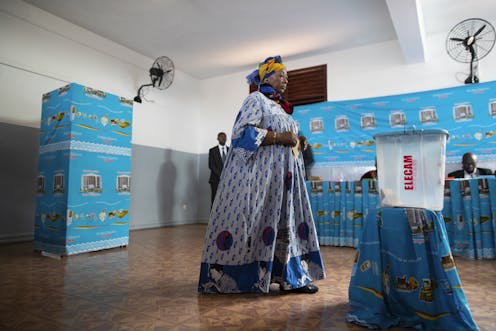
Cameroonians head for the polls this weekend against the backdrop of the armed conflict that broke out in October 2017 in the country’s Anglophone North West and South West regions. Elections to the legislature and to local municipalities have been postponed twice. The last ones were held in September 2013.
In 2018 presidential elections were held which saw President Paul Biya win another seven-year term. But the poll was heavily contested, and resulted in an escalation of the violence which persists. More than 3 000 people have died, half a million have been displaced within Cameroon and 40 000 were forced to seek refuge in Nigeria. An estimated 700 000 children are out of school and one third of the population in the Anglophone regions are in need of humanitarian aid.
What impact will the elections have on the resolution of the conflict?
In our view the answer is simple: none. This is because the ruling Cameroon People Democratic Movement’s dominates state institutions such as the executive and legislature. If anything, preparation for the elections has already heightened violence.
The North West and South West regions also experienced increased rates of violence during the presidential election of October 2018. Voter turnout was low – only 5% in the North and 15% in the South. The opposition asked for a re-run but the constitutional court said the elections were credible.
Political landscape
Cameroon has three major political parties. The ruling Cameroon People Democratic Movement which currently has 148 of the 180 National Assembly seats. The Social Democratic Front follows with a distant 18 seats. It has been the leading opposition party since its creation in 1990. The Social Democratic Front has a challenger in the form of the Cameroon Renaissance Movement which is led by Maurice Kamto. Kamto came second in the 2018 presidential election, the Social Democratic Front’s candidate 4th.
Kamto challenged the outcome of the presidential elections. He was subsequently jailed but then released after 9 months. Having become the de facto leader of the opposition in the country, Kamto has announced that the Cameroon Renaissance Movement will boycott the twin elections, citing the ongoing conflict and a bad electoral code.
If Kamto’s party does indeed boycott the elections, the ruling party will not face any major challenge.
Kamto believes that on its own, the special status granted to the English-speaking region of Cameroon will not resolve the crisis. Like his counterparts in the Social Democratic Front, he has proposed federalism.
Wrestling control of territory
The spike in violence before and during elections in 2018 was due to the belligerents fighting for control of the former British Southern Cameroons territory.
The Anglophone conflict is separatist in character. The pro-independence fighters want the “restoration of the statehood of the Southern Cameroons”, which they have renamed “Ambazonia”.
The separatists have asked members of parliament representing constituencies in the Anglophone regions to stage a walk-out or resign from the parliament in Yaounde, the country’s capital. They hope that such a step will achieve the same results as the 1953 walk out.
That year, the Southern Cameroons’ representatives walked out of the Eastern House of Assembly of Nigeria to assert the right to self-determination and the separate status of the Southern Cameroons as a United Nations (UN) Trust Territory. It was a successful gambit as the administering authority – Britain – complied and allowed the territory its autonomy.
But the members of parliament have not complied. The result has been an increase in violence.
Parliamentary discipline
The latest efforts of the state to resolve the Anglophone conflict includes a a national dialogue. The key resolution was the adoption of a “special status” for the Anglophone North West and South West regions.
The legislation mentioned schools and the judiciary system as part of the special status – a delayed response to protests in 2016 by teachers and lawyers.
Members of the ruling party hailed the law as a major breakthrough but the opposition received it with a pinch of salt. Their argument is that Anglophones, even the moderate ones, want a federal state.
For their part, separatists said no law enacted in Cameroon can be enforced in Ambazonia. They firmly stand by their demand for independence.
The stalemate suggests that more still needs to be done to resolve the conflict.
Parliament has the prerogative to make laws. It can leverage this privilege to improve the special status or enact a more adequate law. But the domination of parliament by the ruling party allows the president to define its agenda.
For example, the only time the Anglophone conflict was examined by parliament was when Biya ordered it to adopt the decentralisation bill which included the special status in December last year.
The elections are unlikely to change the power dynamics in the country. The ruling party is set to maintain control of parliament and municipalities. This means that the special status law will be implemented, which in turn will mean that nothing will change. The opposition’s inability to challenge this law means the conflict will persist.
United opposition is needed
If opposition parties are to make any contribution to building a more resilient society, they will have to unite to face the ruling party.
Cameroon’s ruling party has been able to dominate the political space in the country because of fractious disagreements among opposition and civil society. Major opposition parties must settle their differences and find ways of forging solid alliances that can allow them to effectively wrest control of the parliament, municipalities, and even the presidency from the ruling party.
If a united opposition came to power it would mean that voices for change could field the type of strategies and legislation that could provide longer term solutions to the conflict. Many in Cameroon’s opposition and in civil society believe that a return to a two-state federation – that Anglophones have repeatedly called for – following all-inclusive dialogue, is the best way out the country’s impasse.

Cheryl Hendricks is the Executive Director of the Africa Institute of South Africa at the Human Science Research Council which receives funding from multiple sources.
Gabriel Ngah Kiven does not work for, consult, own shares in or receive funding from any company or organisation that would benefit from this article, and has disclosed no relevant affiliations beyond their academic appointment.
Source: The Conversation – Articles (AFRICA)
Read more on The Conversation.
Join the fun: Add Your event | Submit a Press Release | Add your listing.


