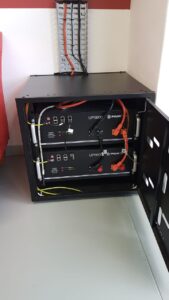
South Africans have become accustomed to working and living with loadshedding over the past few years. Scheduled and unscheduled power outages have become a reality, with 1130 hours of planned power cuts experienced in 2021 alone. Recently, the country was warned that the future of its electricity supply does not look bright and to prepare for approximately 61 days of load shedding between 1 April 2022 and 31 August 2022 – depending on unplanned unavailability .
South Africa typically sees more power outages during summer months due to high ambient temperatures and high rainfall in the northern parts of the country. During the colder winter months, however, electricity supply is under pressure owing to the higher demand for power. These factors, along with a number of others, impact the country’s electricity generation capacity.
Energy experts at FM Solutions recommend that companies who have been considering investing in solar power, avoid delaying this decision any longer. “While we are not able to predict the future, we can say with a fair amount of certainty that loadshedding and interrupted power supplies will continue to be with us for a long time to come. Organisations are being impacted in productivity and ultimately profitability due to this problem. If they wish to remain competitive, they should aim to become as self-sufficient as possible,” suggests David Petrie, Technical Manager: Utilities at FM Solutions.
Prepare for higher costs, longer delays
Renewable energy has become more affordable in recent years, with the cost of solar PV reduced by approximately 90 % since 2000 . Unfortunately, recent global events had a negative impact on the solar industry’s value chain and negated these savings. According to Petrie, the negative impact of the Covid-pandemic, growing global demand for solar PV equipment and international shipping delays have caused a sharp increase in the cost of solar PV systems in South Africa.
“Current world events such as wars, pandemics and unstable economies are impacting fuel prices. This has a knock-on effect on transportation and shipping costs. South Africans have the added burden of being reliant on fuel to keep their generators running during load shedding. On the other hand, our country’s power utility also relies on diesel to supplement the electricity demand during peak times and when coal supplies are insufficient – necessitating the 300 % increase in electricity tariffs we have seen over the past ten years ,” he explains.
Unfortunately, it appears as if there is currently no quick and easy way to escape this conundrum. South African businesses and homeowners wishing to install solar-powered systems should prepare themselves for long delays before they will finally be able to unshackle themselves from erratic supply and surging electricity tariffs.
“Even though we are entering the winter season now, our recommendation would still be to get your orders in as soon as possible. Installing your solar PV panels during the summer months will undoubtedly yield more impressive returns on investment, but there is too much uncertainty about infrastructure lead times. If you are planning a big installation, you might even be able to pre-book pricing with suppliers to help cushion you against future price increases,” Petrie advises.
Feeding solar energy back into the grid
The question arises whether home and business owners who have invested in solar panels might be able to feed their excess electricity back into the grid in order to reduce the impact of loadshedding on the rest of the country or the municipality.
Petrie explains that technically it is possible for commercial and residential property owners to feed renewable energy back into the power grid. “Small-scale embedded generators (SSEG) can get around 72 cents for every kilowatt hour pumped back into the grid via a bi-directional electrical meter. Whilst this sounds like a workable solution and an easy way to recoup the money you have spent on installing the system, unfortunately the high monthly admin fee and cost of changing over from a pre-paid electricity meter to the required bi-directional electricity meter makes it unattainable for most households or businesses. Additional meter reading fees would also apply,” he says.
Although there still are a few outstanding details that need to be gazetted by municipalities before the purchasing of privately produced power becomes a workable reality, it could become a feasible solution in the near future.
Measuring your success
Government gazetted on 8 December 2020 that non-residential buildings and organs of state must declare their energy consumption by displaying an energy performance certificate at the entrance to their buildings. This will necessitate detailed and ongoing reporting of a company’s energy usage as part of the National Energy Efficiency strategy under the National Energy Act 2008 (Act no 34 of 2008) aimed at improving the country’s energy consumption.
“We facilitate the entire process of installing the correct PV solar system for our clients from start to finish. We begin by conducting a detailed energy audit to determine an organisation’s energy needs, manage and oversee the installation and continue to provide live monitoring and reporting of the solar system’s performance after installation. This allows us to identify what the energy thieves are and address problem areas – thereby ensuring the system’s optimal performance and maximum return on the client’s investment,” Petrie concludes.
CLICK HERE to submit your press release to MyPR.co.za.
Press Release Views: 50


