Working out what’s fair in conservation in sub-Saharan Africa:
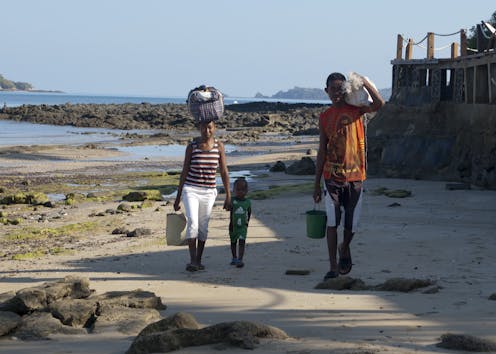
People who care about conserving nature are starting to think more deeply about how communities fit into conservation efforts.
Since early colonial times, the approach to nature conservation in Africa has mostly been to mark out areas and exclude people from them. Armed rangers have kept the surrounding communities out of these protected areas. But when local people don’t participate in conservation activities, they may not benefit or understand the purpose, and therefore have no interest in supporting them. For example, since the Canaima National Park in Venezuela was established, the Pemon Indigenous Peoples have been in conflict with environmental authorities over it. The park was established on ancestral territory without local consent.
More recently, conservationists have begun to think that if their planning took more account of people’s rights and needs, it might be more effective. Within the last decade, they have started paying more attention to balancing livelihoods and conservation, and to “social equity”. This means thinking about fairness. This includes asking questions about who makes the conservation decisions, how people benefit from or pay for nature conservation, and what’s recognised as valuable.
But does social equity really mean the same thing across all of conservation?
This question motivated an international group of researchers to review how equity is treated in conservation literature. The researchers from Colorado State University and the Universities of Queensland, British Colombia, and Nottingham reviewed the literature to get a better sense of how research on conservation worldwide has approached equity – especially defining, measuring and evaluating it. Defining equitable conservation better should lead to better application in practice.
We found a general upward trend in the number of studies published that explicitly addressed the topic of social equity and conservation. The majority of the 138 studies in the review were published from 2009 onward. This coincides with the rise in international policy processes like the Sustainable Development Goals, Reduced Emissions from Deforestation and Degradation carbon projects, and Convention on Biological Diversity Aichi Targets.
Over one-quarter of the studies were in sub-Saharan Africa. But these only included 11 of the region’s 46 countries. Half focused on protected areas and one-third on livelihood schemes like ecotourism projects. Just over 50% took place in forest ecosystems and 31% in grasslands. The only urban study was located in sub-Saharan Africa, in the Macassar Dunes Conservation Area in Cape Town.
Types of equity
Scholars describe three types of equity. The first is distribution of costs, responsibilities, rights, and benefits. For example, a study in Nosy Be, Madagascar looked at whether different villages around the national park benefited equally from ecotourism income and training opportunities.
The second is the procedure by which decisions are made and who has a voice. A study in Chwaka Bay Marine Conservation Area in Zanzibar, Tanzania looked at how much villagers are able to participate in determining fish harvest restrictions and compensation for the conservation area.
Thirdly, there is recognition: acknowledgement of and respect for distinct identities, histories, values, and viewpoints. In a payment for ecosystem services case study in Rwanda, researchers asked local people if they were satisfied with how their views, knowledge, and identities were recognised.
These three aspects of equity are useful starting points. But studies often don’t define equity well to begin with. They need to be clearer so that the equity of conservation activities can be monitored and evaluated. But they also can be broader and more holistic. Nearly 80% of conservation research in sub-Saharan Africa only analyse the first kind of equity: distribution. This isn’t surprising, because it’s relatively easy to measure like income, for example. Procedure was only analysed in one-third of studies. Recognition wasn’t included at all in 46% of cases.
Finally, researchers often study conservation and equity because they assume social equity produces conservation success. But that’s not certain. Studies marrying social equity and environmental data are rare and trade-offs likely exist. The bottom line: conservation doesn’t always result in equity. In fact, most studies report negative (44%) or mixed (36%) equity outcomes.
For instance, the study on ecotourism in Nosy Be showed the distribution of benefits differed depending on village characteristics. Sometimes it’s not straight-forward. The Chwaka Bay Marine Conservation Area study showed that conservation activities could have positive environmental outcomes but negative procedural equity outcomes. And of course, these conclusions are influenced by the backgrounds and biases of researchers. In sub-Saharan Africa, 41% of studies were conducted without institutions in the region. Gender was relatively balanced with 54% of studies led by female authors.
Even with any shortcomings this far, a great deal can be learned from the work that’s been done.
What can be learnt
To study and understand the impact of conservation activities on social equity, it’s important to be clear about the definitions. This can improve the assessment of equity in particular contexts. Ultimately, we need to increase the diversity of African scholars leading research on conservation and equity. There is also considerable opportunity to examine the knock-on effects or trade-offs of any given action, and different notions of equity need to be unpacked and better understood.

The authors do not work for, consult, own shares in or receive funding from any company or organisation that would benefit from this article, and have disclosed no relevant affiliations beyond their academic appointment.
Source: The Conversation – Articles (AFRICA)
Read more on The Conversation.
Join the fun: Add Your event | Submit a Press Release | Add your listing.


