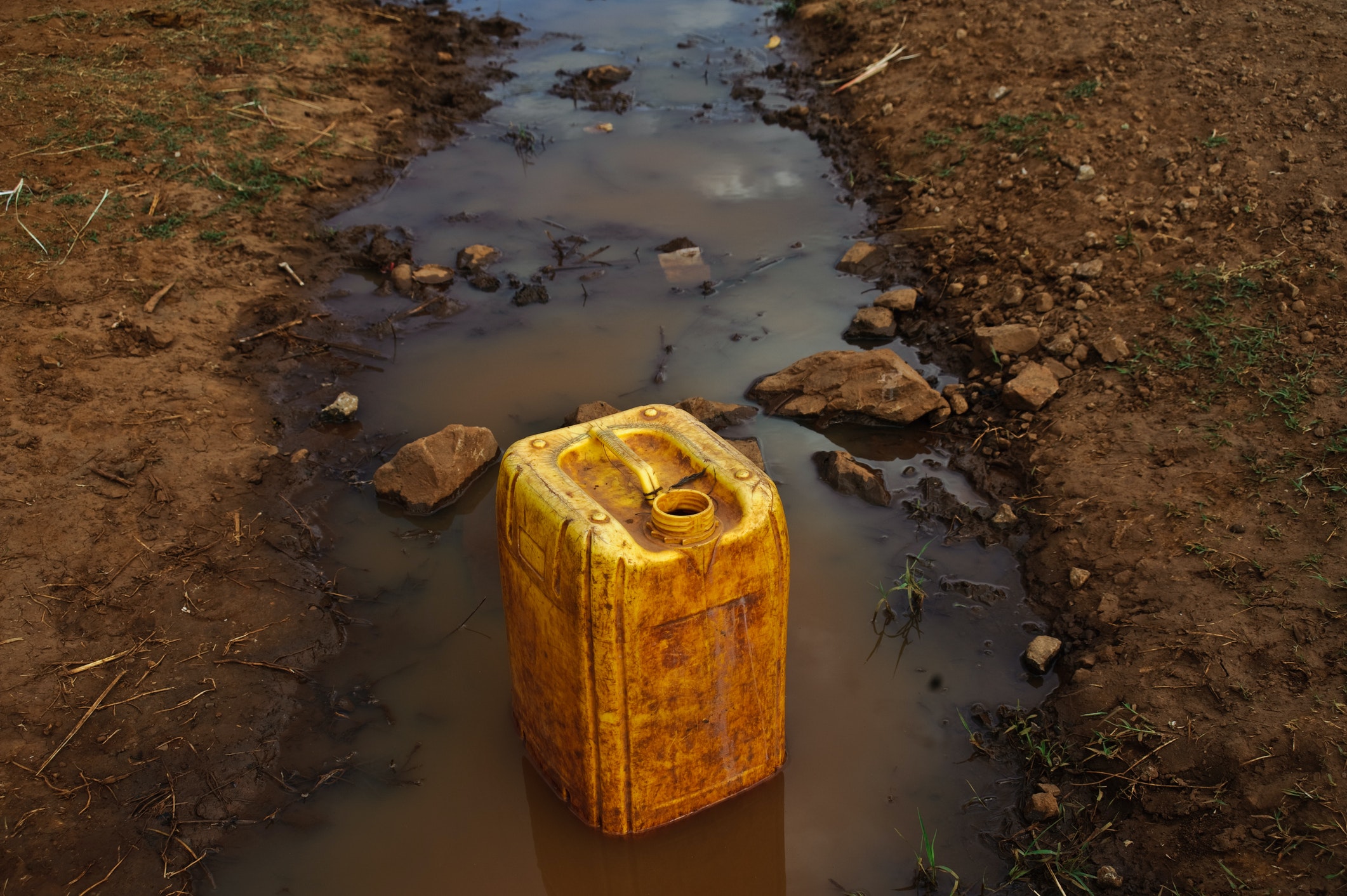
When it comes to water security – a reliable, good supply of safe water – just 29 African countries have made some progress over the past three to five years. Twenty-five have made none.
This data comes out of the UN’s first-ever assessment of water security in Africa. Published by the UN University’s Canada-based Institute for Water, Environment and Health, the assessment used 10 indicators to quantify water security in Africa’s 54 countries. Such an assessment had been done before in the Asia-Pacific region, but never for Africa.
The UN’s concept of water security encompasses various needs and conditions. These include: water for drinking, economic activity, ecosystems, governance, financing, and political stability. Water security, therefore, is not just about how much natural water a country has but also how well the resource is managed.
The assessment is limited by very poor data on some issues – such as access to drinking water or sanitation. It nevertheless offers some preliminary, but obvious, conclusions.
Overall levels of water security in Africa are low. Not a single country, let alone a sub-region, is at the highest “model” stage of water security. The top five countries – Egypt, Botswana, Mauritius, Gabon, and Tunisia — are at best at a “modest” (just above average) stage of water security.
Without water security, people are exposed to environmental and health risks, increased susceptibility to water-related disasters and lack water for economic and social use.
The assessment team hopes that as this quantitative tool develops, it will help generate targeted policy recommendations and inform decision-making and public-private investments toward achieving water security in Africa.
Key findings
The assessment introduced five stages of water security: Emerging (a score of 0 – 45), slight (45 – 60), modest (60 – 75), effective (75 — 90), and model (90 – 100).
Except for Egypt, all countries scored below 70. Only 13 of 54 countries were found to have a “modest” level of water security. Somalia, Chad and Niger appear to be the three least water-secure countries in Africa.
Over a third of the 54 countries had “emerging” level water security, representing a large gap to be closed to reach an acceptable level. These countries are home to half a billion people.
The situation doesn’t appear to be improving very quickly. Between 2015 and 2020, the continent as a whole progressed only by 1.1% based on the indicators.
Examining the indicators
Here is an overview of how countries fared on each indicator.
Access to drinking water
Access to “at least basic” drinking water services ranged from 37% of the population in the Central African Republic to 99% in Egypt. Regionally it ranged from 62% in central Africa to 92% in north Africa. Africa’s average basic drinking water service is 71%. This leaves behind about 29% of the total population, or more than 353 million people.
“At least basic” means access to improved water sources – such as piped water, protected hand-dug wells and springs. These either need to be “safely managed” (accessible on premises, available when needed, and free from contamination) or can be collected in a trip of 30 minutes or less.
Access to sanitation
Access to sanitation – meaning access to, and use of, sanitation facilities and services – was broadly similar at the regional level. There’s an average of 60% access to limited sanitation. This means at least 40% of the total population (483 million people) are left behind.
A few countries – Seychelles and most countries in north Africa – have reached, or nearly reached, 100%. The most challenged countries are Chad and Ethiopia.
Access to hygiene facilities
This indicator refers to access to practices like hand washing. The greatest access was found in north Africa (67%), the least access was in west Africa. Liberia was the lowest in the region with less than 10% access.
Chad and the Central African Republic suffer from the highest number of deaths from diarrhoea, an indicator of ineffective hygiene practices.
Per capita water availability
The amount of water available per person was highest in central Africa, with the Republic of Congo considered Africa’s most water-rich country. At the other end of the spectrum, half of the countries in north Africa appeared to be absolutely water scarce.
Water availability has recently declined in west, central and southern Africa. This was most notable in Cote d’Ivoire, Cameroon, Somalia, Mozambique and Malawi.
Water use efficiency
This indicator assesses the economic and social value. The score is a sum of efficiencies – a measure of how well a country uses the water it has in its economy.
On this basis, water use efficiency appears to be lowest in north Africa (with Somalia lowest at the national level) and highest in central Africa (with Angola highest at a national level).
Water storage infrastructure
Water storage in large dams, measured in volume (m3) per capita, is deemed best in the southern Africa, worst in east Africa.
South Africa, with over 25% of all large dams in Africa, is outscored by Ghana, Zimbabwe, and Zambia, likely due to just one mega reservoir in those countries.
Half of all countries score very low, reflecting the continent’s low level of water storage development. Only Ethiopia and Namibia have increased their storage over recent years.
Wastewater treatment
Scores are highest in north African countries, lowest in east and west Africa, where 12 countries in each region treat less than 5% of wastewater. No country treats more than 75%. Only Tunisia, Egypt and Lesotho treat over 50% of wastewater.
Water governance
Governance takes into account the various users and uses of water with the aim of promoting positive social, economic, and environmental impacts. This includes the transboundary level.
Water governance appears to be most advanced in north and southern Africa and least advanced in central Africa.
Nationally, Ghana reported reaching 86% of integrated water resource management implementation in just two years – a significant improvement.
Liberia, Guinea-Bissau, and Comoros are the lowest-performing countries.
Disaster risk
Disaster risk is a measure of the potential loss of life, injury, or destroyed or damaged assets, which could occur to an ecosystem, or a community in a specific period of time.
North Africa appears to be the least risky sub-region (it has less exposure or high ability to adapt), with Egypt the least risky country. West Africa was the riskiest.
Some 49 of 54 African countries have seen increased disaster risk scores over five recent years.
Water dependency on neighbouring nations and water resources variability
Egypt stands out as Africa’s most water-dependent country. It relies on the Nile river which flows through 10 countries – Tanzania, Uganda, Rwanda, Burundi, Democratic Republic of Congo, Kenya, Ethiopia, Eritrea, South Sudan, and Sudan – before reaching Egypt. And the southern Africa sub-region has a wide disparity in the available water per year.
Preparing for the future
Our paper calls for a pioneering effort to create global standards for water security measurement data and assessment.
Some critical components of water security simply cannot be assessed without good data. For example, it’s not possible to estimate the percentage of the African population that will have access to safely managed drinking water services or safely managed sanitation by 2030, a key UN Sustainable Development Goal.
Our water security assessment tool is a work in progress, guided by a goal of an influential and nationally-owned tool used by all African countries and that it helps generate targeted policy recommendations and inform decision-making and public-private investments in Africa.


