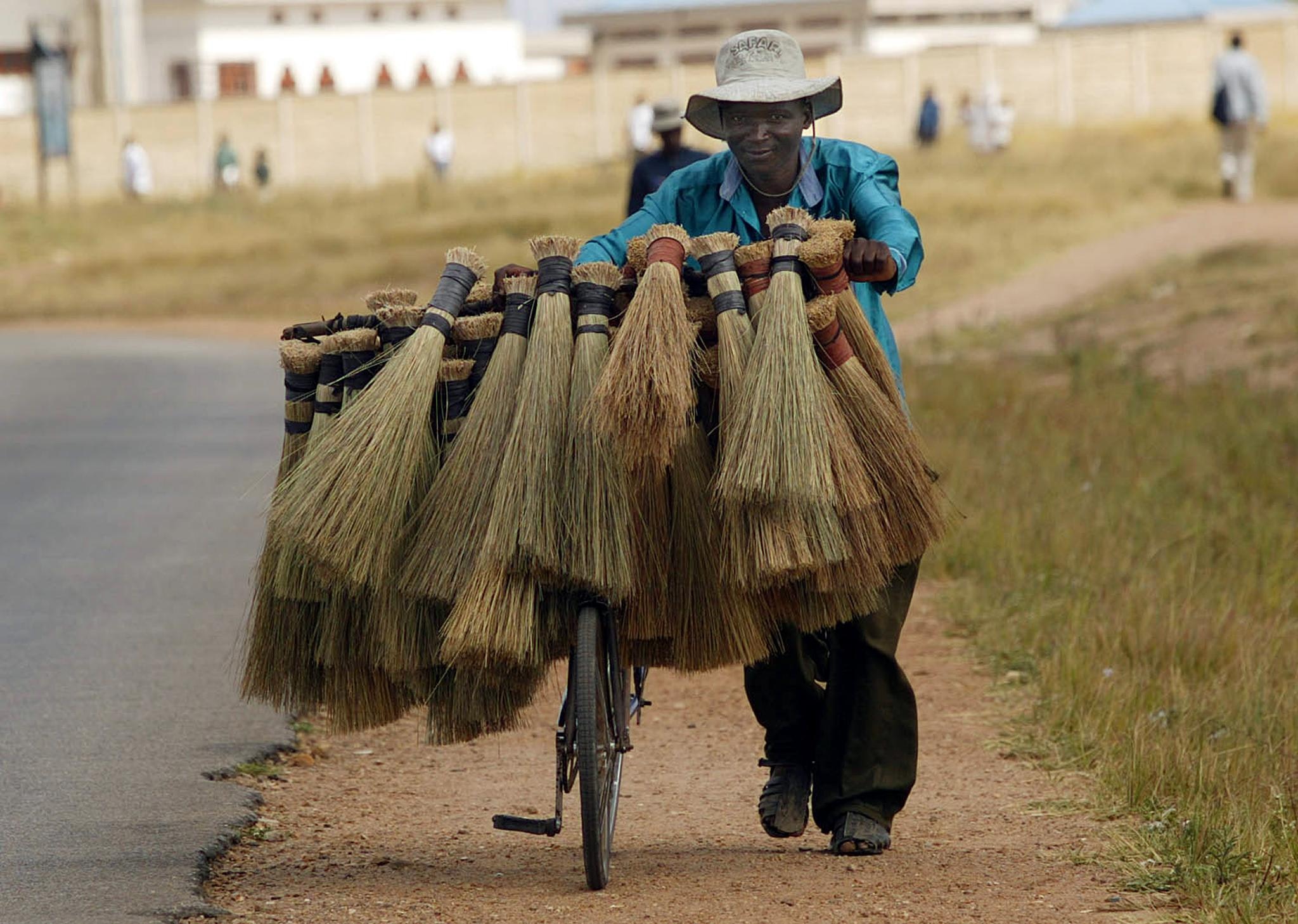
The informal sector plays an important role in the development of skills among Zimbabwe’s disadvantaged groups, and should be recognised as an alternative training path for those who cannot access formal training.
Yet, training in Zimbabwe remains tied to the formal education system. To be recognised as “trained”, one must go through and attain passes in primary, secondary and tertiary education or training. Without this certification, one is generally not recognised as adequately trained or skilled. This is regardless of expertise or competence in a particular trade.
Formal training plays an important role in skills development in Zimbabwe, but it is has some serious limitations. For example it is expensive and most families cannot afford the high tuition fees after the government stopped tertiary education grants in 2006 and 2011.
Moreover, tertiary institutions’ entry requirements exclude learners with a poor academic record. High schools are producing far too many students whose exam results are not good enough for university or college entrance. In 2020 for example, only 24.8% of all O-level learners passed at least five subjects required to enrol into a formal training institution.
My research queries the effectiveness of such an exclusionary training. It highlights the fate of all the learners who are excluded from tertiary training for different reasons.
Skills are empowerment tools the disadvantaged can use to fight poverty and inequality. Skills enhance their chances of getting better jobs, which also improve their earning capacity and increase their self-sufficiency. This will in turn improve their food security, livelihoods and living standard.
What does the future hold for young people who are denied a chance to acquire life-changing and poverty-fighting skills? I argue that, since most of them end up in the informal sector, harnessing the training benefits of the sector can be a positive step towards addressing this uncertainty.
Zimbabwe’s labour market is dominated by informal employment. In 2011, 94.5% of its employed population were working in the informal economy.
The country’s formal education and training system is structured as follows:
-
Primary school
-
Ordinary level
-
Advanced level
-
Tertiary training (such as university, technical, teacher, agricultural, vocational, nursing, professional colleges; offering certificates, diplomas and degrees)
Most learners do not proceed beyond Ordinary level. Statistics from 2019 show that only 13.5% of young people proceed to post-secondary and tertiary training. As such, while formal training is the recognised form training, only a minority access it.
Vocational skills
My research found that the informal sector plays a crucial role in the acquisition of vocational skills. These include trades such as carpentry and joinery, metal fabrication, plumbing, construction, and domestic electrical installation. Others repair electrical gadgets such as televisions, laptops, cellphones and refrigerators. Some master garment making, shoem aking, cosmetology, panel beating, spray painting and catering.
The research encountered highly skilled people who did not get formal training, but gained their expertise through participating in the informal economy. Some failed their high school exams while others could not afford college or university tuition, and sought refuge in the informal sector. After years of learning and perfecting those skills, they are equally skilled to or better than those who attended formal training.
The study involved speaking to clients most of whom expressed satisfaction with their products and services. They noted that based on their experience, there was no real difference between products made by tradespeople with formal training and those trained informally.
In addition, consumers also applauded their products, arguing that in most cases, there was little or no notable difference between products made by those informally trained and tradespeople with formal skills.
One example involved a builder who mastered construction skills through participating in informal construction work. He mastered expertise in site preparations, foundations, masonry, bricklaying, stonework, decorations, plastering, skimming, painting, renovations, tiling and others. He could also manage big construction projects like church, school and storey buildings. Had it not been for the informal sector, he would not have to mastered these skills as he had dropped out of high school. He could not qualify for tertiary training and would probably be unemployed.
This applies to many others in such trades as garment making, beauty therapy, catering and carpentry who could not get into formal training institutions, but were now highly skilled and experienced professionals.
Soft skills
People who participate in informal economy activities also acquire many soft skills necessary for both employees and entrepreneurs. These include knowledge and thinking skills, planning, objective or goal setting, basic numeracy and market research. Other skills are literacy and computer skills, networking, interpersonal communication, negotiating and bargaining, teamwork, problem solving and decision making. These skills are important on their own, but they also complement vocational skills. It is difficult for one to thrive on vocational skills alone without soft skills.
The informal economy is a rich hub from which these skills are learnt, nurtured and perfected. For example, the informal sector is a very contested space as entrepreneurs compete for business, and is also often criminalised by the law. Operating successfully in such environments requires negotiating and bargaining skills.
Moreover, the highly competitive nature of the sector makes conflicts inevitable. Entrepreneurs in the same trade often clash over clients and deals. However, because working together is unavoidable, they learn to resolve their conflicts amicably to continue working together.
Entrepreneurial skills
The informal sector is also equipping its participants with a range of entrepreneurial skills. Entrepreneurial skills in this context refer to the ability to device and exploit an idea to make income out of it.
Taking part in informal sector activities exposes actors to complex situations which require them to learn various skills. These include:
-
project planning and management,
-
delegation of work and tasks,
-
building relationships through networking,
-
time management, budgeting,
-
costing and pricing,
-
marketing and advertising,
-
leadership and decision making, and
-
customer care.
To boost their businesses it is imperative for them to be innovative and inventive, creative, identify niche markets, marketing, leadership, risk-taking skills and ability to raise, invest and manage money.
They also include the ability to be productive, hire and manage people and identify new trends and niche markets. Together with soft skills, entrepreneurial skills complement vocational skills and turn one from a mere trades-person into a complete entrepreneur.
Why it matters
Promoting the informal sector as an equally important alternative training platform as well as recognising and standardising informally acquired skills will allow skill holders to participate in the main or formal economy. They will have a chance to challenge for formal jobs and tenders in private and public sectors.
Since most of these skill holders are from disadvantaged backgrounds, recognising their skills and allowing them to participate in the formal economy will play an important role in uplifting their living skills.


