The abrupt arrival of the COVID-19 pandemic has shaken the world, creating havoc for economies and social fabrics and taking heavy tolls on lives and livelihoods. Many rich nations have procured and vaccinated a critical mass of their populations. Many have reopened their borders for “business as usual”.
At first sight, the situation looks dire for Africa. The regional office of the World Health Organisation (WHO) recently released a statement saying that 90% of countries in Africa would miss the target of vaccinating 10% of their populations by June 2021.
Are these warnings a sign of grim despair? Or are they a call to action?
I would argue that they are a call to action.
But what actions can realistically be taken by African countries, considering the odds stacked against us?
In my view there is a lot we can – and should – do, given that mass vaccination for Africa is not imminent.
African countries are at various stages of the pandemic. In formulating national policies, governments must incorporate good practices derived from lessons learnt so far to strengthen their health systems. Critical policy elements should include preparedness and response components.
What can be done
African countries should resort to time-honoured public health practices originating from the continent.
Take the astute scientific observations of the 1976 Ebola epidemic in Zaire. This taught us that by knowing the transmission modes we can successfully stop the epidemic from spreading when we break the chain of transmission through isolation of a positive case followed by surveillance. This was successful without any recourse to vaccination.
Secondly, good hunters know they can catch prey when they have studied its habits. We know that the virus responsible for COVID-19 is mainly transmitted by air. Like good hunters, we should exploit this knowledge and break the chain of transmission of the virus by viable options at our disposal.
For example, we can reduce the source of transmission at the outset by instituting some form of lockdown or quarantining all subjects who test positive for COVID-19. South Africa’s lockdown strategy showed promising success at at the outset of the outbreak, but did not pan out when it was intermittently relaxed.
The practice of social distancing by keeping a distance of at least two metres from one another has worked to a large extent in the west. This may be difficult to practise throughout Africa. This is because overcrowding is common in big cities and in villages there are extended families living in one home.
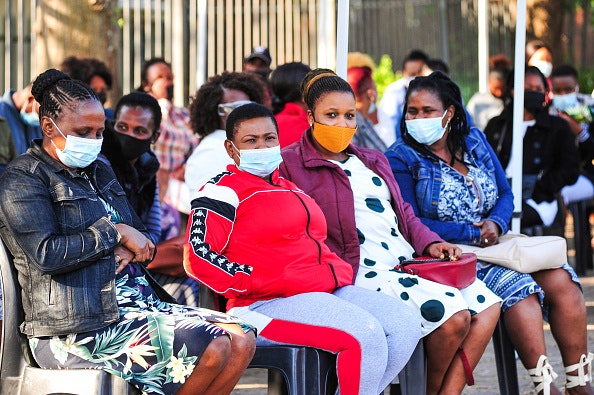
We can also protect ourselves by properly wearing a respiratory mask to cut the risk of transmission. Numerous scientific studies in many parts of the world bear testimony to the utility of wearing a mask in closed spaces, healthcare facilities and crowded places with shared air spaces. However, the usefulness of masks can be compromised by non-availability of non-respiratory types or inadequate training in their proper use, leading to recurring waves.
Thirdly, sound public health policy would save lives and reduce illnesses. The practices set out above must be incorporated into existing or new policies on preparation and response to resonate with the WHO International Health Regulations criteria.
And all countries should have contingency plans with adequate medicine and life-supporting facilities. One key component is ensuring oxygen supply since the great majority of COVID-19 deaths are due to lack of adequate and timely access to oxygen.
Fourth, we must introduce surveillance at the most basic levels to permit the early recognition and reporting of COVID-19 cases, through training of community healthcare workers.
Citizens must be empowered through education and community leadership to recognise a cluster of cases before the disease has time to spread in institutions or communities. Citizens act responsibly when they are provided with the right information. They will feel that they are contributing towards the national good of public health protection and not just for their own self-interest.
Education must be in local vernacular to target the population at risk, including frontline workers and people with medical conditions with increased vulnerabilities. We must dispel misinformation that negates the public health measures through classic information education and communication methods to include role model figures like artists, tribal chiefs and other community leaders.
It is therefore incumbent on all national governments, nongovernmental organisations and educational institutions to inculcate self-isolation, wearing of masks and practising personal hygiene.
The vaccine quest must continue
We cannot give up the quest for vaccines as they have contributed to significant progress in controlling many diseases on the continent. Examples include a reduction in meningitis in the meningitis belt through the MenAfriVac initiative and the eradication of wild poliomyelitis throughout the continent.
African governments should explore vaccine diplomacy at all levels. This should include supporting waiving of intellectual property rights and the transfer of technology to expand local vaccine production beyond Egypt, Senegal and South Africa. Coupled with these efforts, we should also promote uses of traditional medicines to relieve the severity of the disease.
And national governments must move away from overdependence on the precarious supply of the COVAX alliance to proactively pursue bilateral arrangements, foster public private partnerships and procure their own supplies by earmarking the budget.
Currently, COVID-19 vaccination highlights the gap between the haves and have-nots and widens the social inequity gap. This theme must be pushed in all international forums to galvanise support for Africa.
Mass vaccination for the continent and the rest of world will become a reality when there is a push for global control as has been done for the eradication of poliomyelitis and measles. These are diseases that are indiscriminately transmitted between the haves and have-nots, just like COVID-19.
Africa has remained resilient in the face of pandemics before. It needs to rise to the challenge again.


