Africa must keep its rich, valuable data safe from exploitation:
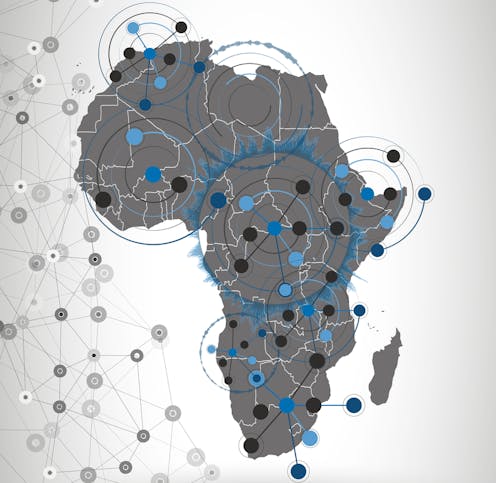
There’s a data revolution underway in Africa. It’s being driven by major international research collaborations like the Square Kilometre Array (SKA) project. This and similar initiatives are producing volumes of data the continent has never witnessed before.
All of that data then needs to be carefully managed throughout every stage of the research project. That’s why data stewardship – a job that didn’t exist in academia ten years ago – has today become the key to the integrity of any academic research enterprise.
Data stewardship refers to the person or people in an organisation responsible for describing data accurately, then arranging it so it’s easily found, understood in context and, ultimately, used appropriately.
High-profile projects like the SKA are supported by important national infrastructure initiatives, such as South Africa’s National Integrated Cyber Infrastructure System. These help to boost the country’s capacity for high levels of research data management.
The continent’s universities are also scrambling to provide necessary data services to researchers. This is important to make sure that academics comply with international funding agencies’ complex data management requirements. But there are more than technical or operational considerations to managing and sharing the huge volumes of data being sourced in Africa.
Political, ideological, cultural and historical factors also matter. Data is emerging as a powerful force in the digital economy. Will other nations and regions try to control the flow of information from Africa? That’s what happened the last time Africa had something valuable to offer in the form of oil reserves and minerals.
Africa must develop its capacity for data stewardship. This is a critical resource to refine the data according to “FAIR” data principles outlined by global bodies. These call for data to be open, shareable and reusable – an important way to prevent the exploitation of Africa’s research data.
Opening up access
The Africa Data Revolution Report 2016, backed by the United Nations Development Programme, argues that in the African context open data means not only sharing and reuse: it also requires inclusion. This means that the benefits of gathering and sharing data should accrue to all, from institutions to individual researchers and entire communities.
That principle differs sharply from the historical paradigms of data production, dissemination and usage in Africa. Census planning was an early example of data gathering on the continent. Far from being a neutral act, this data was used to construct ideologies of race. It became a tool for exclusion and segregation, especially under colonial and apartheid rule.
This history explains why many researchers in Africa are now committing themselves to this principle of openness. South Africa’s research community is particularly sensitive to the benefits of sharing data openly to promote social, economic and political inclusion and the integration of marginalised communities.
Those who support open data see that it drives greater scientific integrity, global participation. They understand that it enables a strategic response to Africa’s societal challenges. The continent’s public health researchers and epidemiologists are leading the way here.
But of course, researchers have their reservations too. South Africa’s academics insist on the right to make the decision whether to share their data openly – and where to share it. Few universities have developed policies on research data management. These are necessary to guide research communities in collecting good, standardised data that can be shared at the end of a research project.
Another concern among African scholars is the problem of “helicopter science”. The risk in international research collaborations is that non-African partners tend to drive the research agenda. They gather uniquely African data and then export it for analysis and publishing elsewhere. The African partners then lose out on research incentives like peer recognition and reward. They also can’t, for instance, patent products based on that relinquished data in future.
These concerns must be taken seriously as Africa continues its data drive. A focus on collaboration among African universities and research institutions is crucial in developing national policies that both meet the FAIR principles of Open Data and ensure equity and fairness in research contracts. All of this work will ultimately offer greater protection against the risk of “helicopter science”.
A collaborative ‘cloud’
One example of this sort of crucial collaboration is work that’s been undertaken by Data Intensive Research Initiatives of South Africa DIRISA. The organisation plans to develop a shared data service from core funding awarded to a consortium of universities in the Western Cape province.
This consortium, established in late 2016, is known as ILIFU, a word which means cloud in isiXhosa. Part of the ILIFU project includes the deployment of the cloud-based Figshare platform. This offers an institutional repository for research data. It serves researchers who need a place to store and disseminate their data with discrimination.
The project is South Africa’s first national data infrastructure grant. It will give more access to research infrastructure, software and data to all the country’s researchers. That includes those from under-resourced communities, where access to this kind of infrastructure should “leave no one behind”.
The opportunity to work collaboratively in providing shared data infrastructure heralds another conscious mind shift for African research. We are beginning to see open data not as a commodity but as a source of renewable energy. It generates new value every time it’s reused – and, ultimately, it can power the world.

Dale Peters does not work for, consult, own shares in or receive funding from any company or organization that would benefit from this article, and has disclosed no relevant affiliations beyond their academic appointment.
Source: The Conversation – Articles (AFRICA)
Read more on The Conversation.
Join the fun: Add Your event | Submit a Press Release | Add your listing.


